Rifle cleaning sits in that unglamorous part of deer management that rarely gets talked about. Nobody books a stalk to discuss solvents and patches. Yet the rifle is the tool that ultimately decides whether your work is humane, accurate and safe. Ignore its maintenance and the rest of your professionalism unravels fairly quickly.
Most of the time the cleaning routine is uneventful. The outing ends, the rifle is checked clear, the kit comes out, and a familiar sequence of actions plays out almost without conscious thought. That was exactly the situation when this particular problem started.
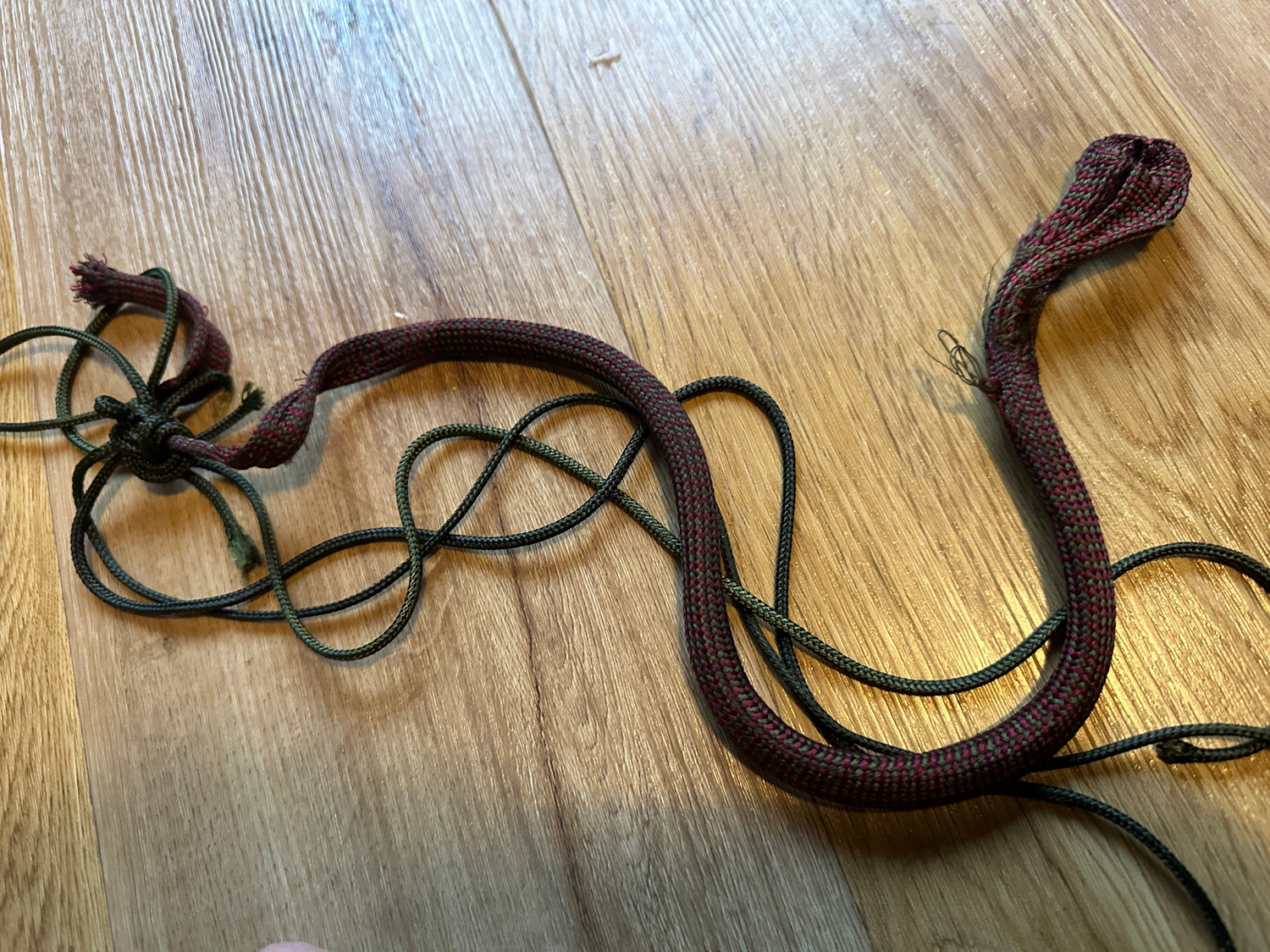
After a wet session on the ground, I did what I always do. Rifle unloaded and checked, bore snake ready, a straightforward post-shoot pull-through. The snake entered the bore as it has hundreds of times before, then stopped. Completely solid. No movement forward, no movement back. Somewhere between chamber and muzzle it had kinked and locked itself in place.

How a Bore Snake Ends Up Stuck
When something jams inside a barrel there is usually a simple mechanical reason. A pull-through or bore snake can wedge for several reasons:
- It twists as it enters the rifling and folds back on itself.
- It snags and bunches up.
- It compresses at the muzzle if the exit angle is wrong or if the end knots on itself.
In each case the effect is similar. A flexible cord and woven body that are supposed to glide through the bore suddenly behave like a solid plug. Friction and pressure increase, and every extra pound of force you apply only tightens the knot.
The moment you feel that change in resistance is the crucial decision point. You can either respond with more strength or with more thought. Most disasters in rifle maintenance start when people choose strength.
What I Did Next
In this instance I decided not to fight the obstruction. No pliers, no improvised rods, no yanking until something gave.
I flooded the barrel with oil from both ends and left it alone. The aim was to saturate the fibres, reduce friction, and give the material a chance to relax instead of compressing further. By walking away for a period, I also removed the temptation to keep pulling out of frustration.
After leaving it to soak, I returned and worked it very gently. Small movements rather than sudden jerks. Eventually the bore snake began to shift. Little by little it moved, and I was able to draw it out without feeling any harsh tearing or sudden release that might have indicated damage.
Only then did the second phase begin. I inspected the bore carefully, cleaned it again using conventional rods and patches. The rifle was treated as back to build until it had put rounds on paper. Only after it re-zeroed cleanly and grouped as expected did it return to being used.
That last step is not cosmetic. Even if you are confident nothing has been harmed, you cannot assume that a barrel which has had a plug forced through it behaves exactly as before. Confidence in the rifle is not a feeling, it is evidence.
Why Cheap Kit Is a False Economy
It is tempting to blame this episode on inferior equipment. The problem is that the equipment in question was not inferior. It was a genuine, branded Bore Snake that had given good service for years. In other words, if a high-quality product can jam, a low-quality one can jam more often and fail more violently.
Copies made from weak fibres or poor stitching add another risk. If a cheap snake breaks under tension you no longer have a single obstruction, you have fragments. Some may come out, some may not. You have turned one problem into several and made a gunsmith’s life far more complicated.
You also increase the temptation to escalate your own efforts. Once people see frayed cord or loose threads, they start reaching for screwdrivers, drills and improvised hooks. That is where real damage happens: scarred rifling, ruined crowns, or in the worst cases an unsafe barrel that should not be fired again.
The sensible conclusion is simple. Treat pull-throughs and bore snakes as consumables. Buy decent ones, inspect them regularly, and replace them before they reach the end of their strength. The cost of periodic replacement is small when compared with the cost of repairing or replacing a barrel.
When Things Go Beyond a Simple Fix
In my case, patience and oil were enough. That will not always be true. If an obstruction refuses to move with gentle, controlled effort, that is the point to stop. Not five minutes later, not after you have tried one more bright idea. At that stage you are not rescuing the situation, you are gambling with a precision tool.
This is where the role of the gunsmith becomes important. A competent rifle smith has the proper rods, jigs and experience to remove an obstruction without tearing at the rifling or deforming the crown. They have the benefit of distance as well. Your frustration is not driving their decision making.
It is easy in our culture to confuse self-reliance with doing everything yourself. Professional deer managers spend countless hours honing their own fieldcraft, marksmanship and equipment knowledge. That can accidentally bleed into a reluctance to hand the rifle over when something goes wrong. Pride can be an expensive adviser.
The better attitude is to treat specialist help as part of your responsibility. Your job is to know when your own knowledge ends.
Why a Blocked Barrel Is Not a Minor Issue
There is a deeper reason to take these situations seriously. A barrel obstruction is not just a nuisance, it is a potential safety hazard. If anything is left inside the bore and a live round is fired, pressures can spike well beyond what the rifle was designed to handle. Best case, you bulge the barrel. Worst case, you cause catastrophic failure.
Some will argue that a small amount of fabric cannot generate that much additional pressure. That is not the point. The correct question is not “could I get away with it”, but “am I certain the risk is zero”. If the answer is anything other than yes, then the decision is simple. Sort the obstruction properly, inspect, then re-zero.
The moral responsibility here is obvious. We operate in an industry that already carries external scrutiny. Any avoidable accident involving firearms creates consequences far beyond the individual. Taking unnecessary risks with a blocked barrel does not only endanger you, it endangers the reputation of the entire sector.
Cleaning, Habit and Complacency
This sort of problem usually appears when routine hardens into habit. Cleaning is often done when you are tired, hungry and keen to sit down. The temptation is to move quickly and trust muscle memory. That is precisely when attention drifts.
There is a broader lesson here about professional practice. The more routine a task becomes, the more deliberate you need to be. Fieldcraft on a new estate naturally sharpens your senses. You know you are learning. Cleaning at the end of yet another wet evening feels familiar, so you relax.
The correct stance is almost inverted. The familiar tasks are the ones that need conscious discipline. Safety checks, cleaning, storage, ammunition handling. These are areas where boredom breeds error. If something can go wrong it will usually do so in exactly those quiet moments when you think nothing of importance is happening.
Creating a small internal checklist for yourself makes a difference. Bore checked clear. Cleaning kit inspected. No force used on anything that binds. If something feels off, stop. You are not trying to impress anyone in the cleaning room. You are trying to send the same rifle back out next week, fully trustworthy.
Pull-throughs, Rods and Frequency
Episodes like this also prompt a wider question: how often should you be cleaning and what method should you be using. That is heavily debated and beyond the scope of a definitive answer here, but there are some sensible principles.
Pull-through systems are excellent for removing loose fouling, moisture and debris in the field, particularly after wet or dirty outings. They are convenient, compact and less likely to damage the crown than a badly handled rod. For a quick post-stalk clean they are ideal.
They are not a substitute for a more thorough periodic clean with rods, patches, brushes and the correct solvents. Over-reliance on any single method can build up stubborn fouling that eventually causes problems of its own.
In practice, many working rifles follow a mixed pattern. Light, regular cleaning with pull-throughs, backed up by deeper cleans at set round counts or when accuracy shifts. The exact rhythm depends on calibre, barrel, ammunition and how the rifle behaves. The central principle, however, is always the same: nothing is done on autopilot.
Re-zeroing Is Non-negotiable
It is worth returning to the issue of re-zeroing because it is one of the areas where people most often cut corners. Once an obstruction has been removed, or any significant work has been done on the rifle, you no longer know where that rifle shoots. You might have a guess, but you do not know.
From a deer management perspective that is unacceptable. The animals we cull deserve certainty. A rifle that has been interfered with and not re-zeroed is a rifle being pointed at a living creature on the basis of hope rather than evidence.
Re-zeroing is not an indulgence, it is part of the ethical framework of the job. It is also the point at which any lingering anxiety about what might have happened to the barrel is either resolved or confirmed. If the rifle prints exactly as it did before, your confidence returns. If it behaves oddly, you have just been given a clear signal that further inspection is needed.
This Is Not Professional Gunsmithing Advice
It is worth stating clearly what this article is and is not. It is not a step-by-step guide to barrel obstruction removal. It is not an encouragement to improvise your own tools, nor a substitute for the advice of a qualified gunsmith.
What it is, is an honest account of something that went wrong during a routine clean, and the thought process that followed. The key messages are simple:
- Problems can occur even with good kit and familiar routines.
- Force is rarely the right first response.
- Specialist help exists for a reason.
- Any significant incident involving the barrel should be followed by a proper re-zero.
For those of us working in professional deer management, the rifle is not a toy or a lifestyle accessory. It is a precision tool that carries both moral and legal responsibility every time it is used. Maintenance is part of that responsibility.
A stuck bore snake may sound trivial compared with the bigger questions of ecology, population control and public perception, but it is at exactly this level that professionalism is tested. Anyone can talk theory. How you behave when a simple task goes wrong is what really reveals your standards.
Treat cleaning with the same seriousness you give to shot selection. Choose decent equipment, replace it before it fails, and never be embarrassed to hand a problem over to someone whose entire job is making rifles safe and accurate again.
Your future self, your clients, and the deer on your ground will all benefit from that decision, even if nobody but you ever knows the story of the bore snake that tried to stay in the barrel.