Most stalking stories end where people want them to end. A clean shot. A short wait. A straightforward gralloch. Something neat to write down in the book and move on from. The problem with real deer management, especially when you are doing it regularly, is that risk does not live only in the shot. It lives in the aftermath, when adrenaline drops, hands are cold, light is poor, and you are working close to a large animal that is still capable of doing damage.
This week was a useful reminder.
We had a shot deer. No blink. No rise or fall in the chest. We followed our standard approach: a five minute wait, then a proper check. Everything you would normally rely on told the same story. The deer was dead.
And then it kicked.
The hoof caught my wrist and opened it cleanly. It is the kind of injury that looks minor until you remember what sits under skin in that area, and how quickly blood loss, shock, or tendon damage can turn a manageable situation into a difficult one. It was only a few inches away from being far more serious, and it landed exactly where the lesson lives: in the space between “the work is done” and “the work is safely finished”.
Last gasps, reflex movement, and why a dead deer can still hurt you
People often describe this as “last gasps”, as if it is folklore. There is a scientific reason it happens, and understanding it matters because it changes how you handle the aftermath.
 A cleanly killed animal can still move because not all movement is conscious and not all movement is driven by the brain. The spinal cord and peripheral nerves can continue to fire reflexively for a period after death, particularly while there is residual oxygen and energy in the tissues. In plain terms, the animal is dead, but the wiring in the body can still spark. That can produce sudden, forceful kicks, even when the animal is no longer conscious and could never recover.
That is why a shot animal can still be followed by movement. It does not mean the deer is alive in any meaningful sense. It means there can be a brief window where the body is still capable of reflex action. The scientific explanation does not reduce the risk, but it removes confusion. It also reinforces the practical point: the absence of blink reflex and the absence of chest movement are strong indicators of death, but they are not a guarantee that the legs will remain still.
The safest approach is simple. Assume the animal can still move until you are fully committed to safe positioning, distance, and methodical checks.
The aftermath is where most injuries happen
People imagine risk as a single dramatic event. In deer management, risk is usually quieter and more mundane. It is the slip when you step off a ride onto wet leaf litter. The knife nick when you are rushing in poor light. The strain when you drag a carcass over bracken you cannot see properly. The moment you work too close to a carcass in an awkward position and forget, briefly, that there is still weight and leverage in the legs.
That is why the “safe shot” conversation, important as it is, is only part of the professional picture. The job includes what happens next. Recovery, extraction, hygiene, and the reality that you are handling sharp tools and heavy objects in imperfect conditions. If you ignore that reality, you are not being brave. You are being unprepared.
A military reminder: accidents are rarely dramatic, but consequences can be
One of the most useful things I took from the army is not the romance people imagine. It is the understanding that accidents do not need to look heroic to ruin someone’s life. They happen when people are tired, carrying too much, trying to save time, and making a judgement call that seems small in the moment.
I remember a colleague who jumped across what looked like a manageable gap while heavy laden. It took half a second. He landed awkwardly and snapped his femur. That is not an injury you walk off. It is not an injury you simply grit your teeth through. In the wrong context it becomes life changing, and it happened not in combat, not under fire, but in a mundane moment where someone assumed the body would do what it normally does.
That incident sits in my mind for the same reason a deer hoof striking your wrist does. It reminds you that the margin between fine and serious is often narrower than we like to admit.
The other military lesson is this: you do not rise to the occasion. You fall to the level of your training.
Muscle memory is not only for shooting
We talk endlessly about muscle memory with rifles and optics. Correct trigger press. Follow-through. Safe arcs. Consistent handling. But the same principle applies to medical emergencies. Reaction speed matters. Calmness matters. The ability to do the right thing without debating it internally matters.
First aid is often treated as common sense. In practice, common sense disappears the moment someone is bleeding, the light is fading, you are cold, and you are two fields behind a locked gate with patchy signal. That is when a simple plan built in advance becomes the difference between calm and panic.
Recreational stalkers often take this for granted. Not out of negligence, but because nothing has happened yet. That is how risk works. It feels theoretical until it becomes personal.
What happened next, and what I was proud of
What mattered most after the strike was not the cut itself. It was the response.
Milly was with us on placement and this was her first time seeing how quickly a routine sequence can change. She stayed calm and took the lead on what needed doing: carcass recovery, inspection, clean-up, and keeping the process controlled while I attended to the wound. That is exactly the sort of behaviour you want in a team, and it is exactly why introducing motivated young people into the sector matters. They learn what the job really is, not what it looks like in a highlight reel.
It also reinforced something we say regularly. Professionalism is not a badge. It is what you do when nobody is watching, and what you do when the plan is disrupted.

First aid is part of your risk assessment, not something you also carry
Most incidents in deer work are not dramatic. They are slips, cuts, strains, punctures, knife nicks, falls from banks, and the occasional moment where a deer reminds you it is a powerful animal even after the shot.
That is exactly why risk assessments matter. A risk assessment is not a paperwork exercise. It is a process tool. It forces you to think ahead, and it exposes the gaps you would otherwise ignore.
The gaps are usually predictable.
Are you behind a locked gate. Who else has a key. Who knows the code. If you go down, how does anyone reach you. Will emergency services be able to access the site quickly, or are you two miles behind an access point with no signage and no clear instructions.
Do you have signal. Do you have What3Words ready to use. Does your colleague know it. Have you agreed a check-in time if you are working alone. What happens if you do not respond.
If that sounds overcautious, it usually means you have been lucky so far.

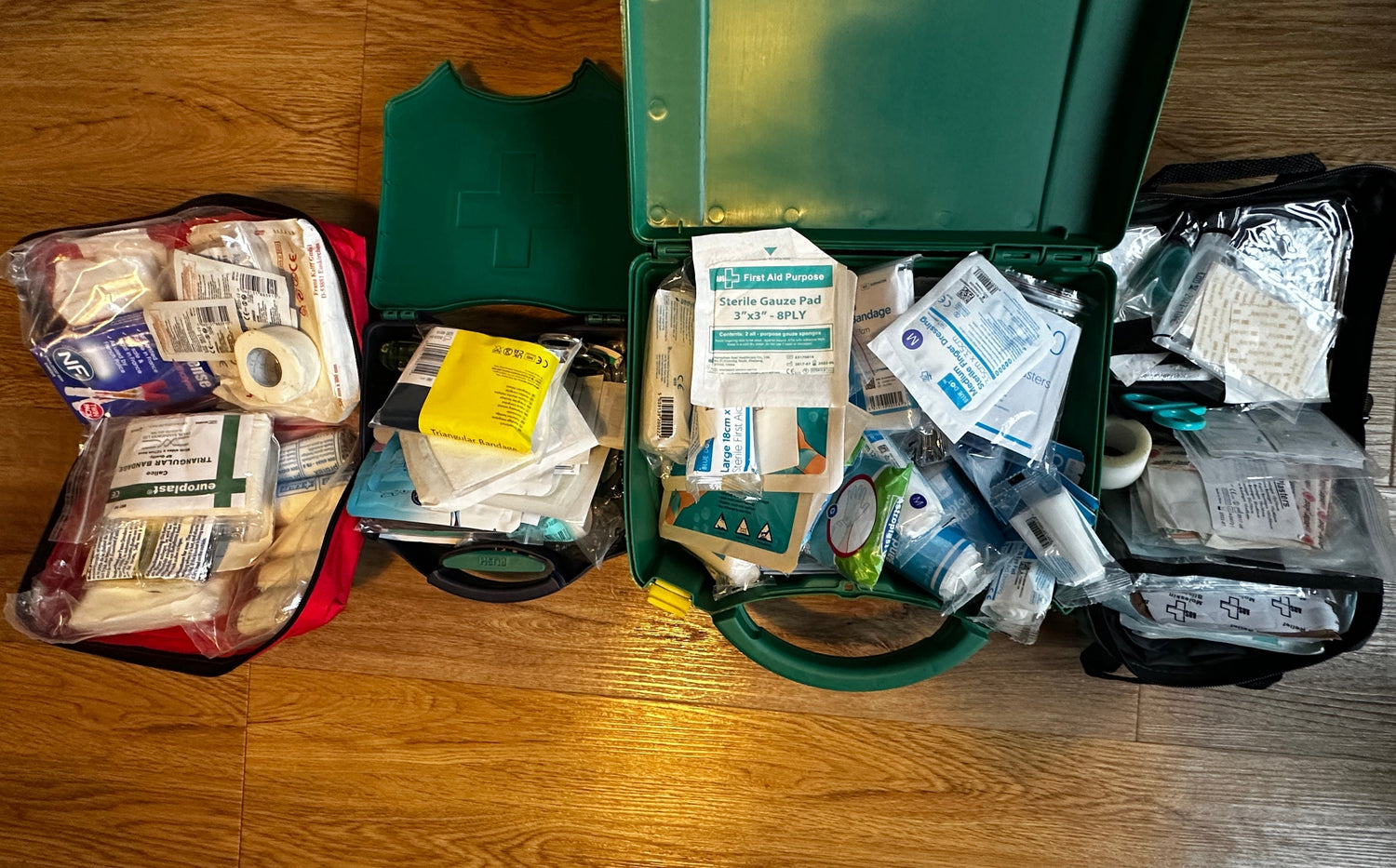
What you should have in your field first aid kit
This is not medical advice, and a blog is not a substitute for training. But there are basics that should be non-negotiable in a stalking pack, especially if you are working alone or in remote corners.
A field kit should be built around the injuries that actually happen: cuts, punctures, lacerations, slips, and bleeding. It needs to let you control a situation quickly enough to keep you functional until you can get proper assessment.
In practice, that means you want the kit to let you clean, compress, and cover. Proper dressings, a compression bandage, sterile wipes, tape that sticks in wet weather, and nitrile gloves. A small trauma dressing and a proper compression wrap are far more useful than a dozen plasters. If you choose to carry a tourniquet, then carry the competence to use it appropriately. A tourniquet is not a reassurance token. It is a tool for a specific problem.
You also need to think about contamination. Deer work is messy. Blood, gut content, mud, and wet vegetation are part of the environment. Hygiene is not a nice extra. It is part of staying well enough to do the job tomorrow.
A heavier kit in the van or truck, and why it matters
The field kit buys you time. The vehicle kit buys you options.
In the truck or van you want a more substantial pack. Not because you are planning for drama, but because a ten minute delay in the field can become thirty very quickly, and weather does not pause while you deal with an injury. If you are cold, wet, and bleeding, decision making degrades faster than people like to admit.
A vehicle kit should include more dressings, more compression, more cleaning supplies, spare gloves, spare layers, and the ability to stabilise a situation while waiting for assistance. It should also include the basic admin items that people forget until they need them: a charged torch, a power bank, and a simple way to locate yourself precisely.
Lone working protocols are not paranoia, they are a professional standard
If you work alone, you need a system. Not a vague intention to be careful. A system.
That means a check-in person who knows where you are, when you went in, and when you are expected out. It means clarity about what happens if you do not check in. It means planning for access, including gate codes, and a way to communicate your location quickly.
This is where What3Words becomes a practical tool rather than a gimmick. If you ever have to call 999, you want to give them a precise location without trying to describe a woodland ride and a fallen oak that nobody else can see.
Training: the gap nobody wants to admit
The truth is that many people carrying first aid kits have never trained properly for the situations they are carrying them for. They have purchased reassurance, not competence.
If you can access good training, take it. Refresh it. Treat it like part of your annual standards in the same way you refresh shooting safety and legal knowledge.
Free first aid training is available online through the Shooting and Hunting Academy

The uncomfortable conclusion
This incident was minor, and that is precisely why it is worth writing about. Minor incidents are warnings. They are the moments where you get to adjust before you are forced to.
The hoof caught my wrist. A couple of inches either way and we might have been dealing with a very different outcome. Instead, it became a reminder. First aid is not separate from deer management. It is part of it. Risk assessments are not bureaucracy. They are a thinking tool. Lone working protocols are not theatre. They are what keeps you alive if the day turns suddenly.
Planning for the unknown is always difficult. But the more prepared you are, the less dramatic it needs to become.
Disclaimer: This article is general information and not medical advice. If you are injured, seek appropriate medical assessment. If there is severe bleeding, loss of function, or concern about shock or infection, call emergency services.