It is always good to catch up with the Swarovski Optik team. Familiar faces, proper conversation, and a stand that feels as organised and professional as the kit it carries. This year we met the new UK manager, Adam, while Rebekah caught up with Wah. No theatre, no pressure, just time to handle the optics properly and ask the sort of questions that matter when you are trying to make decisions for real deer work in British conditions.
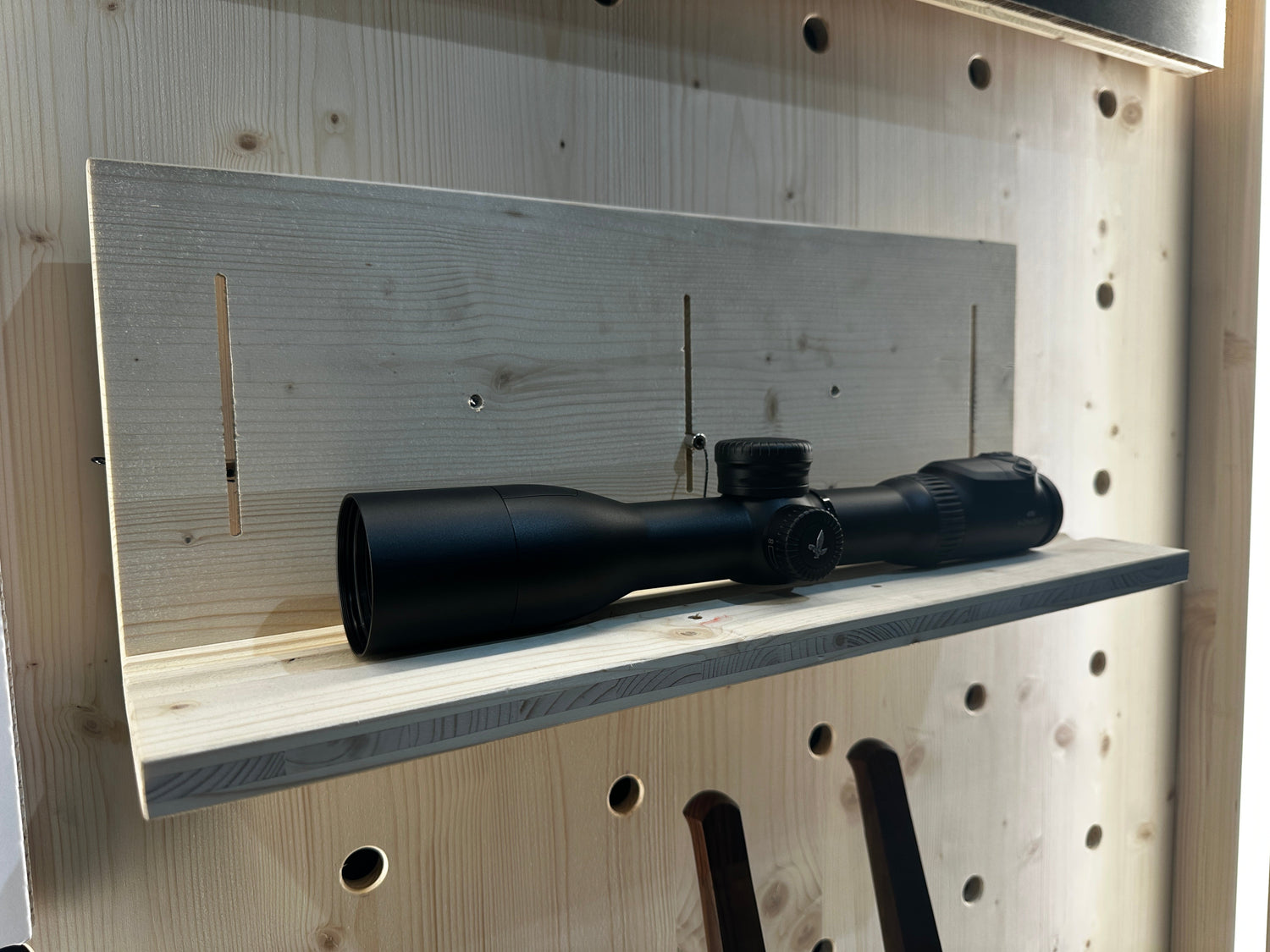
The piece I was most interested in putting hands on was the new dS Gen III 4-24x50 P. The scope looks familiar at first glance, which is very Swarovski. The changes are subtle enough that muscle memory is not sacrificed for loyal users, but once you start looking through it and working the controls, you can see it has been refined with a clear aim: reduce friction, increase clarity, and make the ballistic process feel like one joined-up system rather than a collection of separate steps.

A brand built on loyalty, trust, and value that tends to hold
Swarovski’s position in the stalking world is not an accident. Their brand has been built over decades on premium quality, customer loyalty, and trust. For many of us, their glass is not just “nice to have”, it is the baseline you measure everything else against. And unlike plenty of kit that depreciates the moment it leaves the shop, Swarovski optics often retain value unusually well, precisely because confidence in the product and the support behind it remains strong, I mention this as it was evident from those on the stand at the show.
Swarovski optics often retain value unusually well, precisely because confidence in the product and the support behind it remains strong.
That loyalty is not abstract for me. I have been an opinion leader for the brand for the last couple of years, and I do have a love for the kit. My EL Range binoculars have been with me in every conceivable condition Sussex can throw at you: damp cold, persistent drizzle, wet bracken, and the kind of grey light where cheaper glass quietly quits. They are one of the few tools I can say have been present so consistently that they feel less like equipment and more like part of the workflow.
Where the dS fits, if you already live in the Swarovski ecosystem
The real pull of the dS, for me, is not that it replaces skill. It is that it compresses process.

The thought of using the dS alongside programmed ballistics for my home loads, while already running bullet drop calculations through rangefinding binoculars and keeping it all controlled via the app, is genuinely attractive. Not because it turns stalking into a button-press exercise, but because it reduces the small, avoidable friction points that appear under pressure.
If you are honest about it, the field skill is still the same. Wind judgement still matters. Position still matters. Shot selection still matters. The discipline to say “no” still matters. What the dS offers is a way of presenting a corrected aiming point at the moment it matters, without you having to mentally juggle as many steps in the background. That is not the removal of marksmanship. It is the attempt to preserve it when the conditions are trying to pull you away from it.
And that ecosystem point matters. This scope is not trying to live alone. It is designed to sit inside a wider “Swarovski way of working”, where your ballistic profile, your preferences, and your practical set-up are held together rather than spread across notebooks, turret tapes, and mental arithmetic. For someone already invested in the brand, the dS is less about learning a new system and more about tightening an existing one.
What the dS is actually trying to do, in plain deer-manager terms
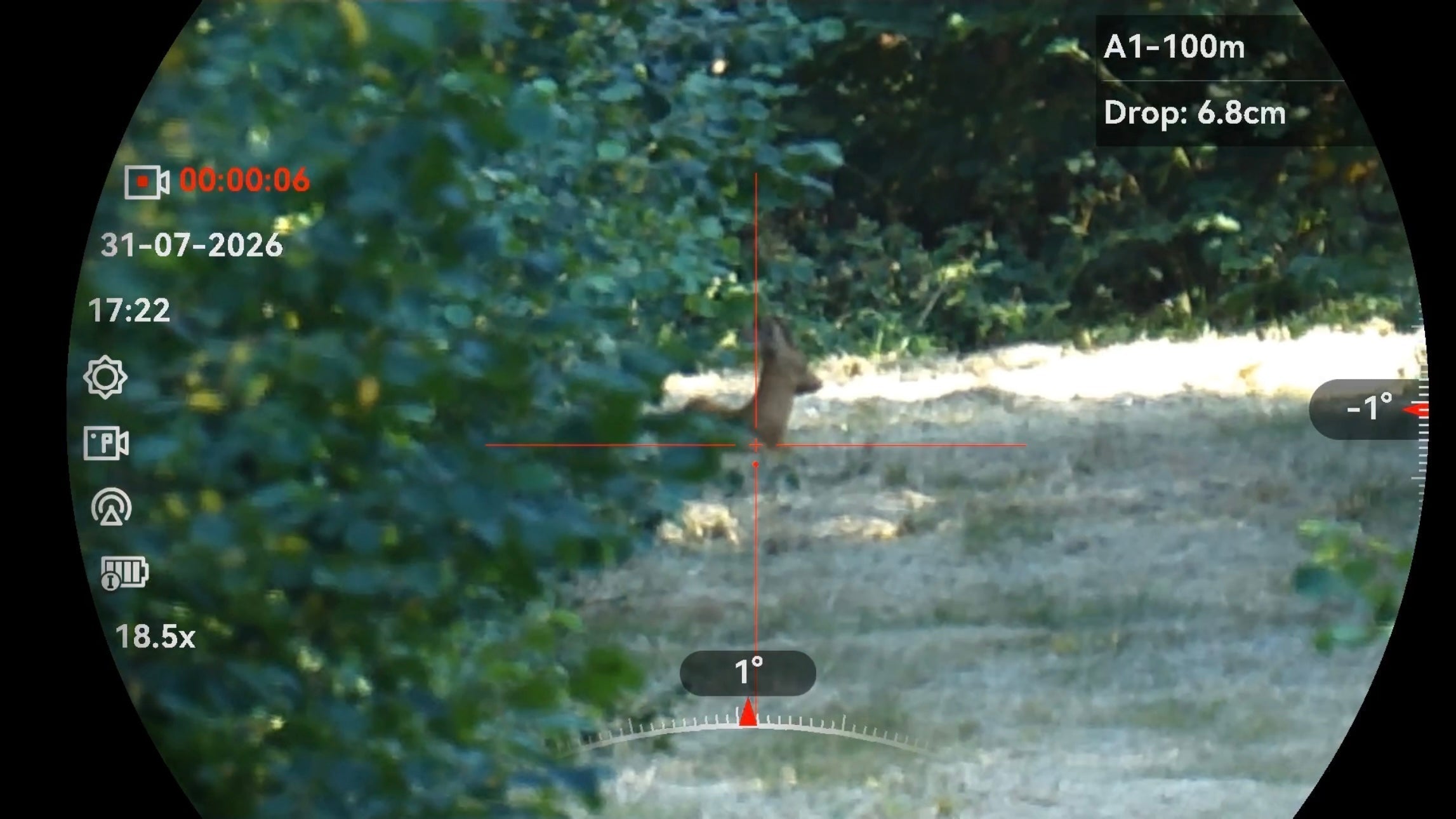
The dS concept has always sat in an unusual place. It is not simply “a scope with a turret”, and it is not just “a rangefinder in a tube”. It is a scope that carries the ballistic decision inside the optic and then presents you with a corrected aiming point when you ask for it.
That matters because many of us are not taking shots in perfect, open conditions. We are working in mixed woodland, on rides that narrow unexpectedly, on edges that offer a short window, and often in damp air where light drops faster than you would like. Whether you are managing muntjac in tight cover, roe along a boundary, fallow moving between blocks, or the occasional sika or red on more open ground, you are usually managing time pressure and environmental pressure at the same time. In that context, anything that helps you stay calm and make fewer “small errors” has real value, provided it does not create new failure points.
It also matters that Swarovski have not built this as a novelty optic that forces you into a different handling style. The design language stays familiar. The scope still feels like a Swarovski scope first, and a ballistic system second. That ordering tells you something about how they expect it to be used: not as a gadget you “operate”, but as an optic you shoot, with support that appears when you ask for it.

The details that actually matter once you stop treating it like a gadget
A scope like this is easy to discuss badly, because people either talk like salesmen or like cynics. The practical questions sit somewhere in the middle.
One is speed. In deer work, especially on fallow that will not hold long on an edge, you do not have time for a sequence that feels clever but slow. Whatever the internal process is doing, it has to feel immediate. On the stand, the impression was that the system is trying to be quick and clean, not something that drags you into menus when the moment is already moving.
Another is clarity. The dS is still a premium optic, and that matters. If the view through the glass is compromised by the presence of the system, then the whole idea collapses. The most telling part of handling it is that the core optical experience still feels like the main event. The display element is there, but it is not screaming at you. It is trying to support the shot, not dominate it.
Then there is the honest British question: wet, cold, and constant use. Sussex is not usually dramatic cold. It is damp cold, with moisture on everything, and a lot of short sessions stacked across the week. That is where plenty of electronics become irritating rather than helpful. The dS is, by design, asking you to accept another layer of dependency. If you are the sort of person who already runs rangefinding binos, app ballistics, and you have discipline around your kit, that dependency feels manageable. If you prefer a rifle and scope that can be wiped down, left in the truck, and never thought about again, it will feel like an intrusion.

Is Swarovski joining the tech race, or distancing themselves from it?
This is the question the dS inevitably raises.
On one reading, Swarovski is joining the tech race, because the market has moved and expectations have moved with it. People are already running rangefinding binoculars, ballistic apps, turret systems, and clip-ons. If Swarovski did nothing, they would be leaving the “system shooter” to other brands.
If you have the budget and the curiosity to test the tech, Swarovski wants you to test it inside their ecosystem, where the interface feels familiar and the optical standard remains the anchor.
On another reading, the dS is Swarovski doing what Swarovski tends to do: taking a trend that is already noisy, and trying to do it in a way that feels controlled, premium, and deliberately separate from the churn of new gadgets. Not everyone wants tech bolted onto their shooting. Some people want a dedicated option that is built properly, supported properly, and sits at a price point that signals, quite clearly, that it is not aimed at everyone.
I suspect it is both. It is a response to the market, but it is also an attempt to set a higher bar for how that market behaves. If you have the budget and the curiosity to test the tech, Swarovski wants you to test it inside their ecosystem, where the interface feels familiar and the optical standard remains the anchor.
The feedback so far: varied, and that is telling
Having spoken to a number of colleagues and fellow deer managers over the last few days, the feedback has been varied.
Some are excited by the idea of tighter integration, particularly those who already use rangefinding binoculars and app-based ballistics and simply want a cleaner, faster way to apply that information when the moment comes. They see it as a logical evolution: less mental load, fewer steps, more repeatability. In other words, less internal noise.
Others are sceptical, and their scepticism is not irrational. They worry about dependency.
They worry about complexity creeping into a discipline that is, at its best, deliberately simple. They worry about what happens when electronics misbehave in wet Britain, or when batteries and software become part of the pre-stalk checklist. And some simply do not like the cultural direction it hints at, the idea that stalking becomes “tech-led” rather than judgement-led.
Both viewpoints deserve respect. The important thing is to be honest about what you are trying to solve. If your current method is consistent, calm, and repeatable, you do not need a dS to validate your competence. If you want to reduce friction in a workflow you already run, and you want to do it without stepping outside the Swarovski system you already trust, the dS starts to make more sense.
A closing thought, and the honest position from a long-term user
Swarovski’s strength has always been that they build confidence. Not hype. Not theatre. Confidence. The dS is interesting because it sits right on the fault line between traditional craft and modern assistance.
My first hands-on impression is that Swarovski are trying to keep the craft intact while offering an option that reduces process under pressure. Whether you see that as joining the tech race or setting themselves apart will depend on your temperament, your ground, your species, and how you already work.
For me, the attraction is not that the dS makes you better than you are. It is that it might help you stay as good as you already are when the conditions, the time window, and the pressure are trying to erode the small disciplines that keep the work clean.
I’m looking forward to getting the dS Gen III out on the ground and giving it a proper field test in real British conditions, wet woodland, awkward angles, and the sort of light and time pressure where you find out quickly whether a system genuinely supports judgement or simply adds another layer of complexity.
Click here for more information on the Swarovski dS Gen III 4-24x50 P