There is a simple truth that tends to get missed in woodland conversations. You can have a beautifully written management plan, a well intentioned restocking programme, and a team that genuinely cares about biodiversity, yet still fail on the ground because nobody has thought properly about rides, glades and access.
Ride and glade maintenance rarely sounds exciting. It is not a headline topic. It is, however, one of the most practical ways to improve woodland resilience, biodiversity and the safety of deer management in the same stroke. When it is done well, everyone benefits. When it is neglected, the woodland becomes harder to manage, deer control becomes riskier, and the estate quietly pays more for less.
Foresters and deer managers are ultimately trying to achieve the same thing: a woodland that can regenerate, carry diverse structure, and remain operationally workable. The problem is not intent. The problem is that the two disciplines sometimes plan in parallel rather than together.

This is a call for better integration, and for treating rides and glades as what they really are: infrastructure.
Rides are not just access, they are the working skeleton of the wood
A ride is often treated as a track you drive down or a place you walk a dog. For those managing deer professionally, rides are something else. They are lines of sight, safe shooting corridors, recovery routes, monitoring transects, and the primary way to move through a woodland without turning every outing into a disturbance event.
When rides choke in, two things happen.
First, visibility collapses. That reduces opportunities for safe and ethical control, and it increases the temptation to take shots through cluttered margins where judgement becomes harder and the margin for error narrows.
Second, recovery becomes heavier. Carcass extraction turns into bracken wrestling and dead weight dragging through obstacles. That is not simply inconvenient. It is a welfare and hygiene issue. The harder recovery becomes, the more likely standards drift, particularly for smaller landowners or part-time stalkers trying to manage their own ground after work.
If a woodland wants deer management to support regeneration, it must remain workable.
Width is not aesthetics, it is light, surface condition and safe judgement
Forestry Commission guidance on rides is consistent on one central principle. The greatest benefit from a ride is gained when its width is at least equal to the height of the adjacent canopy. If a ride is narrower than the canopy height, the benefits are quickly lost as the trees mature, because shade closes in and the ride stops behaving like open space.
That is not simply a biodiversity issue, although biodiversity benefits are substantial. It is also a practical deer management issue.
A ride that holds light holds structure. Structure holds edge habitat. Edge habitat attracts deer, which means you see deer where you can assess them properly. At the same time, the ride remains dry enough to use, and dry enough to recover from without turning every outing into a mud exercise.
Forestry Commission examples often illustrate the idea of a “generous” ride as one that is around one and a half times the canopy height, particularly where consistent light is the aim. You do not need to worship a ratio. You do need to understand the direction of travel. If the ride is too narrow, it will fail in function.
A practical woodland example that often appears in Forestry Commission planning language is a ride width in the region of 12 to 16 metres to maintain enough light on the ride floor, with active maintenance to stop scrub encroachment. Whether that exact number is right for your woodland depends on canopy height and site conditions, but the principle is solid: ride widths should be chosen with sunlight in mind, not just machine access.

Design matters because wind matters, and wind is not negotiable
Wind is the invisible boss of deer management. It dictates approach, dictates whether you can sit a ride without educating the wood, and dictates whether the deer will tolerate your presence.
Forestry Commission guidance makes a point that foresters sometimes overlook because it is not framed as deer management. Straight, tunnel-like rides can channel wind. Ride ends widened right up to the boundary can increase wind funnelling. Stopping widening short of the woodland edge and avoiding long straight wind corridors reduces the wind tunnel effect and reduces the risk of creating vulnerable edges.
For a deer manager, that translates into a very practical reality. If the ride network creates predictable wind tunnels, your approach options shrink. You are forced into upwind routes or into noisy, awkward entry points. You either spook deer before you see them, or you do not go at all. Over time, that turns into effort without outcome.
A ride network designed with wind in mind is not a luxury. It is the difference between a system that can be worked repeatedly and one that burns out the deer manager and educates the deer.

Scallops, glades and junction openings are not decoration
The Forestry Commission has long advocated for ride zoning and structural variation, not simply wide corridors. The most useful features, especially in mixed woodland, tend to be:
Scalloped edges
A straight ride edge is easy to cut, but it creates a uniform corridor and uniform habitat. Scallops break that line, create pockets of light and shelter, and diversify the edge. Forestry Commission examples often show scallops of meaningful scale, not token widening. The point is that scallops should be large enough to hold light as the adjacent canopy grows, otherwise they are swallowed within a few seasons.
For deer management, scallops also reduce the “tunnel effect”. They give you places to observe without being framed at the end of a straight line. They create opportunities where deer step out briefly to feed and can be assessed calmly, rather than appearing as a fleeting silhouette down a corridor.
Glades at junctions
Small woods often cannot afford wholesale ride widening without losing too much productive canopy. Forestry Commission guidance recognises this and often suggests focusing effort where it gives the most return, such as ride junctions. Turning junctions into small glades concentrates the benefit. You gain light, habitat and visibility where rides meet, which is often where deer movement also concentrates.
This is one of the cleanest “best of both worlds” solutions for smaller woodland parcels. It improves monitoring and safety without turning the wood into open ground.
Ride zoning rather than one uniform strip
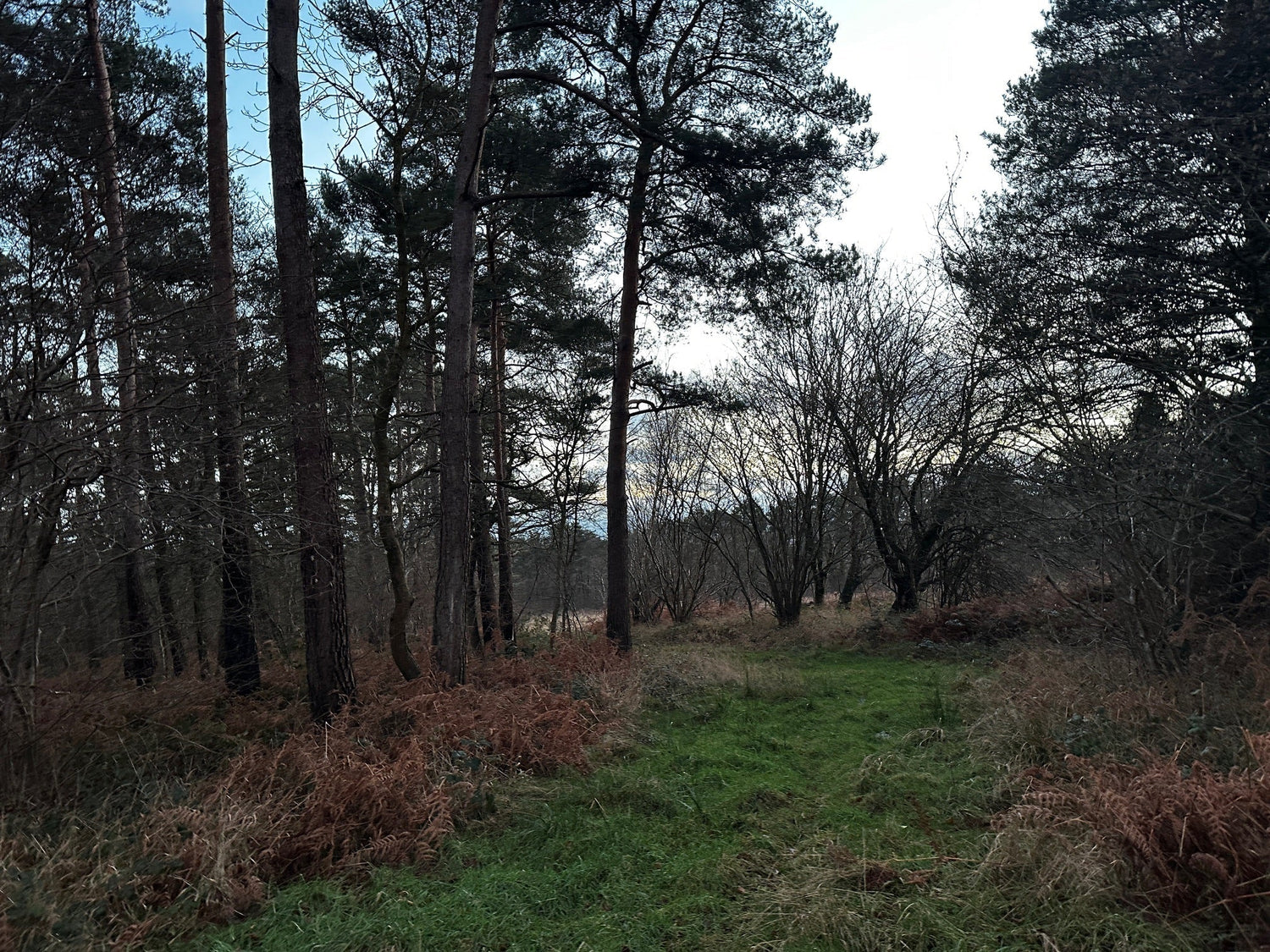
Forestry practice increasingly treats rides as zones: a central grass strip for access and open structure, with herb and shrub zones on either side managed on rotation. This is now common language in grant-driven ride creation as well, because it creates predictable, maintainable habitat while keeping the ride usable.
From a deer perspective, zonal rides are easier to work. The centre stays clear for quiet movement and recovery. The edges hold structure and feeding. The woodland becomes readable again, which is exactly what a deer manager needs.
Maintenance is where the plan either works or fails
A ride that is designed well and then left is not a ride. It is a temporary clearing.
The Forestry Commission’s approach to maintenance is rarely complicated. It is disciplined and cyclical.
The central strip is typically mown on a predictable annual cycle, often late summer, to keep it open, to reduce scrub dominance, and to avoid cutting during peak nesting periods. The edge zones are then cut on rotation, often every three to five years, so one side is always in a different structural state from the other.
This rotational approach matters. If you cut everything the same way at the same time, you create uniformity. Uniformity reduces biodiversity. It also reduces deer management options, because the whole ride edge behaves the same. Rotational cutting creates variety in cover and feeding, and it creates a woodland that is easier to interpret.
Glades require the same discipline. An annual cut keeps the open structure. Periodic scrub clearance stops glades reverting to thicket. The point is not to create a lawn. The point is to prevent the glade becoming woodland again through neglect.
What tends to go wrong on estates is not that people choose the wrong ride width. It is that they do not budget for maintenance. They do the creation work once, then treat the ride as “done”. Five years later it is choked, wet, and useless. Everyone then blames deer managers for not delivering outcomes, when the access and visibility that make delivery possible have been allowed to fail.

Backstop safety begins with how rides are oriented and kept readable
Every experienced deer manager thinks in backstops. It is the first filter, before species, sex, age, or any other consideration. On many sites, the ride network is the difference between safe, defensible control and a situation where opportunities appear but cannot be taken safely.
Foresters can support this without becoming deer managers themselves. The most productive conversations are simple:
Where are the safe lines. Where are the unsafe lines. Where are the public routes. Where are the boundaries. Where are the risks that a visitor will not see and will not respect. Where does the woodland edge drop away into open ground, or into a path, or into a road line.
Maintenance matters because overgrowth creates visual deception. You think you have a clear line. You do not. A deer steps out, and the background is no longer readable. That is where poor decisions begin, particularly when people feel pressure to “get something done”.
A well maintained ride does not guarantee safety. It does, however, make safe decision-making easier, and that is the goal.
High seat locations should be part of woodland planning, not an afterthought
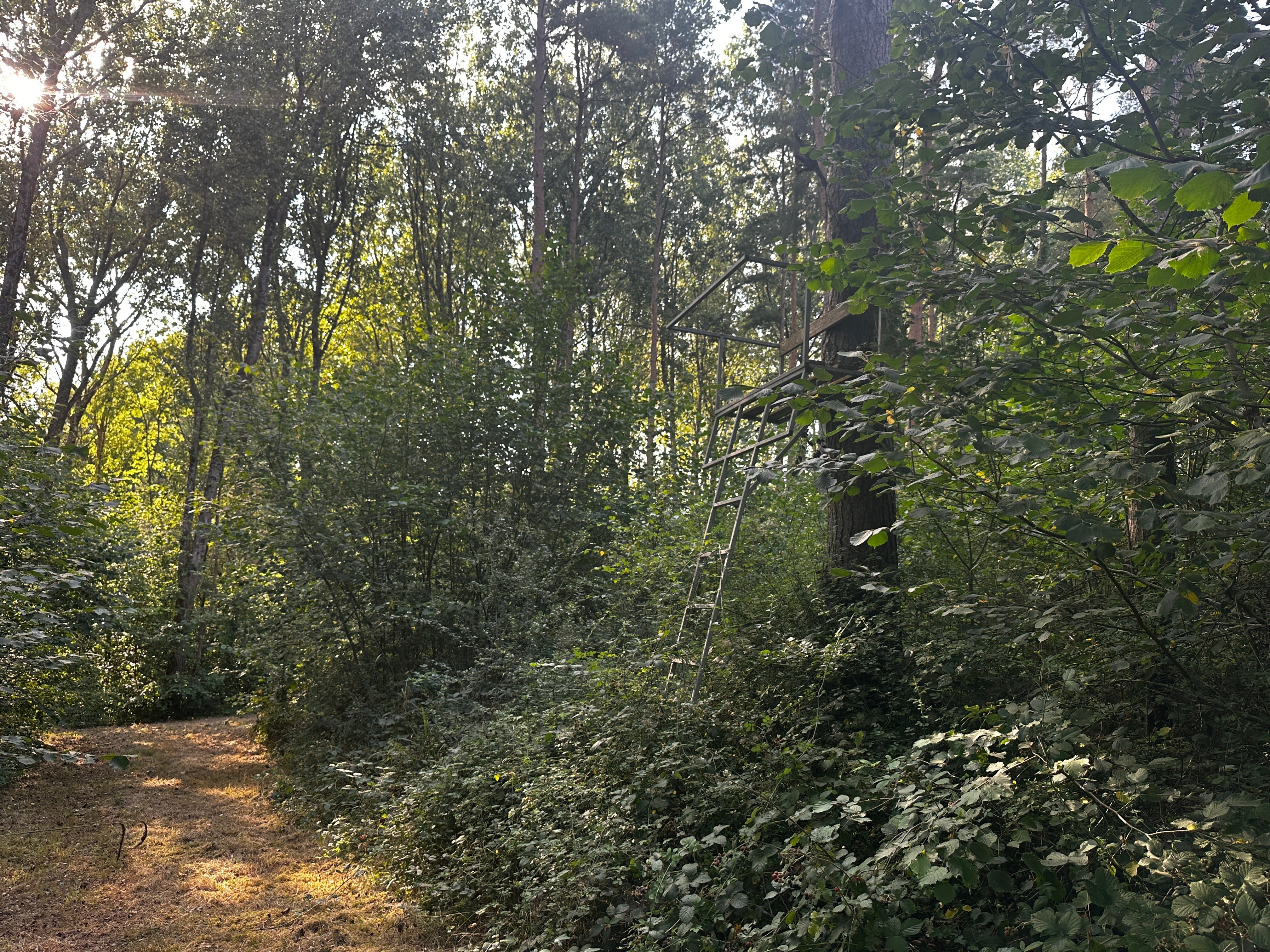
High seats are often treated as purely deer manager kit. In reality, they are part of woodland infrastructure when public access is high, when wind is complicated, or when backstops are limited.
A sensible high seat location is rarely chosen purely for convenience. It is chosen for wind, approach, safe arc, background, and recovery route. If rides are not maintained, the best seat locations are often inaccessible or become so disturbed to reach that deer shift their movement away from the very areas you need to control.
Foresters can make deer management dramatically safer and less intrusive by discussing seat locations early, and by treating access routes to those seats as part of the operational plan. That does not mean turning the wood into a motorway. It means ensuring there is a reliable, quiet approach that does not require pushing through dense cover and leaving scent and noise everywhere.
On sensitive sites, a well sited high seat can also be part of public reassurance. Elevated positions can reduce the risk profile compared with ground shooting in cluttered conditions, provided the background is right and the approach is controlled.
Extraction, hygiene and realism
There is a point in deer management where theory meets reality. It is the moment you have a carcass down, in wet woodland, after dark, and you have to get it out cleanly.
Ride maintenance is part of animal welfare because it supports efficient recovery. It is part of food hygiene because it reduces dragging through bracken and mud. It is part of professionalism because it makes recovery predictable rather than chaotic.
If estates want to improve venison outcomes, ride and track infrastructure is part of that story. You cannot talk about venison quality and then ignore the access routes that make clean recovery possible.

Funding exists, but it follows planning
Many estates assume ride and track work is simply a cost. In practice, woodland infrastructure is one of the areas where grant support can help, particularly when the work contributes to habitat improvement, operational access and long-term woodland resilience.
Ride creation and zonal ride management is often explicitly recognised within countryside stewardship style funding frameworks because it supports biodiversity outcomes. Woodland infrastructure and access improvements can also be supported where they enable better management and reduce damage from ad hoc access.
The detail changes by scheme and by year. The principle does not. If rides and access are planned early as part of a coherent woodland and deer management approach, it becomes far easier to justify funding support. If the infrastructure is not planned, it rarely gets funded, and it usually fails by neglect.
What good collaboration looks like in practice
The best outcomes come when foresters and deer managers stop treating rides as “someone else’s issue” and start treating them as shared infrastructure.
It starts with walking the woodland together in winter, not summer. Winter tells the truth. You can see the canopy influence, the choke points, the wet lines, the wind behaviour, the public pinch points and the places where safe lines do and do not exist.
It then becomes a purpose conversation. Which rides are primarily for public access. Which are operational. Which are zonal control corridors. Not every ride needs to serve every function, but every ride should have a clear purpose.
After that, it becomes mapping and method. Safe arcs, likely high seat locations, approach routes that respect wind, recovery routes that respect hygiene. Those things should be explicit rather than assumed.
Then it becomes maintenance discipline. Annual central strip work. Rotational edge management. Glade upkeep. Targeted scrub control. Not occasional reactive cutting when the wood becomes unworkable, but a predictable cycle that keeps the skeleton intact.
A final point for smaller woodlands
Smaller woods often suffer most because the margin for error is smaller. A few neglected rides can make half the holding effectively unmanaged, simply because it becomes unsafe or impractical to work.
That is why glades at junctions, scalloping in the right places, and purposeful zoning can be so effective. You do not always need a ride widened everywhere. You need light and function in the right places, maintained on a cycle, so the woodland remains readable, workable and safe.
Ride and glade maintenance is not glamorous. It is foundational. If we want woodland resilience, we need the working skeleton that allows good deer management to happen. When foresters consider the needs of deer managers early, the woodland usually wins.