Reloading is often introduced with a neat promise: factory ammunition is expensive, therefore loading your own must be cheaper. That logic is tidy. The real world is not.
Check out our reloading calculator here: Cost of reloading
If you are honest about the true costs, and honest about what you are trying to achieve, reloading stops looking like a simple cost-saving exercise and starts looking like something else entirely. A parallel discipline. A quiet form of insurance. And, for many of us, a hobby that sits alongside the work rather than underneath it.
For us, reloading began with the usual motivation. Then it matured. It became less about pennies per round and more about control. Control over consistency, over bullet choice, over supply, and over confidence in the field when conditions are already doing their best to erode it.
The irony is that the moment you begin reloading solely to “save money”, you risk missing the reasons it becomes valuable.

The real question: what are you comparing it to?
Most people compare reloading to the most expensive factory ammunition they can find, then conclude it must be economical. The fairer comparison is more uncomfortable.
You should compare reloading to the factory ammunition you would actually buy and trust in your rifle for the work you do. Not the premium box you occasionally treat yourself to, but the load you can source consistently, confirm repeatedly, and rely on without hesitation. That is where the calculation starts to tighten.
If you shoot infrequently and can live with whatever factory line is available, then reloading often does not make financial sense for a long time. If you shoot regularly, care about repeatability, and need to keep a rifle performing the same way across seasons, reloading begins to look less like a luxury and more like a system.

Currently priced on
https://www.thecountryman.com/norma-6-5x55-140gr-tipstrike-ammunition
The upfront cost is not the press, it is the full ecosystem
The initial purchase is never just a press and a set of dies. That is how people end up with a “cheap” setup that later becomes expensive through replacing and upgrading.
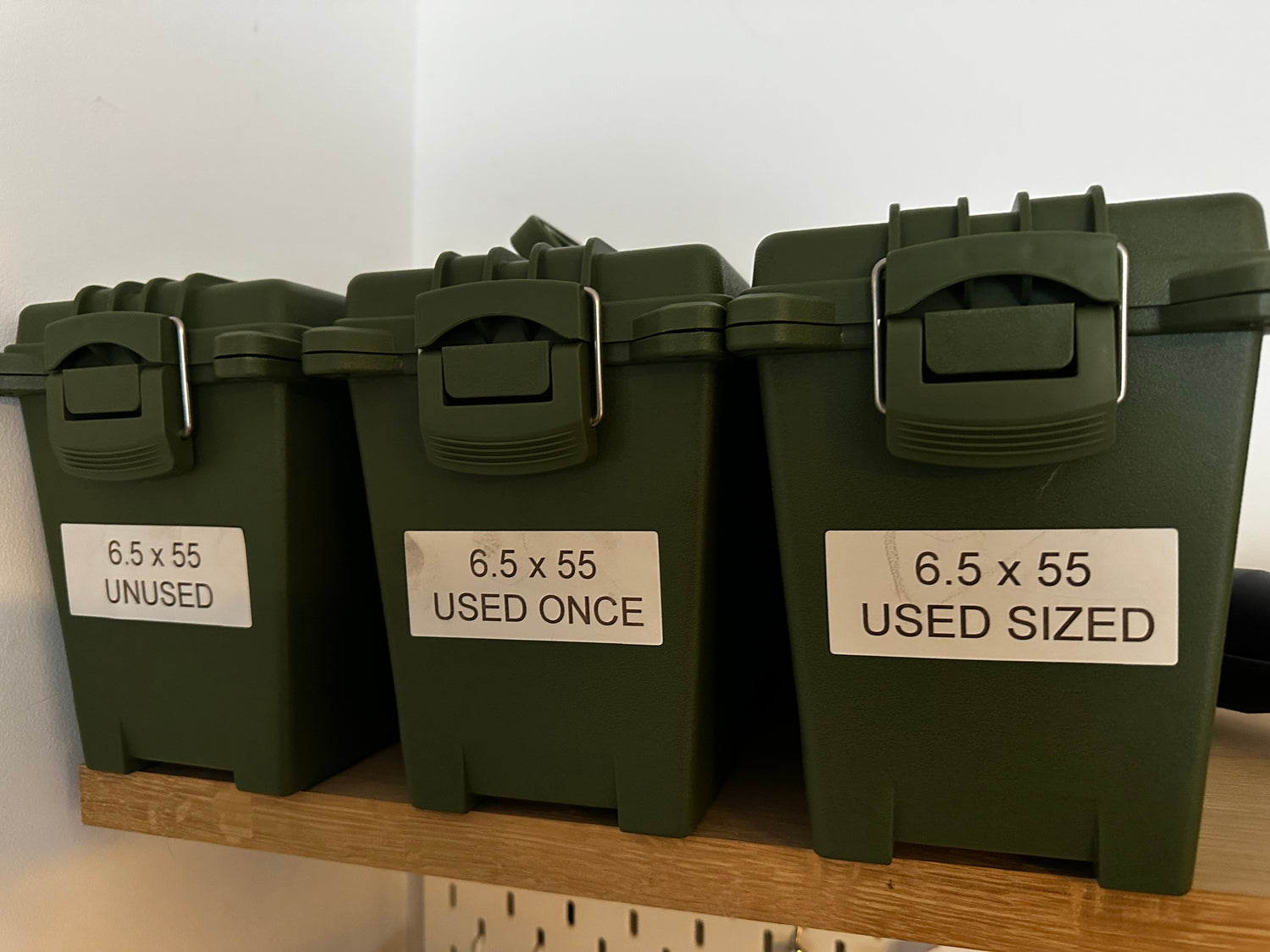
A workable loading bench has a whole ecosystem around it. Measuring kit, a scale you trust, a method of charging consistently, case prep tools, storage, manuals, consumables, and a way of keeping your process clean and repeatable. If you are aiming for consistent performance rather than “it goes bang”, you eventually end up investing in tools that remove error and reduce variability.
That is why the economics can be sobering at the start. Especially now, when components can be expensive, unpredictable, and occasionally scarce.
It is also why I do not encourage anyone to go into reloading with the expectation of quick savings. It is rarely quick. If it becomes cost effective, it usually does so slowly, through volume and longevity, not through an immediate win.

Component reality: powder is the lever that changes everything
If there is one factor that has reshaped reloading in recent years, it is component pricing and availability, particularly powder.
When powder prices rise, the old narrative of dramatic per-round savings starts to wobble. When powders disappear from the market or become inconsistent to source, you face a different problem altogether: continuity.
Reloading depends on repeatability. If you cannot obtain the components you built your known load around, you are pushed back into development. That is time, test rounds, range sessions, and an acceptance that your confidence is earned again rather than assumed.
Primers fluctuate too, and bullets vary in price and availability, but powder is often the hinge. It is the component most likely to force change. When it does, the reloader either adapts or stops.
For us, adapting is part of the process, and arguably part of what we enjoy. But it is still a real cost that should be acknowledged, especially for someone starting out who expects a straightforward path.
Brass, time, and the hidden costs people forget to count
Brass is often treated as free, because you already have it. That is a convenient illusion.

Brass is an asset you manage. It has a life cycle. It needs inspection. It needs preparation. It needs sorting. It sometimes needs replacing. It also ties you into time. And time is a real cost even if you never put a pound sign next to it.
Reloading is not only about money. It is about where you want to spend your effort. Some people would rather spend that effort in the woods. Others enjoy the bench work as its own discipline. Neither is wrong, but you should be clear which person you are before you commit.
Because if you treat reloading as a chore, it will become one quickly. And anything that becomes a chore is rarely sustained with the care it demands.
Why we still reload: control, not novelty
Our position is shaped by time. We have been invested for over a decade. Much of our equipment has already seen thousands of rounds. It has been used hard, maintained, and trusted. The economics change when your initial outlay is already behind you and your kit has proven itself across seasons.
We have upgraded selectively, not constantly. The recent addition of a Frankford Arsenal Intelligent Dropper is a good example of the sort of upgrade that makes sense. Not because it makes reloading glamorous, but because it reduces effort and helps consistency where it matters, particularly when you are charging carefully and do not want your process dominated by slow, fiddly steps.
That is the wider point. Reloading becomes more attractive over time because the kit is not a one-season purchase. A good setup, looked after, becomes a decade-long platform. The return is not only financial. It is the ability to keep a rifle behaving exactly as you expect it to, with loads you understand because you built them.
Bullet choice: the practical advantage that matters in the field
Factory ammunition is convenient. It is also a compromise. You are buying someone else’s decisions about performance.
In deer work, particularly across mixed ground and changing species, “general purpose” does not always fit. The bullet you prefer is not necessarily about chasing velocity. Often it is about predictable behaviour, reliable accuracy, and confidence in your typical distances and typical shot presentations.
Reloading gives you the flexibility to choose bullet designs that suit your needs and to tune a load to your rifle, rather than spending months trying different factory options hoping one lands perfectly.
That flexibility matters in a working context because your confidence is not abstract. It is built on repeated confirmation. A rifle that groups consistently, prints where you expect, and behaves the same way across conditions is a tool you can rely on. When you work in tight woodland, when windows are brief, and when shot opportunities are limited by backstops and access, you do not want uncertainty introduced by ammunition variability.
Reloading as quiet insurance
There is another benefit that is rarely stated plainly. Reloading can be a form of insurance against supply disruption.
If factory ammunition becomes difficult to source, if your preferred load disappears, or if availability becomes unpredictable, the reloader has options. Not unlimited options, but enough to keep working without being pushed into second-best choices.
That matters more now than it did years ago, particularly as costs rise and availability can shift without warning. It is not a reason to start reloading in isolation, but it is part of why many experienced people stay in it.
The current headache: the end of “known” powders and the return to development
The main concern moving forward for many reloaders is simple. The powders you built your proven loads around are not always available anymore. Some have disappeared. Some are inconsistent to source. Some have become expensive enough that the old calculations no longer feel comfortable.
That means going back to fundamentals. New load data. New testing. New confirmation. New notes. New patience.
It is time-consuming, and it burns components. It also forces you to treat the process with respect because this is not an area where casual shortcuts belong.
But it is also part of the craft. Load development is not just a technical exercise. It is attention and observation. It is learning your rifle again under slightly different conditions. It is building a load you can trust not because you read about it, but because you confirmed it.
And in deer work, trust is everything.
The honest conclusion, without romance
If you are starting out today and you want quick savings, reloading is unlikely to satisfy you, particularly when you price in equipment, components, and the time required to do it properly.
If you want control, consistency, flexibility of bullet choice, and a disciplined process that gives you confidence in your rifle across seasons, reloading remains deeply worthwhile.
For us, it sits somewhere between craft and insurance policy. It is part of the work behind the work. It has served us for years, and it will continue to do so, even as the component market forces a return to load development and fresh testing.
That is not a problem. It is simply the price of maintaining control in a landscape where supply and costs no longer behave as they once did.