Deer are easy to treat as background. They are part of the scenery, part of the story an estate tells about itself, part of what visiting friends expect to see in the park or across a ride at last light. Because they are familiar, and often attractive, it is tempting to think of them as benign until there is an obvious crisis.
The trouble is that deer rarely cause crisis in a dramatic way. They do not arrive overnight in a way that forces an obvious decision. They work slowly, season after season, from the ground up. Estates that ignore them or play at managing them discover, usually too late, that the real cost has been accumulating in the soil and the understory for years. On the surface, nothing appears dramatically wrong. Underneath, the system is quietly failing.
To understand why the PA7 Species Management Plan exists at all, and why the CWS1 “Deer control and management” action has been introduced, you have to start here: with the long term costs of not taking deer seriously. PA7 is not just another form. It is the point where an estate is asked, in writing, to stop pretending that deer are a decorative extra and to state plainly what they are doing about them.
What follows is a practical guide to completing the PA7 for deer (and, where relevant, grey squirrel), how it links to CWS1, and how to use the form as a genuine management tool rather than a bureaucratic hurdle.

1. Where PA7 Sits in the Bigger Picture
The PA7 Species Management Plan is a capital item under Countryside Stewardship, paying a fixed rate per species type to a maximum cap. For deer and grey squirrel, it is there to fund the thinking: to pay you to set out, in a structured way, how these species are impacting your land and how you intend to manage them.
For deer, the plan is approved by the Forestry Commission and is often read alongside your woodland management plan and any Higher Tier application, particularly where you are also seeking support under CWS1 for ongoing deer control.
CWS1 itself is a 10 year action aimed at reducing harm to priority habitats and species by managing deer pressure. It pays per hectare per year, but it expects you to be doing something intelligent, consistent and defensible on the ground.
PA7, in that light, is not a side exercise. It is your evidence base. It tells your Woodland Officer or Deer Officer:
- That you understand how deer are affecting specific woods and habitats.
- That you have a realistic, resourced plan to reduce that impact.
- That you are prepared to monitor and adapt over the lifetime of the agreement.
Write it as if you will have to defend every line, not in front of a committee, but on the ground, with someone walking beside you asking “show me where this is true”.
2. Before You Touch the Form: Three Pieces of Preparation
Most poor PA7s have the same features: they are written in a rush, by one person at a desk, without reference to the people who actually see deer on the ground. If you want to avoid months of clarifications and delays, a little work before you open the template pays for itself.
a) Walk the ground with the right people
You need at least one walk in each key block with the people who actually see deer at unsociable hours: stalkers, keepers, forestry staff. The aim is not a grand survey, but an honest conversation in situ:
- Where is browsing obviously suppressing regeneration.
- Where is bark stripping, fraying or ring barking evident.
- Which compartments feel “empty” in the understory, and which are coping.
- How has this changed over the last five to ten years.
These observations will feed directly into the “impact” sections of the PA7.
b) Gather hard information
You should have to hand:
- Cull records (by species, sex, age class and, ideally, by beat or compartment).
- Any previous deer impact assessments or woodland plan notes (UKFS woodland management plan).
- Maps showing woodland types, priority habitats, designations and access.
- Any records of grey squirrel damage in key commercial or native broadleaves.
The PA7 guidance explicitly expects you to identify species impacts, areas and habitats under control, and methods/resources. Those three headings are only convincing if there is something behind them.
c) Decide what you are really trying to achieve
This is the part people skip. You should be able to answer in one or two sentences:
- “In ten years’ time, what do we want these woods to look like, in terms of structure and regeneration”
- “What does ‘acceptable’ deer impact look like here”
Your PA7 will feel much more coherent if everything in it is a means to that end, rather than a collection of unrelated measures.
3. Step One: Holding and Agreement Details
The first section of the template is administrative: SBI, agreement number, contact details, plan date, species covered. It is easy to treat this as box ticking, but it silently sets expectations.
If you are including both deer and grey squirrel, say so clearly. The payment rate is per species type and the Forestry Commission will read the plan on that basis.
Make sure the named contact is someone who understands both the land and the deer, not a generic office email. If your Woodland Officer needs to query something, you want that conversation to happen with someone who can answer in real terms, not in abstractions.

4. Describing Your Land: Context Without Fluff
Most templates ask early on for a description of the landholding and the habitats affected. This is where many plans drift into estate brochure language. Resist that temptation.
You do not need to impress anyone. You need to orient them. In fairly plain terms:
- Set out the total area, the woodland area, and the key priority habitats (ancient woodland, PAWS, SSSI, priority grassland, wetland).
- Note any relevant designations or constraints (SSSI, SAC, SPA, scheduled monuments, public access, utilities).
- Describe the main woodland types: conifer, mixed, native broadleaf, age structure, and whether they are under active management.
The important point is to make it easy for a reader to see, in their mind’s eye, where deer pressure matters most. “Mixed ancient semi-natural woodland on steep ghyll sides with heavy public access along the valley bottom” sets a very different context from “large continuous commercial spruce with limited access”.
If you are also applying for CWS1, this section should mirror the habitat descriptions used there, so that the two documents read as parts of the same story rather than separate inventions.

5. Identifying the Species and Their Impacts
The core of PA7, for deer, is three linked questions:
- Which deer species are present.
- How they use the land.
- What impact they are having on habitats and objectives.
Do not be vague. “Various deer species present in moderate numbers” is worse than useless. Your Woodland Officer knows that you can do better.
a) Species and distribution
State clearly which species you have: roe, fallow, red, muntjac, sika or Chinese water deer. Note:
- Where each species tends to concentrate.
- Seasonal shifts (wintering in valleys, summer on higher ground, crop use, rut areas).
- Any obvious movement routes to and from neighbours.
If muntjac or sika are present, even in apparently low numbers, say so. They are specifically mentioned as invasive non native species in the CWS1 guidance and require a different management emphasis.
b) Impact on woodland structure and regeneration
Here you are, in effect, giving a short, focused deer impact assessment:
- Are you seeing natural regeneration reaching above browsing height outside fenced areas.
- In coppice, does regrowth reach the stage required, or is it repeatedly taken back.
- Is there obvious browsing on preferred species (oak, hazel, ash in some regions, rowan, yew) compared with less palatable ones.
- Are there clear browse lines or stripped shrub layers in certain blocks.
Use specific examples. “Compartment 7a (10 ha ASNW) shows almost no natural regeneration above 30 cm outside exclosure plots; hazel, oak and ash all browsed repeatedly” is far stronger than “some browsing is evident in older woods”.
If grey squirrel are included, describe bark stripping, crown dieback and the proportion of stems affected in key age classes.
c) Impact on other objectives
Bring in the wider consequences:
- For commercial woods: what does deer browsing mean for yield class, quality, and thinning options.
- For conservation: which priority species or ground flora communities are at risk if browsing continues (bluebells, orchids, woodland birds that need understory).
- For access: where deer activity is increasing risk on roads, tracks or in public areas.
This is where you quietly make the case for CWS1: you are showing that deer are already limiting habitat condition and that structured control is not optional if Higher Tier habitat outcomes are to be met.

6. Mapping: Making the Plan Legible on the Ground
The PA7 guidance is explicit: you must provide a map showing where you will manage the species.
Do not treat this as an afterthought. A good PA7 map:
- Shows woodland blocks, key habitats and any designations.
- Highlights areas of high impact (for example, compartments with failed regeneration or heavy bark stripping).
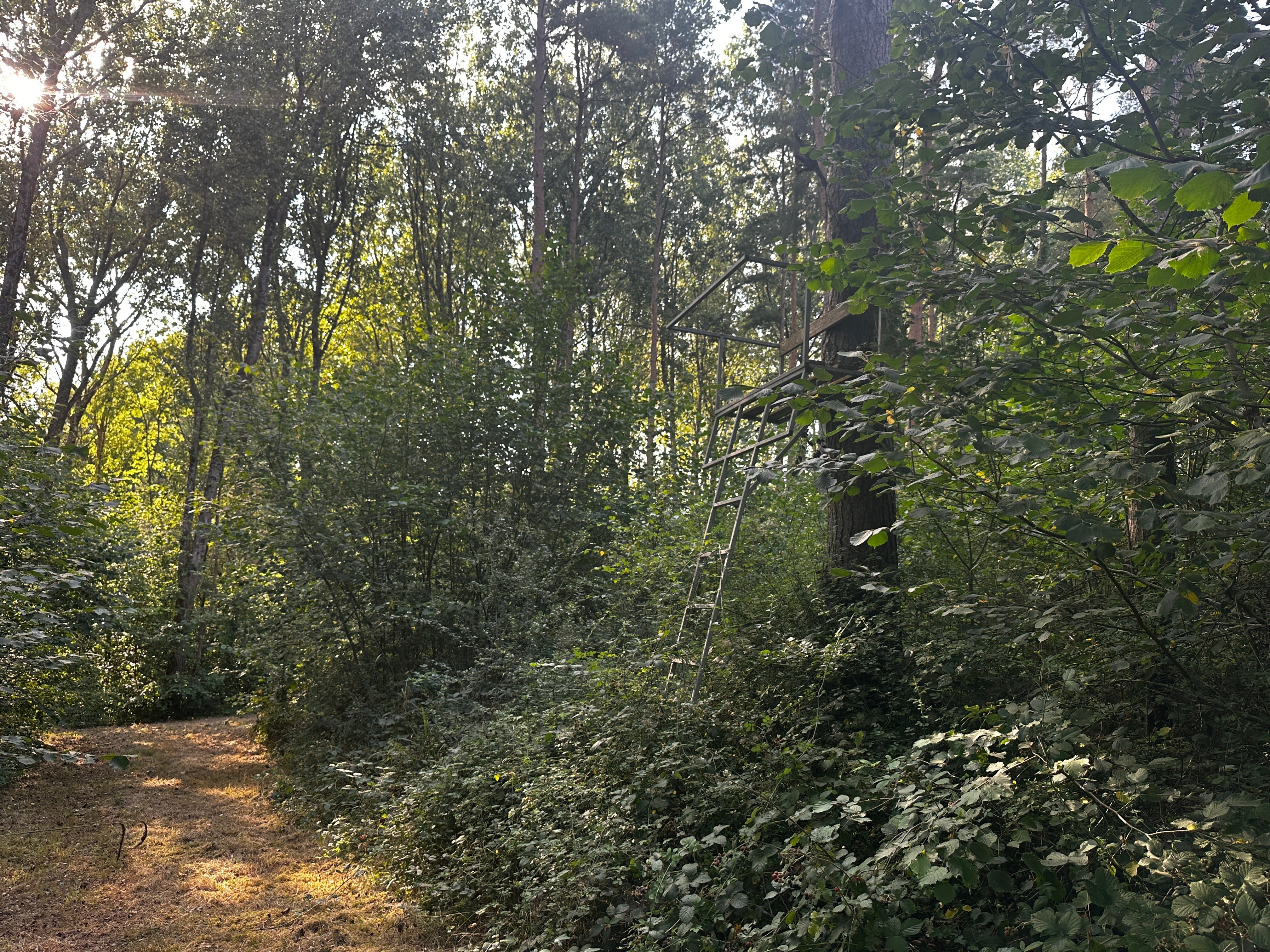
- Marks main access routes, high seats, rides and vantage points.
- Indicates boundaries with neighbours where deer movement is significant.
You are, in effect, providing the Forestry Commission with the same visual understanding that a competent stalker would build in their head over several seasons. If the map and the written description match, your plan immediately feels grounded.
Where CWS1 parcels are involved, make sure the mapping ties the two together: the hectares claimed under CWS1 should be identifiable as areas where PA7 acknowledges deer impact and proposes control.
7. Current Control and Management: Telling the Truth About Where You Are
Most templates carry a section for “existing control” or similar. This is where honesty matters more than pride.
Describe plainly:
- Who currently carries out deer control (in house staff, syndicate, contractor, combination).
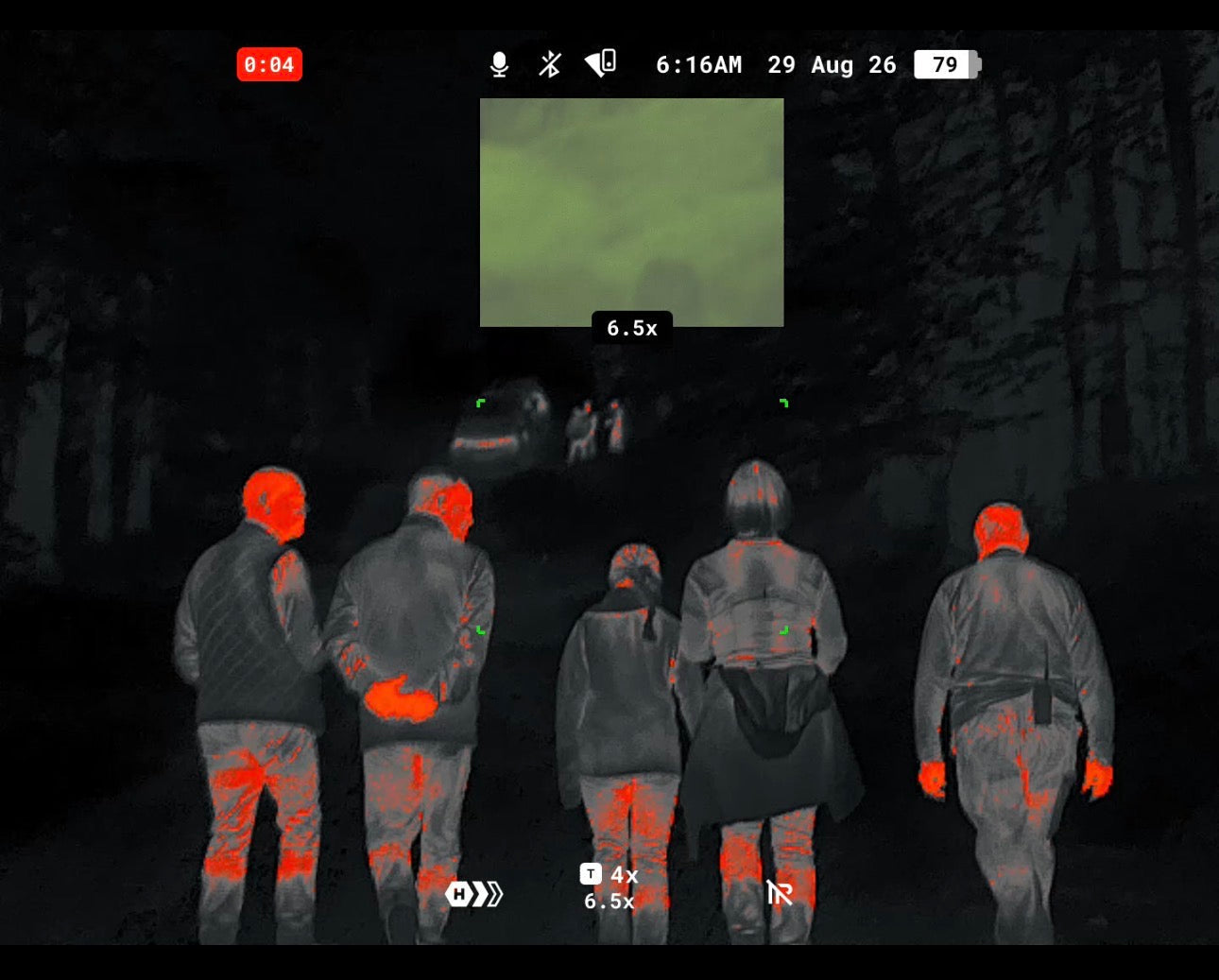
- How effort is structured (number of outings, seasons used, any night licences, use of thermal).
- Average annual cull by species over the last three to five years, broken down if possible by sex and age class.
- Existing measures for grey squirrel (trapping, shooting, timing relative to critical phases in timber growth).
If cull figures have been low or irregular, say so. If control has been largely recreational, with no formal targets, say that as well. A PA7 that admits “we have been under controlling deer relative to impact” is more believable than one that pretends everything has always been fine.
Remember that the point is not to impress but to create a baseline from which improvement can be measured. CWS1, in particular, is designed for situations where deer are causing demonstrable harm. Admitting that historic management has not matched that harm is the first step towards responsible change.
8. Setting Objectives: What “Good” Looks Like
Before you describe future control, the PA7 will expect you to state what you are aiming for. This is not just a slogan. It should be tied to UKFS expectations and to the aims of CWS1 where relevant.
Examples of genuine objectives:
- “Restore natural regeneration of oak, birch and hazel in ASNW compartments 3–9 so that at least 30% of ground is occupied by saplings over 1.5 m by year 10.”
- “Reduce grey squirrel damage in 20–40 year old beech and sycamore crops to below the threshold where future quality is compromised, as measured by systematic damage surveys.”
- “Bring browsing levels in new native woodland creation blocks so that establishment succeeds without repeated replanting.”
These are not perfect, but they are testable. They allow your Woodland Officer to ask, in year five: “are we on track”. They also force you to think beyond “shoot more deer” towards a view of what the habitat will become once pressure is brought under control.
9. Proposed Methods and Resources: The Heart of the Plan
The PA7 guidance boils this part down to three headings: impact, areas and habitats under control, and methods/resources.
This is where you show that you understand both the ecology and the practicalities.
a) Culls and effort
Set out, in indicative terms:
- Annual cull targets by species, and where it makes sense, by sex and age class.
- How effort will be distributed across seasons (for example, emphasis on hinds/does in winter in key impact blocks, bucks in summer where appropriate).
- Whether night work will be used under licence on vulnerable crops or wood edges, and how public access will be handled safely.
Avoid fantasy numbers. A plan that doubles or triples the cull on paper without any explanation of resourcing invites scepticism. If you are increasing control, explain how: more outings, additional contractors, better access, improved high seat coverage, training (for example, SM1 training capital item for deer control).
b) Non lethal and structural measures
Bring in relevant capital items:
- Deer fencing and exclosure plots where appropriate.
- High seats to improve safety and efficiency.
- Gates and access improvements to support effective patrols.
Explain how these are targeted at specific pressure points rather than thrown around at random. A fence around a particularly sensitive SSSI block, for example, or exclosure plots used to demonstrate change in impact over time.
c) Grey squirrel control
If you are including grey squirrel, set out:
- Where traps will be focused (for example, good nature traps and live traps in specific age classes of broadleaf).
- How often they will be checked.
- How effort will be coordinated with neighbouring owners where possible.
Again, keep it realistic. A plan that promises intensive trapping across hundreds of hectares with no additional staff or budget will not be taken at face value.
10. Monitoring and Review: Proving That It Is Working
The PA7 advice encourages you to carry out habitat impact assessments during the life of the agreement (for example in years 1, 5 and 10).
In this section, you should explain:
- How you will record culls (by species, sex, location) in a form that can be shared with the Forestry Commission if requested.
- How you will monitor habitat response: repeat photographs, fixed plots, exclosure comparisons, simple browse level scoring.
- How often you will review the plan with your deer team and adjust effort or tactics.
This is, in miniature, a commitment to tell the truth about outcomes, not just intentions. If browsing remains high despite a cull, you will either increase effort or reconsider your analysis. If impact falls and regeneration recovers, you may be able to ease off without slipping back into neglect.
For CWS1 applicants, this monitoring is what links payment to genuine habitat recovery rather than to activity for its own sake.
11. Common Pitfalls (And How to Avoid Them)
Over the last year, as the updated PA7 templates have bedded in, the same errors keep appearing.
- Cut and paste plans that reuse wording from other estates and forget to change species, compartments or context. Woodland Officers recognise these instantly.
- Vague language: “some browsing”, “moderate numbers”, “ongoing control” without any scale or evidence.
- Unrealistic promises about cull levels or trapping effort with no mention of who will actually do the work.
- No reference to neighbours, as if deer populations stopped at the estate boundary.
- Misalignment with woodland plans: PA7 describing severe impact where the UKFS woodland plan blithely claims everything is fine, or vice versa.
All of these stem from the same root: unwillingness to look closely at what is actually happening. The easiest way to avoid them is to build the PA7 out of real conversations, real walks and real data, even if it means admitting past failures.
12. The Questions You Must Ask Your Deer Team
As you draft, there are certain questions that should be put, bluntly, to the people who carry the rifle or the trap:
- “Where are deer doing the most damage, and how do you know.”
- “If you had to reduce browsing in one block within five years, which would you choose, and what would it take.”
- “Are our current cull figures genuinely controlling numbers, or are we simply taking off the annual surplus.”
- “What would you need, in terms of access, time, seats or equipment, to meet the targets we are describing.”
These questions are not comfortable, because they force everyone, including owners and agents, to abandon illusions. But they are exactly the questions that sit behind a genuinely useful PA7. Without them, the plan is just a story.
13. Why Detail Matters – And When to Ask for Help
The Forestry Commission and Natural England are very clear about what a PA7 must include: impacts, areas and habitats for control, methods and resources, and a map, all aligned to the current template. They also encourage you to seek specialist advice if needed, and to use PA7 alongside a woodland management plan and habitat impact assessments in years 1, 5 and 10.
Detail matters because it is the only way anyone can judge whether your intentions are credible. A thin, generic PA7 says, in effect, “we would like the money, but we are not prepared to think properly about the work”. A detailed, specific PA7 says “we accept the reality of what deer and grey squirrels are doing here, and this is how we intend to respond”.
If you are stuck – because the estate is complex, because relationships with neighbours are tangled, or because your deer team is too busy doing the work to write about it – you do not have to struggle alone.
Wildscape Deer Management offers a fixed fee PA7 service based on field information supplied by your own team. The plan is built with your stalkers, keepers or agents, and aligned to the latest Forestry Commission template, ready for submission to your Woodland Officer or Deer Officer. Wildscape Deer Management
The principle is simple: those who know the ground provide the raw truth; those who understand the grant and regulatory framework shape that truth into a plan that stands up under scrutiny.
Whether you choose to write PA7 yourself or to bring in support, the underlying choice is the same. You either treat deer as a serious, long term factor in the life of your estate, or you pretend they are a charming inconvenience until the bill falls due. PA7, CWS1 and the current Stewardship framework simply bring that choice to the surface and ask you to put it in writing.