When Paul at Scott Country rang and asked whether I wanted to be one of the first people in the UK to run the new Hikmicro Habrok 4K 2.0 HE25L on live work, it was an easy yes. We have used the original Habrok 4K HE25L hard for some time now on our night licences. It has seen everything from Sussex fallow in sideways rain to airport foxes under sodium lights. That made it a good benchmark.
This review is not written from behind a desk. Both versions have been bounced in trucks, soaked on rides and used on jobs where mistakes are expensive. The question throughout was not whether the spec sheet looked impressive and whether the 2.0 actually changed the way we worked on the ground.
First Evening: Setting Up And Getting Out Of The Way
Straight out of the box the 4K 2.0 feels familiar if you know the first model, but the body is clearly new. The eyecups, barrels and general footprint are similar, yet the controls are better thought through.
The first “test” was deliberately dull. Set it up in real time, on a wet afternoon, with other things going on. No manuals, no careful study. Just plug the batteries in, throw it in the vehicle and use the first contract of the night to dial in.
Within about fifteen minutes it was set the way I like to run a binocular: dioptres matched, focus roughly fixed for 70–200 metres, units in yards (although we usually use metres we didn't change this in the field), preferred colour palettes locked in. The menus behave like every other bit of Hikmicro kit. If you have used an Alpex or an older Habrok you can almost predict where the options will be. That matters when you are tired. You do not want to be solving a puzzle in the field.
The real improvement shows itself in the controls. On the 4K 2.0 the power, thermal/digital toggle, rangefinder and recording all fall under the fingers naturally, something that clearly has been changed as a result of customer feedback.
The real improvement shows itself in the controls. On the 4K 2.0 the power, thermal/digital toggle, rangefinder and recording all fall under the fingers naturally, something that clearly has been changed as a result of customer feedback. By the end of that first sit I was no longer thinking about which button I was pressing. It was automatic. That is the standard all kit should be judged against: does it disappear into the background of your thinking.

Thermal To Digital: What The Switch Really Gives You
The defining feature of the Habrok line has always been the ability to move between a thermal view and a high-resolution digital view without changing tool. In theory that gives you the best of both worlds: thermal for finding life, digital for understanding it.
In practice, on the ground, the 4K 2.0 makes that idea finally feel effortless, especially with the new central switch.
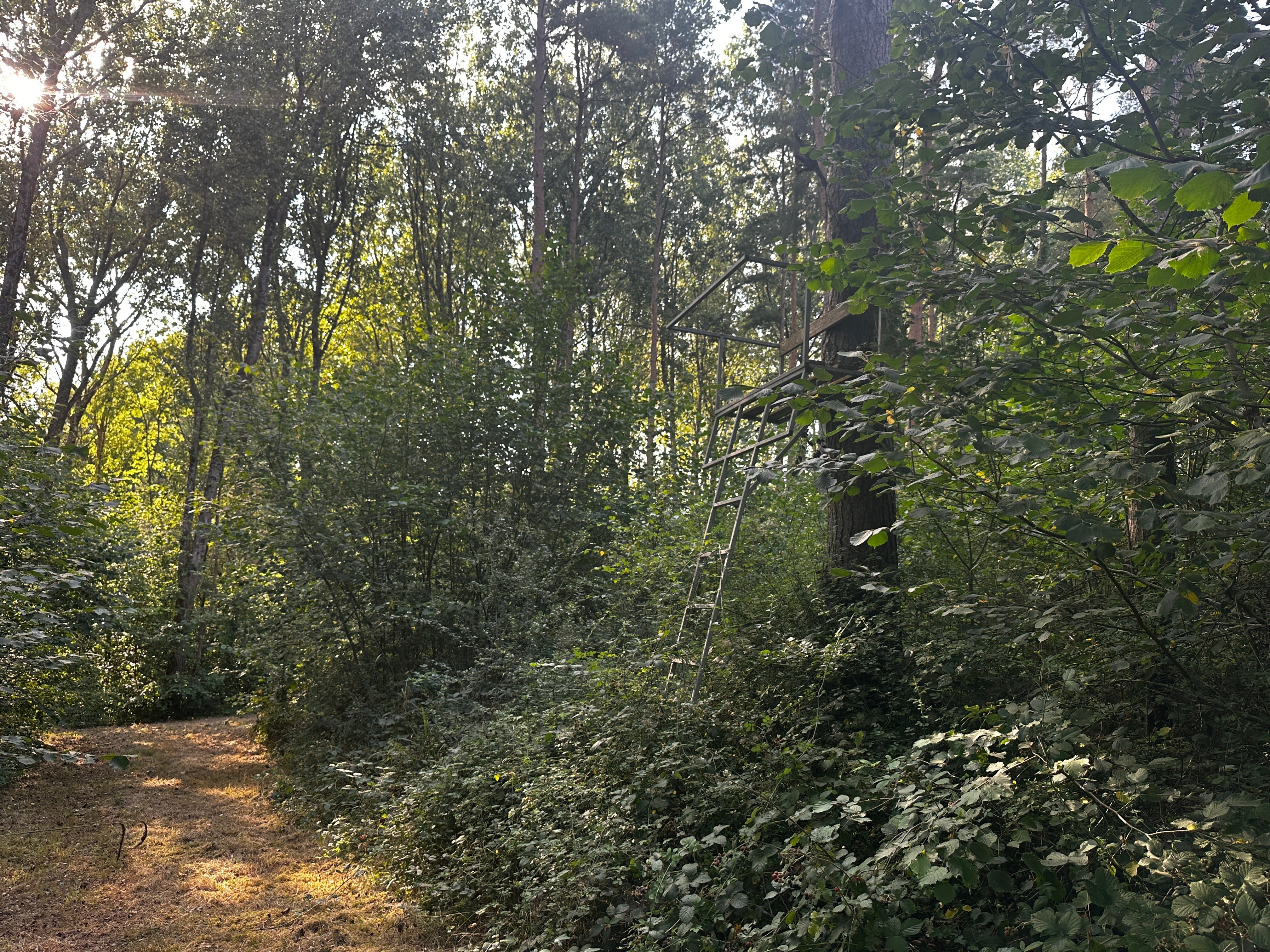
The pattern goes something like this. You stand up in the high seat and scan on thermal. The image shows the landscape in simplified form: warm shapes on a cool background. On the first evening with the 2.0 I picked up a cluster of fallow feeding. On the screen they were simply white forms against the grey.
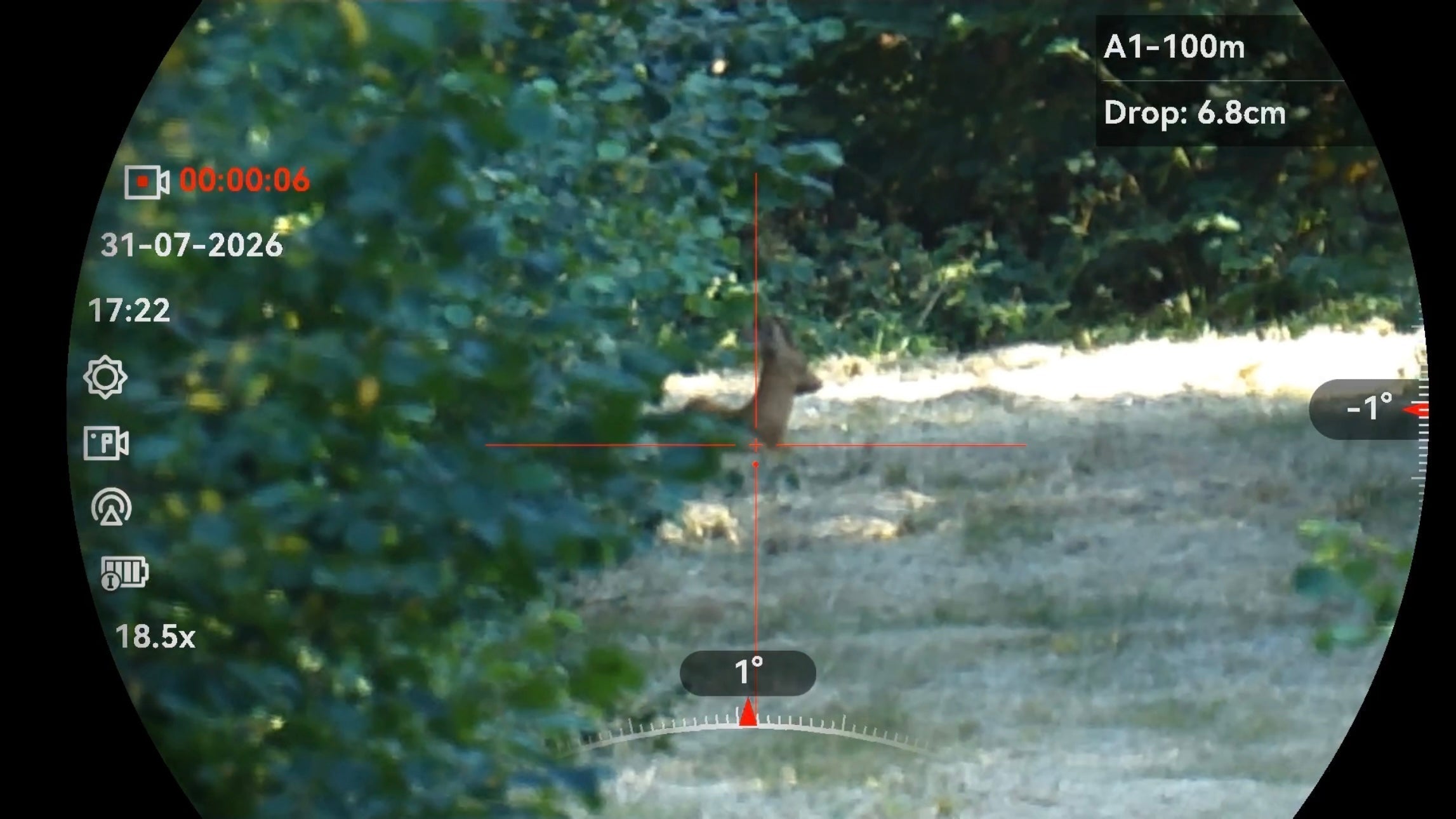
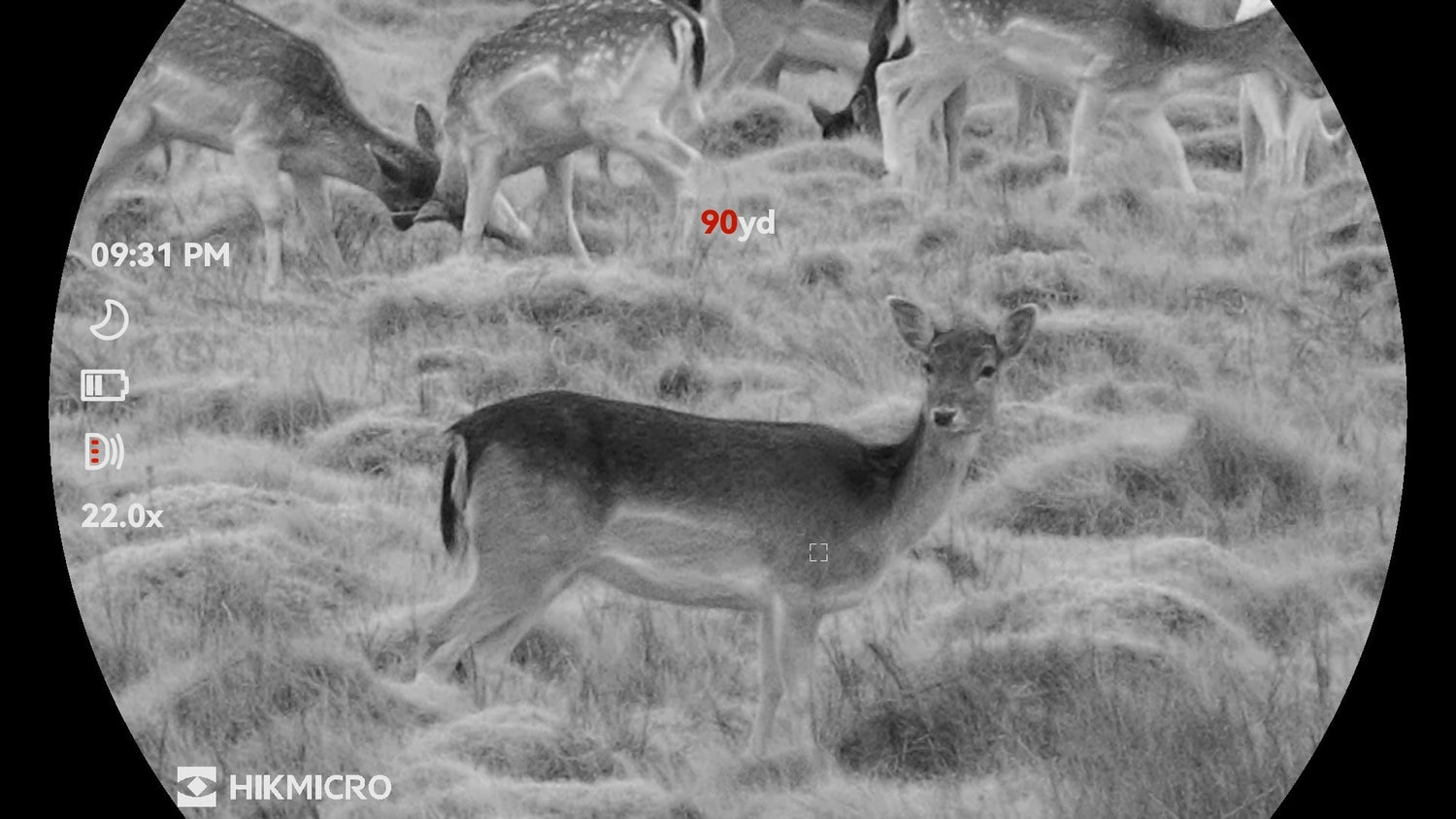
A switch of the mode button and I was in the digital channel. Now you see the animal you are actually dealing with. In this case, several does, a follower and a pricket at around ninety yards, exactly as in the still image. The digital picture is clean, sharp and stable enough that you can assess condition, body language and the backdrop without squinting or convincing yourself that something is there when it is not.
That movement from “there is life” to “this is what it is, and here is what is behind it” is where the binocular earns its place. The 4K 2.0 simply lets you do it faster and with less cognitive effort than the original.

Long Nights, Real Weather
Kit only proves itself when the weather turns, so the 4K 2.0 went straight into the sort of conditions that normally show up weak links: cold rain and wind on exposed rides, followed by long periods of sitting still as the temperature drops further.
One of the earlier worries with putting this much electronics into binoculars was waterproofing. You can quote IP ratings all day; the question a working stalker has is whether it can live in rain without becoming temperamental.
The 2.0 has been out in solid rain more than once now. It has been used standing in open field while weather comes straight across, then stuffed back into a wet chest harness and driven around in a cold truck before being used again. There has been no fogging under the lenses (which can't be said for my glasses), no glitching, no odd behaviour from buttons. On this front, at least, Hikmicro appear to have got the basics right.
Battery life was the other quiet test. The specification suggests you should get a decent night out of a pair of cells, but winter has a habit of cutting optimistic figures in half. To check it properly we charged the batteries fully, left the binocular outside to cool, and then used it as we would on a normal winter contract: scanning, switching between modes, using the rangefinder and occasionally recording.
The result was reassuring. The claimed run time was not far off the mark. We were not nursing the battery or turning the unit off compulsively. Sensible use and a spare pair of cells in the pocket would be enough for anyone on the highlands for extended periods of time without the creeping anxiety that the screen would go dead just as you needed it.

Long-Range Detection
Some of the best testing ground for any thermal device is an airfield. The combination of flat perspectives, patches of rough cover and hard boundaries makes it easy for your eyes to lie about distance.
On an outing the 4K 2.0 went straight into that environment without any issues. Standing on the edge of the grass, scanning out across runway lights and signs, the binocular picked up foxes moving at ranges where the naked eye was seeing nothing more than the texture of the ground. The thermal image presented them as bright specks, rising and falling as they moved through low cover.
In another test, at around 500 to 600 yards the rangefinder gives quick, repeatable readings, (as shown in the image above on a deer park) a distant group of deer registering at just under 580 yards. The image is not pretty in any artistic sense, but it gives the information you need: there are animals there, for the professional stalker if they are not on your side of the boundary, and they are not your immediate concern.
The value of that long-range detection is not that you are going to shoot at those distances. You are not. It is that you can build a mental picture of what is happening across the entire area without swinging a rifle about. You can see where foxes are moving, which blocks deer are favouring and where people are. That makes the subsequent decisions about how and where to shoot calmer and more grounded.
Public Access And Seeing People First
A lot of modern deer work in the South East takes place on land that is heavily used by the public. Country parks, estate fringes and permissive paths are now part of the routine operating environment.

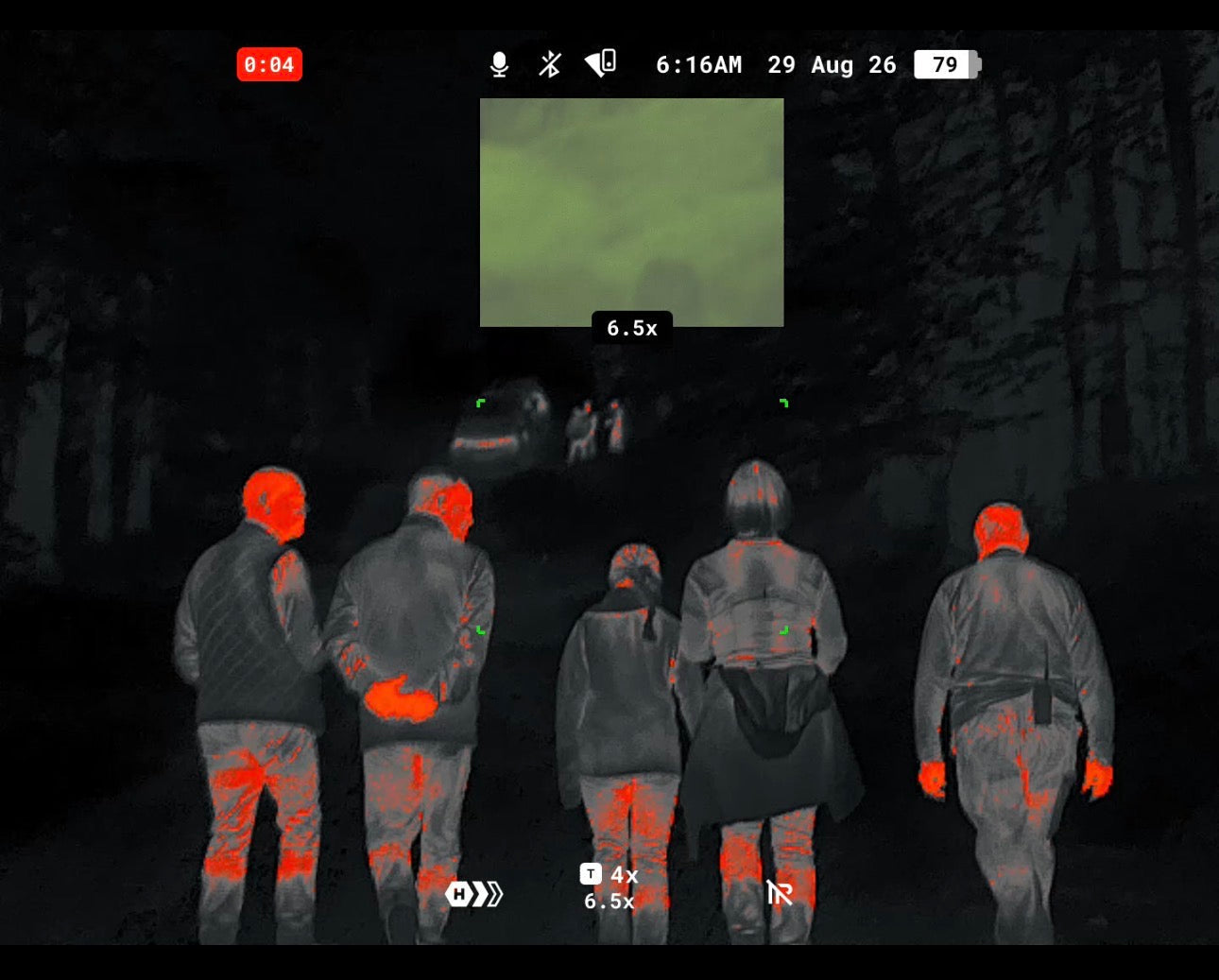
This is where the combination of thermal sensitivity and digital clarity matters. The 2.0’s cleaner thermal image in rough conditions makes those small human signatures easier to catch at distance. The digital channel then confirms that they are, in fact, people, not tree stumps or odd rocks.
From a risk and reputation point of view, that ability to “see people first” is probably more important than any improvement in how nicely a deer’s coat is rendered at 80 yards.
App, Recording And Real Evidence
Syncing the Habrok 4K 2.0 with the Hikmicro app was uncomplicated. Once set up, the connection stayed stable, and pulling off clips and stills was quick enough that it can become part of a normal workflow rather than a chore you put off.

The usefulness of those recordings only really hits home when you sit down with a landowner or agent after the fact. Showing them a clip of a herd at 90 yards, or a screenshot of a group of deer feeding in a regeneration block, or a frame of three people moving through a field at night, changes the conversation. You are no longer asking them to imagine what impact looks like. You are showing it, with a timestamp in the corner.
Comparing 2.0 With The Original Habrok 4K HE25L
Because we have used the original Habrok, the comparison was unavoidable. The older unit is still very capable. It shares the same basic specification: 256 sensor, 25 mm thermal lens, 4K digital channel, 60 mm glass, 1000 m rangefinder and 64 GB of memory in a waterproof magnesium body. It remains one of the better all-in-one binoculars for the money, especially with the discounts Paul at Scott Country is currently offering.
So why would you choose the 4K 2.0 instead. For me, two things stand out.
The first is the thermal performance in bad conditions. The more sensitive sensor in the 2.0 gives a noticeably cleaner separation between animals and background on nights when everything is wet and roughly the same temperature. That is when many devices turn into grey soup. The 2.0 keeps useful contrast a little longer.
Product Features
-
- 4K UHD 3840x2160px CMOS detector for incredible detail and 400m night viewing range
- Rear focus wheel for intuitive one handed operation
- Thermal/Optical rear toggle lever for super fast spectrum switching
- 60mm F2.2 digital lens with 5.5-22x magnification with 12.8m FOV at 100m
- HSIS Shutterless Technology, EIS image stabilisation and Zoom Pro
- Up to 1200m detection range
- 25mm F1.0 thermal lens with 4.3-17x2 magnification, 12.2m FOV at 100m
- 1920x1080 0.49" OLED Sub Round Display
- Integrated Laser Rangefinder with 10-1000m range
The second is the user experience. It sounds trivial, but the way the buttons fall under the fingers, the speed of the thermal/digital switch and the slightly smoother image processing all combine to make the 2.0 less tiring to run. Over a long winter campaign that matters more than you might think.
Does that mean everyone should trade in a 1.0 tomorrow. I'm not sure, and I guess that depends on budget and your personal situation. If you are a recreational stalker, mostly out in good weather, and you can pick up a discounted original from Scott Country, it will still do everything you need.
If you are running nightly work, responsible for sites with heavy public access, or simply want the best version of a tool you are going to depend on for years, the 4K 2.0 justifies the extra spend. It is not a different concept. It is the same concept, refined.

The Verdict
After using the Hikmicro Habrok 4K 2.0 HE25L across deer contracts, airport work and awkward, wet winter nights over the last week or so, it has done enough to earn a permanent place in the kit list.
The obvious strengths remain: binocular comfort, integrated rangefinding, the ability to detect, identify and interpret without touching the rifle. The real improvements are quieter: controls that work with cold hands, thermal performance that holds up when the weather is against you, and a transition between thermal and digital that lets you stay locked on the ground, not the menu.
None of this will make you a better stalker by itself. Fieldcraft, judgement and discipline still sit at the top of the hierarchy. What the 4K 2.0 does is remove some of the excuses. When you can see animals sooner, read the scene more clearly and spot people long before they are a problem, any mistakes that remain are much more obviously yours.
As for whether it is worth upgrading from the original Habrok, the honest answer is: it depends. If your work is occasional, your ground is simple and your budget is tight, the 1.0 on a Scott Country discount will serve you well. If you are pushing hard, in foul weather, on complex ground, and you want your observation kit to be an asset rather than a question mark, the 4K 2.0 is the one I would choose to hang around my neck.

You can order your pair of HikMicro Habrok 4K 2.0 HE25L Multispectral Thermal Binoculars by clicking the image above. Please note, we received no financial benefit for reviewing these products. The Habroks were supplied on loan only, and this review is based solely on our field use. We simply enjoy running the latest equipment where it genuinely makes our role in deer management and control more effective.