Since becoming a Sussex police deer warden in 2014, the issue of vehicle collisions with wildlife, particularly deer, has been a prevalent concern. These incidents not only harm wildlife but also lead to substantial costs and demand on emergency services, often in situations where human life is not at risk.
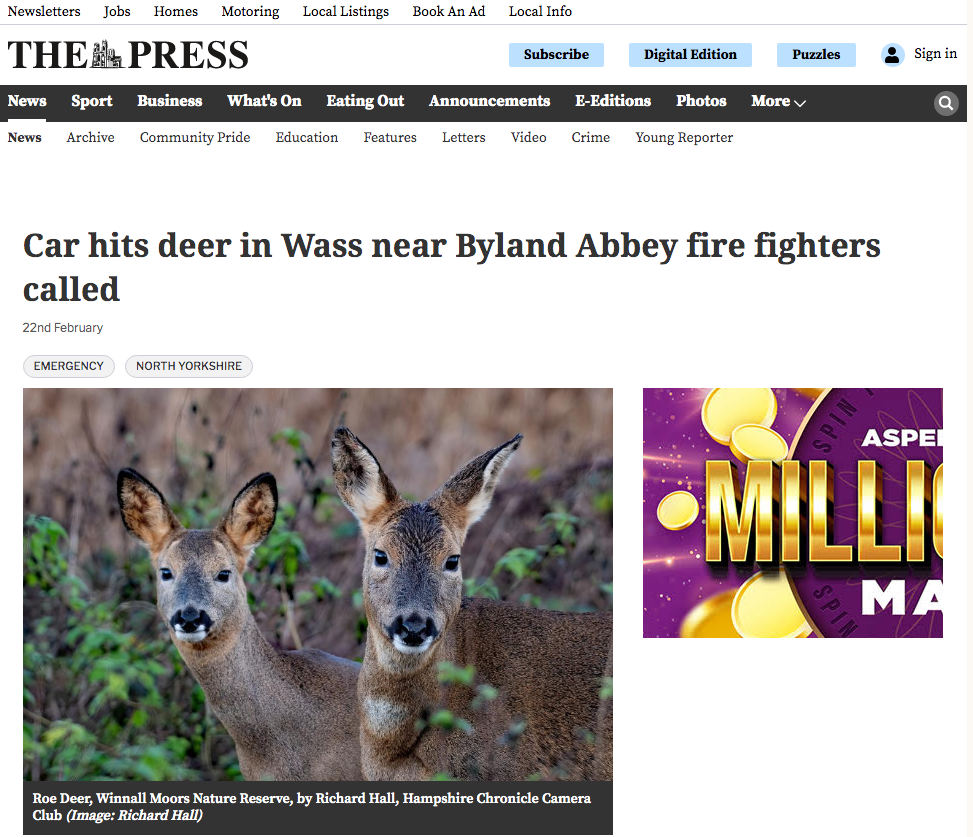
https://www.yorkpress.co.uk/news/24138432.car-hits-deer-wass-near-byland-abbey-fire-fighters-called/
The Importance of Education
This pattern of collisions highlights a clear need for an educational initiative focused on preventing such accidents and guiding drivers on how to react appropriately when they occur, prioritising cases without human life danger.
Incorporating Wildlife Awareness into Driver Education
Integrating wildlife awareness into the driving test and learning materials could significantly reduce the number of vehicle-wildlife collisions. Drivers should be taught to identify areas where wildlife is likely to cross roads and to understand the behaviour of animals such as deer. Additionally, providing guidance on how to react after a collision with wildlife, especially in situations that do not pose a threat to human life, could help minimise the impact on emergency services.
The Need for Action
Without proactive measures, vehicle-wildlife collisions will continue to pose a risk to animals and place a strain on emergency responders. The deployment of services to non-critical wildlife incidents, as highlighted in the article (https://www.yorkpress.co.uk/news/24138432.car-hits-deer-wass-near-byland-abbey-fire-fighters-called/), underscores the inefficiency of current responses and the need for a more effective strategy.
The implementation of a targeted educational initiative is essential in addressing the issue of vehicle-wildlife collisions. By educating drivers on how to avoid such incidents and respond appropriately when they happen, we can protect wildlife, reduce the burden on emergency services, and enhance road safety. As witnessed in my role as a Sussex police deer warden, informed drivers and a collective effort from various sectors are key to making our roads safer for everyone.
CLICK HERE - WHAT TO DO IF YOU HIT A DEER