Most estates do not struggle with the idea of deer control. They struggle with the reality of it. It is repetitive, weather-dependent, occasionally controversial, and rarely convenient. The work happens when most people are asleep. It requires judgement under pressure, not just time in the wood. It also sits at an awkward junction between ecology, finance and reputation.
That is precisely why CWS1 matters. It is not simply a grant line. It is a signal that government has finally acknowledged what those of us on the ground have known for years: unmanaged deer pressure quietly erodes woodland objectives, undermines public investment, and inflates long-term costs.
The risk, however, is that estates treat CWS1 as a general relief fund. Money arrives under a deer heading and is then absorbed into wider forestry pressures because everything feels urgent. The intent is understandable. The outcome is predictable. The deer keep doing what they do, the woodland does not recover, and everyone concludes the scheme was ineffective.
Used properly, CWS1 can be one of the most practical levers an estate has. It can support consistent deer control, enable better infrastructure and monitoring, and reduce the repetitive, hidden bills that come from restocking failures. But it only works when it is treated as outcome funding, not activity funding.

What CWS1 is really trying to buy
CWS1 is not paying for an armed walk in the woods. It is paying for improved condition on the ground. In plain terms, it is trying to buy a woodland that can regenerate, a coppice that can come back, and a habitat that can carry a future canopy rather than just a present one.
The easiest way to test whether an estate is using CWS1 correctly is to ask one question. If the deer control stopped tomorrow, would the woodland still improve because pressure has genuinely reduced, or would the estate simply revert to the same cycle of browsing, replacement planting and frustration.
If the answer is “we would slide back immediately”, the estate is probably paying for effort rather than change.
The measure of success is not a carcass total in isolation. It is the browse line shifting. It is seedlings getting above repeated grazing. It is planted areas establishing without being repeatedly stripped and re-tubed. It is walking a compartment a year later and seeing a future, not just a tidy present.
Why investing in professionals on the ground is not optional
There is a persistent misconception that deer control is a simple labour task. Pay someone, they go out, deer are reduced. In the South East, that assumption fails quickly.
Public access is high. Scrutiny is constant. Landscapes are fragmented and deer move across holdings without regard to boundaries. Costs for ammunition, diesel, insurance, and competent labour have risen sharply. At the same time, expectations have tightened around safety, reporting, carcass handling and public relations.
In that environment, professional deer management is not a luxury. It is the mechanism by which CWS1 becomes real.
A professional brings consistency, and consistency is where habitat outcomes are won. They bring risk management on sensitive sites, where public interface is part of the job, not an occasional inconvenience. They bring credible reporting and monitoring so the estate can demonstrate progress rather than simply assert it. They also bring the discipline to walk away from marginal shots, which matters more than most people admit, because the easiest way to damage an estate’s reputation is to allow pressure to produce poor decisions.
If an estate wants woodland improvement, it has to fund the people and systems that can deliver it. CWS1 can support that if the estate allows it to.
Client stalking can sit alongside professional delivery, but only if purpose is clear
Many estates want to preserve client stalking. There is nothing inherently wrong with that. The difficulty arises when client stalking is assumed to be the same thing as deer impact control. On many sites it is not.
Impact is usually driven by sustained browsing pressure and often by females. Client stalking, left to drift, has a tendency to focus effort in the wrong places or on the wrong classes of animal, because it is shaped by experience, convenience and tradition.
The answer is not to remove client stalking. The answer is to separate objectives and run them in parallel with honesty. Professional deer management should be responsible for delivering habitat outcomes. Client stalking can contribute, but it needs structure. It needs agreed targets, clear boundaries, and a shared understanding that the woodland objective comes first.
When that balance is held, the estate keeps its sporting culture and still sees genuine woodland response. When it is not held, the estate often ends up with plenty of effort and very little change.
Woodland resilience is cheaper than repeated restocking
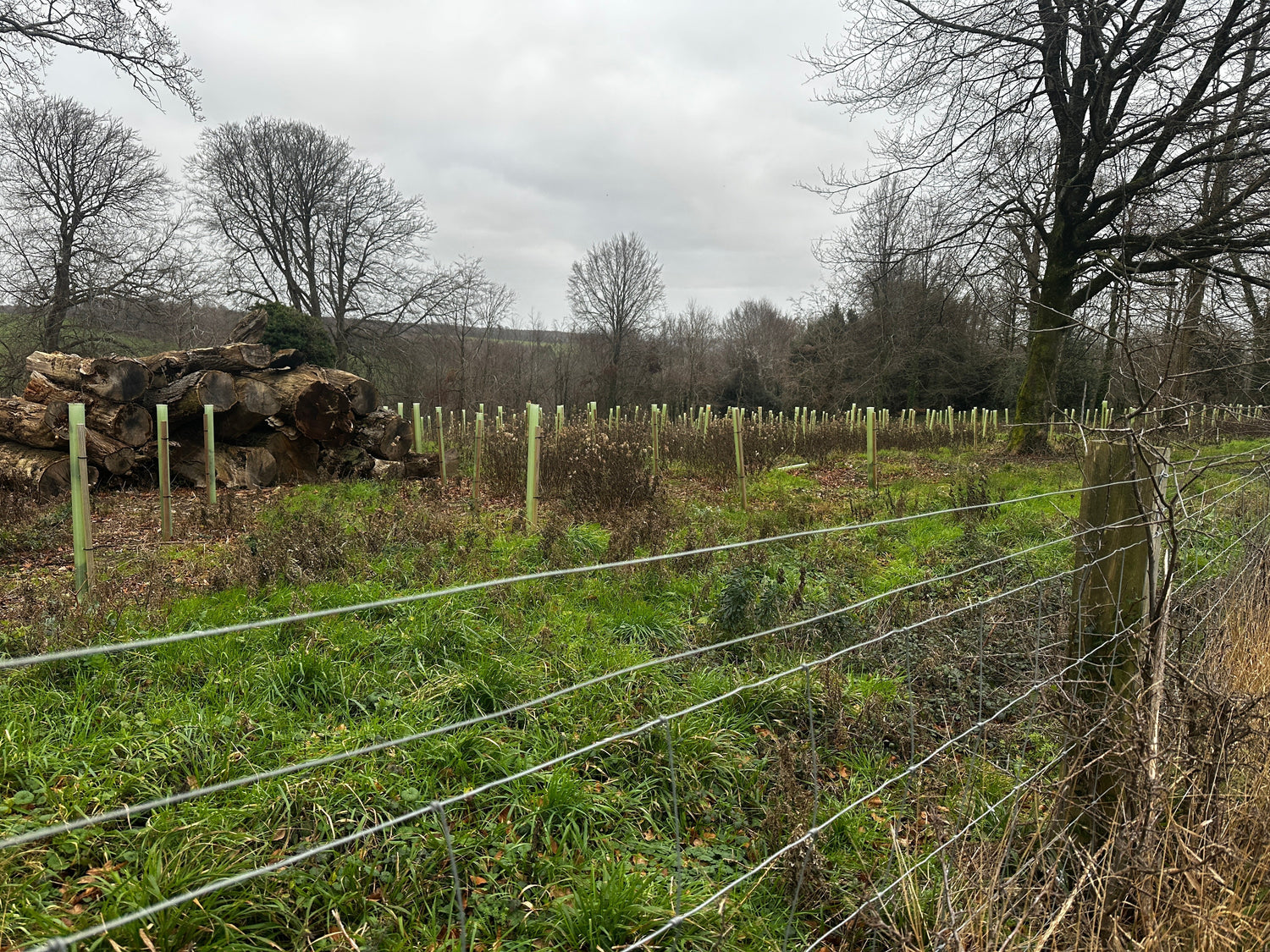
The most persuasive argument for using CWS1 well is financial. Estates rarely do a single restock. They do a restock, then they do replacements, then they do re-tubing, then they do repairs to fencing, and then they do more replacements. The visible costs are obvious. Trees, tubes, stakes, guards, labour, fencing, gates, and the time spent trying to rescue a scheme that should have established first time.
The less visible cost is that woodland creation and restocking becomes a recurring maintenance burden rather than a strategic investment.
When deer pressure is properly reduced, post-felling regeneration has a chance to establish rather than being shaved back repeatedly. Planted areas start to stand on their own feet. Restocking becomes a one-time cost, not a rolling subscription.
That is what woodland resilience looks like in practice. Fewer repeat bills, fewer salvage jobs, and a woodland that begins to carry its own future.
Monitoring is not bureaucracy, it is how you protect the investment
Many estates fail to get value from deer control because they never establish a baseline. They cannot say, with confidence, whether pressure has reduced or simply moved. They cannot show improvement to advisers, funders, trustees, or sometimes even to themselves.
Monitoring does not need to be academic. It needs to be repeatable. Fixed-point photography, clear browse observations, sensible compartment-level notes, and honest revisit intervals. The point is not to generate paperwork. The point is to create a feedback loop so that effort is directed where it produces change.
This also protects the estate against the most corrosive dynamic of all, which is paying for deer control without being able to see what it has achieved. Once that doubt settles in, support collapses and budgets are cut, and then the deer pressure returns stronger than before.
Infrastructure can unlock the venison chain and reduce waste
The venison market has not always rewarded effort, and anyone pretending otherwise is selling a fantasy. That said, poor markets are only part of the story. Many estates leak value through avoidable weaknesses: delayed cooling, limited chill capacity, poor larder setup, and inconsistent handling.
CWS1 is not a venison scheme, but if an estate is serious about deer control it should be serious about what happens after the shot. A basic, clean larder, reliable cooling, and a predictable route to processing can turn deer management from a pure cost into something that offsets itself, even modestly.
Just as importantly, proper infrastructure improves welfare and professionalism. It reduces wastage and raises the standard of carcass care, which matters ethically and reputationally. In an era where public perception is fragile, that discipline is not optional.

Standalone estates and cooperative approaches both work, if the money stays on purpose
Some estates can deliver CWS1 outcomes alone, particularly where boundaries are meaningful and access is controlled. Others cannot, because deer are shared and pressure is shaped by neighbouring decisions.
In much of Sussex and the wider South East, cooperative thinking is not a nice idea. It is often the only way to make a dent. Deer do not recognise boundaries. If one holding invests heavily and the neighbour unintentionally provides sanctuary, the woodland objective becomes a moving target.
Cooperative approaches do not require bureaucracy. They require contact, alignment, and a shared understanding of what each party is trying to achieve. Where that happens, CWS1 funding becomes more effective because it is acting on a landscape reality rather than a paper map.
The failure mode is always the same. Deer-labelled funding is diverted into other forestry pressures because they feel immediate, and then the estate pays later anyway through failed regeneration, repeat restocking, and strained relationships with tenants and advisers.
How we guide contracts and what we offer
Our role is to help estates translate grant intention into habitat change. Not noise, not theatre, not endless promises of “more effort required”, but a structured approach that stands up to scrutiny and produces visible improvement.
We start with site visits and deer impact assessment to establish a baseline and identify priority compartments. We then set a practical plan that aligns with the estate’s woodland objectives, public access realities and neighbouring pressures. We deliver professional deer control on sensitive and high-access sites, with standards around safety, reporting and carcass handling that protect both the estate and the sector. We also advise on enabling infrastructure and on strengthening the venison chain where that is sensible, because sustainability is not just ecological, it is operational.
The point is not to “do deer”. The point is to protect woodland regeneration and resilience, with deer control as the lever that makes everything else possible.
A quiet shift estates can make in 2026
If there is one shift estates can make this year, it is to stop treating deer control as a reluctant cost and start treating it as enabling work that protects every other investment on the holding.
When deer control is under-resourced, the estate pays later in tubes, trees, fencing and replacements, and still ends up with underperforming woodland. When it is properly planned, professionally delivered, and tied to monitoring, the woodland responds and the estate regains control of its objectives.
CWS1 is not a magic wand. It is an opportunity. Used with intent, it can help estates do the hard, quiet work that makes woodland creation, restocking and natural regeneration succeed first time.
If you want help using CWS1 properly, whether as a standalone estate or as part of a cooperative approach with neighbours, we can support with site visits, impact assessment, planning and delivery. The sooner deer control is treated as part of woodland resilience, the sooner estates stop paying repeatedly for the same damage.