After a good trip, and a long one, to the Stalking Show, most of what we expected was confirmed. The usual big names were there. The usual noise around launches, influencers, personalities and “must-have” gear was there too. As ever, there was a mixture of genuinely useful conversations, some very good people, a fair amount of polished surface, and the usual reminder that these events are often most worthwhile once you get past the spectacle and into the quieter exchanges.
We started, as many do, with the obligatory coffee from Beanz Around the World, which felt like the right way to begin a long day on our feet. From there the show settled into the rhythm these events always seem to find. A lot of walking. A lot of stopping. Quick impressions at one stand, longer conversations at another, then the slow accumulation of thoughts that only really settle once you are on the road home.
Practical rather than theatrical, broad enough to move between the larger stands and the smaller conversations, and clear enough that you did not feel as though you were being funnelled constantly into the same bottlenecks.
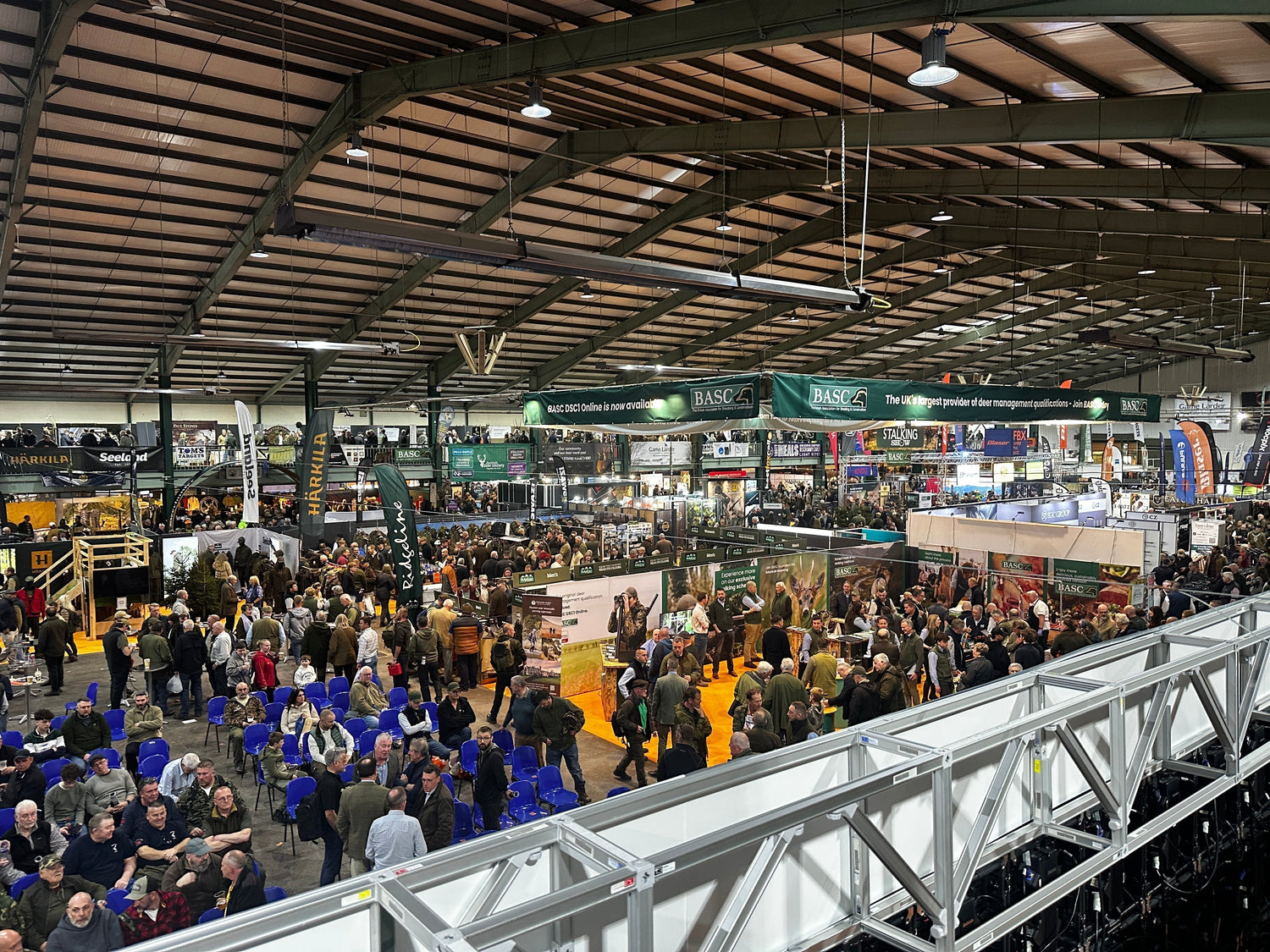
Credit where it is due, the practical side of the event was well handled. There was plenty of parking, it was clearly signposted, and the overall layout felt organised in the way these shows need to be if people are going to spend a full day moving around them without it becoming an unnecessary frustration. The hall layout itself was sensible too. Practical rather than theatrical, broad enough to move between the larger stands and the smaller conversations, and clear enough that you did not feel as though you were being funnelled constantly into the same bottlenecks. That matters more than it sounds. A good show should feel workable as well as busy, and this one broadly did.

There were a few comments from people about the lack of internet reception, which is a fair point in a modern venue full of people trying to upload, post, check messages and chase details on the move. But if I am honest, there was something rather refreshing about it. A little enforced time away from the usual stream of notifications did nobody much harm. In some ways it improved the day. People were actually looking at products, speaking to one another properly, and paying attention to what was in front of them rather than half-engaging while staring into a screen. For all the frustration poor signal can bring, a bit of unplanned tech downtime in that sort of environment was not the worst thing in the world.
As we worked our way through the halls, we spotted plenty of the usual suspects along the way. Owen and Dan Beardsmore, Sarah Miles, the Cigar Smoking Hunter, Chris from the S&C Channel, and Fieldsports Britain, all good to see out supporting the event and doing what they do. That is one of the things these shows still offer at their best. Beyond the brands and the sales pitch, they pull together a fairly broad slice of the wider shooting and stalking world into one place for a few days. For all the noise online, much of the industry still runs on familiar faces, repeated conversations, long memories, and people continuing to turn up year after year.
For me, the better part of the show was always going to be the people rather than the spectacle. It was good to catch up with Dean at Emberleaf and spend time looking over some fantastic pieces. It was equally good to see Adam and the Swarovski team again, as well as catch up with the Hunting and Shooting Academy. Adam was also able to help a fellow deer manager and friend with the replacement of an eyecup, which might sound a small thing to some, but that sort of practical support still matters and is often remembered long after the show itself is over, in fact it was a large part of the conversation regarding the importance of these types of interactions and events. Those are the conversations that usually stay with you longest.
I was in good company throughout, and that always shapes how a show feels. The right people make the day better, not just socially, but professionally too. You notice more. You test your own impressions against other working eyes. You hear what others are noticing in the same piece of kit and, from time to time, where your own judgement might need to be challenged. That matters, because the older I get the less interested I become in pretending certainty for its own sake. That is how it should be if you are serious about kit and serious about the work it is supposed to support.

That is partly why it was useful to catch up with Michael Brown at Blaser as well. If anyone has seen my review of the Shooting Show, they will know my experience on the stand itself had left me underwhelmed. But credit where it is due, the later conversation was completely different. The team were on point, open to discussion, and the whole thing felt much more like the sort of engagement you expect from an established brand. They had seen my review, which made the exchange all the more useful because it meant the conversation started from a place of honesty rather than pretence. I remain exactly where I was in one important respect: I still want to test the newer stocks properly in hard weather and on real ground before making any firmer judgement, because that is where the truth sits with kit like that. Show floors are one thing. Wet woodland, repeated use, poor weather, awkward extraction routes and a season’s worth of ordinary indignities are another. That is still the test that matters. But the later exchange was constructive, and I appreciated that they were prepared to engage directly having already seen my thoughts. I am not interested in theatrical criticism for the sake of it. If I have got something wrong, I will say so. If a better conversation leads to a better understanding, that is how it should be.
They had seen my review, which made the exchange all the more useful because it meant the conversation started from a place of honesty rather than pretence.
GMK were good to speak to as well, particularly in conversation with Derek, their Head of Sales. We had a proper chat around the latest rifle front, including the Sako 90 Finnlight. I am still not a hundred per cent convinced on the front-end flex on that rifle, and that remains something I would want to feel out more carefully before getting too enthusiastic.
It is one of those things that may not bother everyone equally, but once you notice it, you notice it. That said, the conversation itself was detailed and worthwhile, which is often more useful than simple agreement. What also struck me was that, for a mass-produced rifle, the bolt rattle annoyed me less than it has on some more expensive competitors. That may not sound like glowing praise, but there is honesty in it. Not every useful impression is dramatic. Sometimes it is simply that a rifle feels more settled in the hand than expected, or less irritating in one key area than something costing significantly more. There was also some interesting discussion about new kit coming through, including a moderator, and those quieter, technical conversations are often where the real value of a show sits for me.

Toms Targets was, unsurprisingly, busy all day. Some stands just seem to carry a constant flow of people because the product speaks for itself, and that felt like one of them. I came away with a gong, which I am quietly reserving for some new load data that still needs developing. There is something satisfying about leaving a show with something that will actually get used, rather than another passing impression or another item that ends up being little more than a souvenir of a long day out. A target with a purpose tends to feel more honest than most show purchases.
One of the more interesting companies beyond the usual names came through Num’Axes. What came across most clearly was passion and openness, along with a willingness to speak properly about products, limitations, direction of travel, and practical realities rather than disappearing behind over-polished language. That still counts for a great deal. I am generally far more interested in a company that is prepared to speak honestly than one that wants to posture its way through a conversation. Even where they did not have every answer, what came through was genuine engagement, and there is still value in that.
One area I was also actively looking at was in-ear hearing protection, particularly options that do not protrude excessively. That remains a surprisingly under-served part of the market. There are still relatively few options that feel genuinely low-profile without compromising too much elsewhere, and for those of us working regularly with other head-borne kit, collars, hoods, bino harnesses and the general clutter of field use, that matters. It is one of those product categories that looks simple until you start trying to find something that sits discreetly, works properly, and does not become another irritation after a long session. There is still room there for someone to do it better.

More broadly, the show left me circling back to something I think our sector needs to ask itself more honestly.
Are the supply issues we all grumble about simply a function of manufacturing, logistics and demand, or are they partly cultural? Have we become too accepting of them? Eight weeks for a mass-produced rifle. Eight months for some new piece of scope technology which, by the time it finally lands, may already be half a generation behind what is coming next. At what point do we stop shrugging and telling ourselves that this is just how the industry works? It is a fair question, especially in a market that speaks constantly about innovation, responsiveness and progress, yet still seems oddly relaxed about lead times that would be laughed out of the room in most other sectors. There is perhaps a wider conversation there about what we accept because we are enthusiasts, and what we would challenge far more quickly if we were simply buyers in another market.

Away from the kit and stands, I also wanted to say best of luck to Josh at Souls Untapped. I have watched his work for a long time, and there is something in it that feels rarer than it should be now: honesty, vulnerability, and a willingness to show adventure without packaging it into something false. In a much younger part of my own life I challenged myself in different ways, from our own Brecon to free-diving in volcanic holes off Thailand, and perhaps that is part of why his content still resonates. There is a truth in it that has been edited out of too much modern outdoor media, not least by some of our own industry influencers. He captures something more grounded, and whatever comes next for him I wish him all the best with it.
Overall, that was probably the shape of the show for me. Beyond the predictable names, the better parts were still the same as they always are: good company, proper conversations, a few useful surprises, enough honesty to be worthwhile, and enough unanswered questions to keep testing once the show is over. That, in the end, is the real point of these events. Not to come home dazzled. Not to convince yourself every new launch matters. But to come home thinking, and with a slightly clearer idea of what might actually prove useful once the hall lights are gone and the real work begins again.