Wildfire has traditionally been regarded as a greater concern in the moorlands, conifer forests and upland landscapes of northern and western Britain. That assumption is becoming increasingly difficult to sustain. During July 2026, fire crews responded to a succession of incidents across Sussex, including fires on Ashdown Forest, the South Downs near Devil’s Dyke and Eastbourne, and agricultural ground near Battle.
The incidents varied in size and habitat, but together they reflected the same underlying concern: prolonged heat, dry vegetation and difficult ground conditions had created a landscape capable of carrying fire quickly and unpredictably.
The immediate priorities during any wildfire are rightly human safety, the protection of homes and infrastructure, and support for the emergency services. Wildlife impacts are often harder to see and may not become apparent until the flames have passed. Deer are mobile and may escape an advancing fire where routes remain open, but that should not lead to the conclusion that they are unaffected. Fire can remove resting cover, alter familiar movement routes, concentrate animals into neighbouring ground, damage fencing, reduce immediate forage and change the balance between shelter and feeding for months or years afterwards.
In southern England, these consequences deserve particular attention because deer populations already occupy highly fragmented landscapes. Fallow, roe and muntjac move through a close mixture of woodland, downland, scrub, farmland, roads, settlements and recreational land. A fire does not affect only the area that burns. It can change how deer use the land around it, sometimes transferring pressure into surviving woodland that was already struggling to regenerate. The ecological impact therefore extends beyond the blackened ground.
Wildfire should not be considered simply as a dramatic but short-lived emergency. For deer managers and landowners, it is a landscape disturbance that may alter movement, welfare, browsing pressure and management access long after the fire service has left. Understanding that process will become increasingly important if hot, dry summers and severe fire-weather periods continue to affect the South of England.

A Month That Changed the Conversation in Sussex
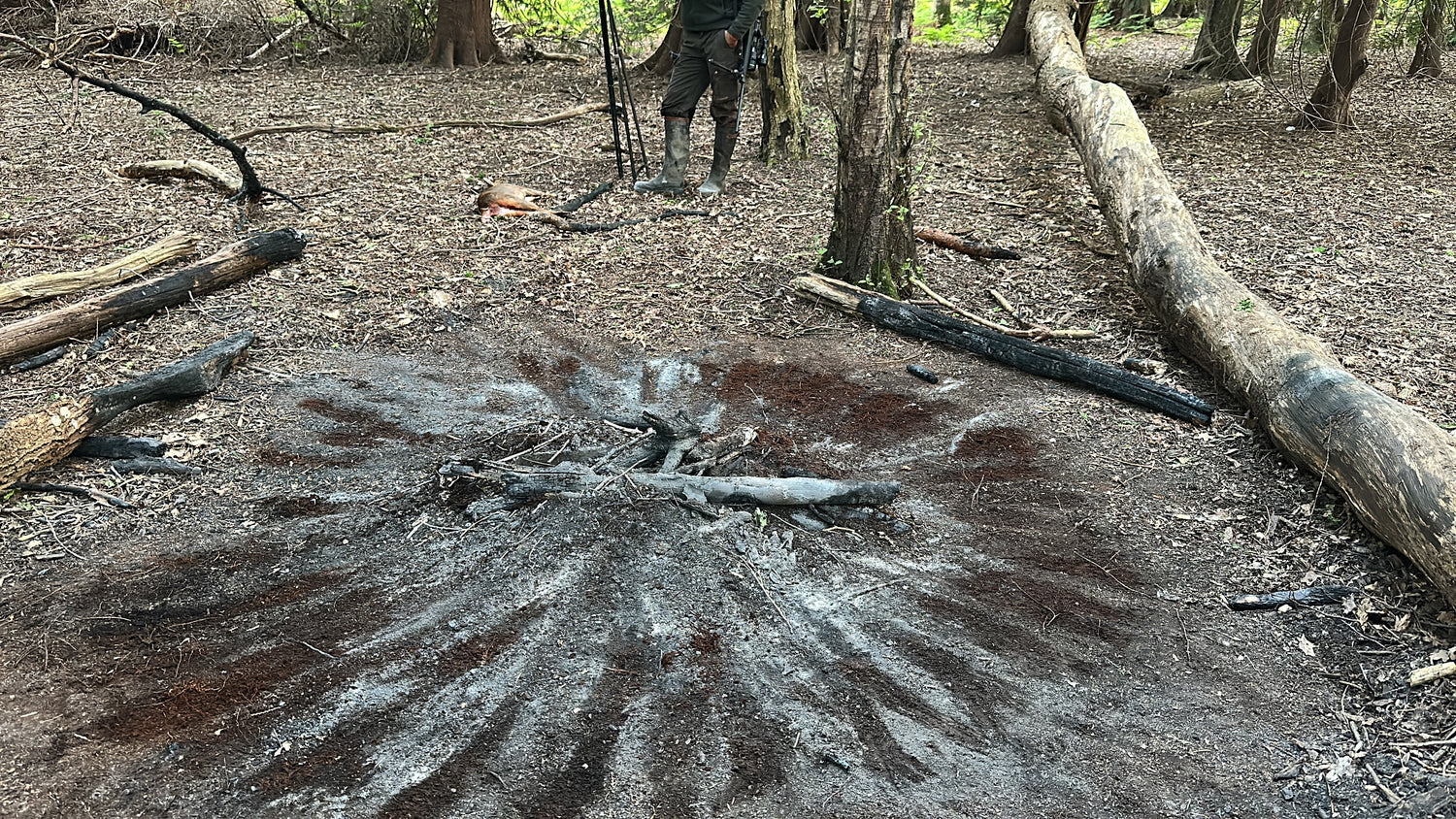
On 8 July 2026, East Sussex and West Sussex fire crews attended Ashdown Forest following reports of smouldering grass and trees close to the forest centre on Colemans Hatch Road. The affected area was initially reported as approximately 70 square metres, but the difficulty was not simply the visible footprint. Firefighters used off-road vehicles and water in a landscape where peat and dry vegetation can hold heat below the surface and allow hotspots to persist after flames appear to have been controlled.
Two days later, crews were called to a wildfire at Devil’s Dyke in the South Downs. The response included multiple fire engines and specialist resources, with crews working through the night and returning to damp down and check hotspots. Residents nearby were advised to close doors and windows, while the public was asked to avoid the area so that emergency teams could work safely.
On 11 July, another large fire developed on the South Downs between Butts Brow and Eastbourne Downs Golf Club. East Sussex Fire and Rescue Service deployed conventional appliances, off-road firefighting vehicles, a water carrier and specialist support. The location illustrates the challenge faced across much of the South Downs: steep or uneven ground, extensive dry grassland, scrub margins and strong public access can combine to make suppression difficult and movement around the fire unpredictable.
On 17 July, approximately four hectares were affected by a fire in a field near the railway line at Telham Lane, Battle. Although this was predominantly an open-land incident, its proximity to hedges, woodland and transport infrastructure demonstrates how quickly agricultural fires can become landscape fires. In southern England, fields do not sit in isolation. They connect to woodland edges, road verges, railway corridors, scrub and cover used routinely by deer.
These Sussex incidents formed part of a wider national period in which wildfires were reported across numerous English regions. Scientists described the conditions as an unusually widespread British “firewave”, with prolonged heat and dry vegetation allowing fires to develop across landscapes not traditionally associated with major summer wildfire.
For deer management, the significance is not that each Sussex fire was exceptionally large by international standards. It is that several incidents occurred within a short period, across different habitat types, in landscapes holding established wild deer populations. The pattern provides a warning that wildfire needs to be incorporated into modern deer and woodland planning rather than treated as an event too unusual to prepare for.
What Happens to Deer During a Wildfire?
The popular image of wildlife fleeing ahead of a wall of flame is only part of the picture. Deer are capable of rapid movement, but their response will depend on the speed and direction of the fire, terrain, smoke, fencing, roads, public disturbance and the availability of familiar escape routes. A slowly advancing grass fire may allow animals to move into adjacent ground. A fast-moving fire driven by wind can close those options quickly.
Smoke may affect deer before the fire reaches them. It reduces visibility, obscures familiar routes and can cause animals to move at unusual times or in unexpected directions. During an incident, deer may emerge onto roads, open fields or residential edges where they would not normally be seen. They may also remain hidden in small unburned pockets, especially where dense cover appears to offer shelter, even if that cover later becomes threatened.
Fencing can become a serious welfare issue. Deer fencing, livestock fencing, road barriers and enclosed compartments may restrict movement at exactly the time animals need to leave. A fence that controls everyday access can become a trap during rapidly changing fire conditions. Damaged fencing may subsequently create the opposite problem by allowing deer into newly planted or previously protected areas.
Direct mortality is possible, particularly for young, injured or disorientated animals, although it is often difficult to quantify. Adult deer may escape the main fire front yet still experience burns, smoke exposure, exhaustion or separation from normal feeding and resting areas. Dead or injured animals may remain undiscovered in inaccessible ground, while scavenging and decomposition can make later assessment uncertain.
The effect of fire is therefore not limited to animals caught within the burned area. Deer that escape may be displaced into unfamiliar habitat, forced across roads or concentrated alongside resident animals in nearby woodland. From a management perspective, this secondary displacement may become more important than the immediate mortality because it can alter deer pressure across a much larger area.
Displacement Does Not Mean the Deer Have Gone
When a burned site appears empty, it may be tempting to assume that the local deer problem has temporarily resolved itself. In reality, the animals may simply have moved. Woodland, scrub and undamaged grassland surrounding the fire can receive a sudden increase in deer use as displaced animals seek food, shelter and security.
This concentration may be temporary, but even a short period of increased pressure can matter where neighbouring woodland contains vulnerable regeneration, coppice, shrubs or recently planted trees. The surviving habitat becomes more valuable because there is less of it available. Deer that previously spread their feeding across a wider area may begin using a smaller area more intensively.
The response will vary by species. Fallow may move considerable distances and join animals already using neighbouring estates or woodland blocks. Their social behaviour means displacement can be visible, with larger groups appearing suddenly on ground where fewer deer were previously recorded. Roe may remain closer to established territories where sufficient cover survives, creating increased local competition or pushing younger animals into new areas. Muntjac may exploit small unburned pockets, gardens, scrub margins and woodland edges, making their changed distribution much harder to detect.
Research outside Britain has shown that wildfire can alter deer movement rates, space use and travel routes, although the precise response depends on species, season, habitat and fire severity. White-tailed deer have been recorded increasing movement in burned landscapes where concealment cover was reduced, while studies of mule deer show that animals balance improved forage opportunities against changes in security and predation risk. These studies concern North American species and landscapes, so they should not be transferred directly to Sussex; however, they demonstrate the credible mechanisms through which fire can change deer behaviour.
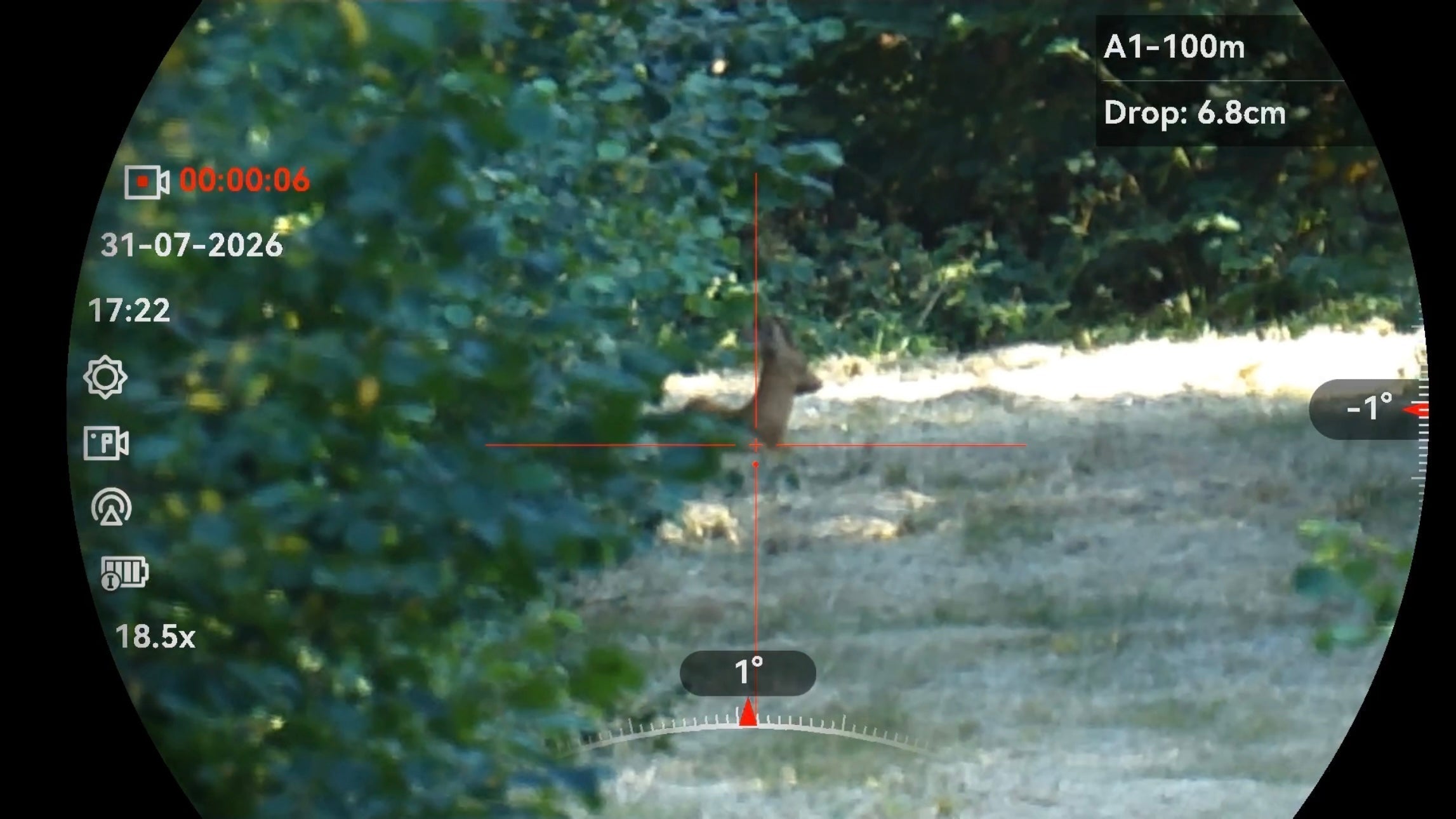
For British deer managers, the practical response should be observation rather than assumption. Previous deer paths may stop being used. New crossing points may appear. Thermal sightings may increase in neighbouring fields. Roadside records may change. Camera traps may show animals moving at different times. The landscape should be reassessed after fire because the pre-fire understanding may no longer be reliable.
The Surviving Woodland Can Carry the Greatest Pressure
The visible ecological damage after wildfire lies within the burned area, but the greatest browsing problem may emerge immediately outside it. Surviving woodland often becomes the nearest available source of cover and food. If that woodland already supported deer, displaced animals can add pressure to a system with little spare capacity.
This matters because a significant proportion of English woodland is already affected negatively by deer. National policy published in 2026 states that evidence suggests around one-third of English woodlands experience negative deer impacts, including damage to trees and inhibition of natural regeneration. Fire displacement may therefore act upon woodland that was not starting from a healthy baseline.
The first signs may be subtle. Fresh tracks may increase along rides and firebreaks. Browsing may intensify around woodland edges. Bramble height may reduce. Young coppice and seedlings may receive greater use. Recently planted compartments may experience unexpected damage despite having shown relatively little previous activity. Muntjac may become concentrated in dense remaining cover, while fallow may use quiet woodland during daylight and move into burned or open ground after dark.
A landowner assessing only the fire footprint may miss this secondary impact. Post-fire management should include the wider affected landscape, not just the blackened area. A practical survey radius will depend on species, habitat connectivity and fire size, but neighbouring woodland, new planting, road crossings, water sources and unburned refuges should all be checked.
This is where prior baseline information becomes particularly valuable. If deer impact assessments, camera data, fixed photographs or cull records already exist, post-fire changes can be identified with greater confidence. Without a baseline, the manager must reconstruct the likely change from field signs, neighbouring reports and repeated observation.
The point is not to assume that every fire will create severe browsing elsewhere. It is to recognise that the possibility is credible and should be tested. The fire may have reduced local deer use, transferred it, dispersed it or concentrated it. Only field evidence can show which of those outcomes has occurred.
Burned Ground May Later Become Attractive to Deer
The immediate aftermath of wildfire can be bleak. Vegetation is removed, cover is lost and food may be limited. Yet burned ground does not remain static. Depending on soil damage, rainfall, habitat type and fire severity, fresh vegetation may emerge as the site begins to recover. That new growth can be attractive to grazing and browsing animals.
International research has shown that some burned landscapes later provide improved forage for deer as nutrient-rich and accessible vegetation develops. Mule deer, for example, may use post-fire areas where forage quality improves, while still responding to changes in cover and risk. Again, this evidence cannot be treated as a direct prediction for fallow, roe or muntjac in southern England, but it indicates that deer use of burned ground may change repeatedly rather than follow a simple pattern of avoidance.
In Sussex, the outcome is likely to depend heavily on the habitat burned. Chalk grassland, heath, scrub, woodland edge and peat-influenced ground recover differently. A shallow grass fire may produce rapid regrowth. A hotter fire that damages roots, seed banks or soil structure may recover slowly. Repeated fire or deep-seated burning can create a much longer ecological disturbance.
As growth returns, deer may revisit the area more frequently. Open sightlines can make deer easier to observe, but increased visibility should not be confused with a population increase. The same number of animals may simply be using more open ground. Conversely, attractive regrowth could draw animals from a wider area and increase local use genuinely.
For woodland recovery, this presents a complicated balance. Deer may feed on regenerating burned habitats while reducing pressure elsewhere, or they may move repeatedly between fresh post-fire growth and surviving woodland cover. Management needs to follow the changing pattern rather than rely on a single assessment made immediately after the incident.
Fire Can Reset Established Management Plans
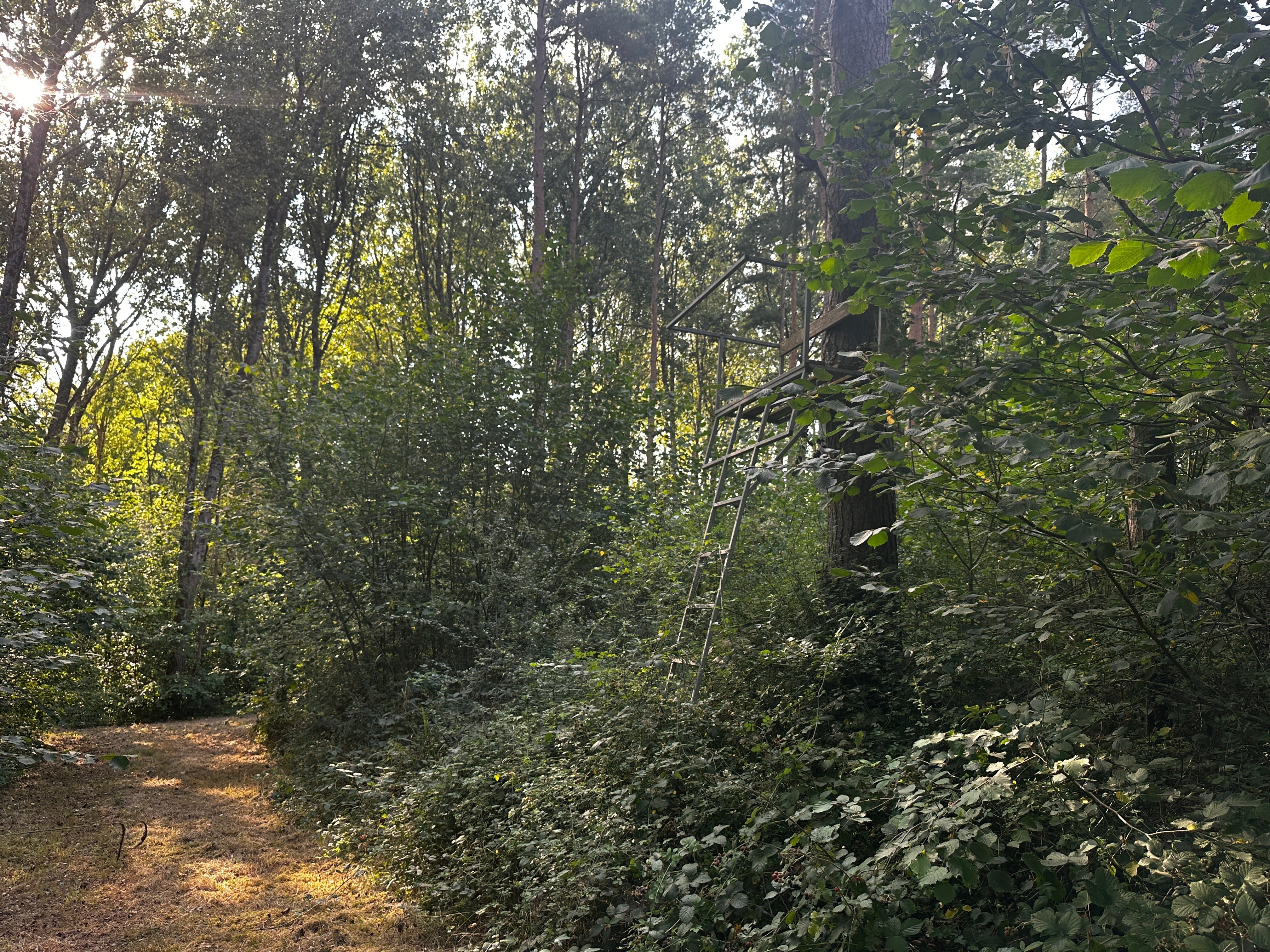
A deer management plan is built around an understanding of how animals use the site. High seats are positioned to cover established movement. Stalking routes are planned around prevailing wind and access. Cameras are placed at regular crossing points. Culling effort is directed towards compartments where impacts are greatest. Wildfire can disrupt all of that in a matter of hours.
Vegetation loss may remove concealment used by both deer and the deer manager. Previously safe approaches may become exposed. Fire-damaged trees can create falling-branch hazards. Ash, unstable ground and hidden hotspots may make access unsafe. Firefighting activity, public interest, contractors and recovery work can continue disturbing the site long after flames are extinguished.
Infrastructure may also be affected. High seats, gates, fencing, signs, cameras and feed or mineral sites can be damaged or destroyed. Roads may be closed. Firebreaks may create new access routes while closing others. A woodland compartment previously considered secure may become open to the public or neighbouring deer movement through damaged boundaries.
The correct response is not to resume normal activity immediately. The site should first be declared safe by those responsible for the land and the emergency response. Once access is appropriate, the deer manager should complete a structured review covering hazards, animal movement, fencing, equipment, carcass extraction routes and any change to public access.
Cull targets may also need to be reconsidered. A fire does not automatically justify increased control, nor does displacement justify abandoning management. If animals have moved into vulnerable neighbouring woodland and impacts are increasing, additional targeted effort may be necessary. If deer have temporarily left the wider area, previous targets may no longer be realistic. The plan must respond to evidence rather than remain fixed because it was agreed before the fire.
Roads and Public Disturbance Create an Additional Risk
Southern England’s deer landscapes are crossed by busy roads, railways, villages and recreational routes. When wildfire changes movement patterns, animals may encounter these features more frequently. Deer displaced from familiar cover may cross roads at unusual places or times, increasing the potential for collisions.
There is limited British research specifically quantifying deer vehicle collisions immediately after wildfire, so any increase following a Sussex incident should not be assumed without evidence. However, wider wildlife research shows that major fires can push animals into unfamiliar areas and force risky crossings of transport infrastructure. The possibility is therefore serious enough to justify local monitoring.
Public behaviour can add to the disturbance. Once an area reopens, burned landscapes often attract attention. People may visit to view the damage, take photographs or walk routes that feel newly opened. This can keep deer displaced from their usual daytime areas and move them towards quieter neighbouring ground. Dogs off leads may increase the pressure further.
Landowners should consider temporary signage, route management and communication after a fire, particularly where wildlife is already concentrated into reduced cover. This is not about closing the countryside unnecessarily. It is about allowing emergency work and early habitat recovery to proceed without avoidable disturbance.
Deer managers can support this by recording unusual daytime sightings, carcasses, road incidents and new movement routes. Communication with neighbouring estates, local deer wardens, farmers and road users may reveal a pattern that would not be visible from one holding alone.
What Landowners Should Do After a Wildfire
The first stage is safety. Landowners should not enter burned ground until access has been confirmed as safe. Hotspots, unstable trees, damaged utilities, weakened fencing and difficult ground can remain hazardous after visible flames have disappeared. Emergency service and site-management instructions must take priority.
Once access is possible, the first deer-related task should be a rapid landscape assessment. This should record the burn boundary, surviving cover, damaged fencing, known deer routes, water sources, neighbouring refuges, road crossings and vulnerable woodland compartments. Any injured or dead deer should be reported and managed through the appropriate channels rather than approached casually.
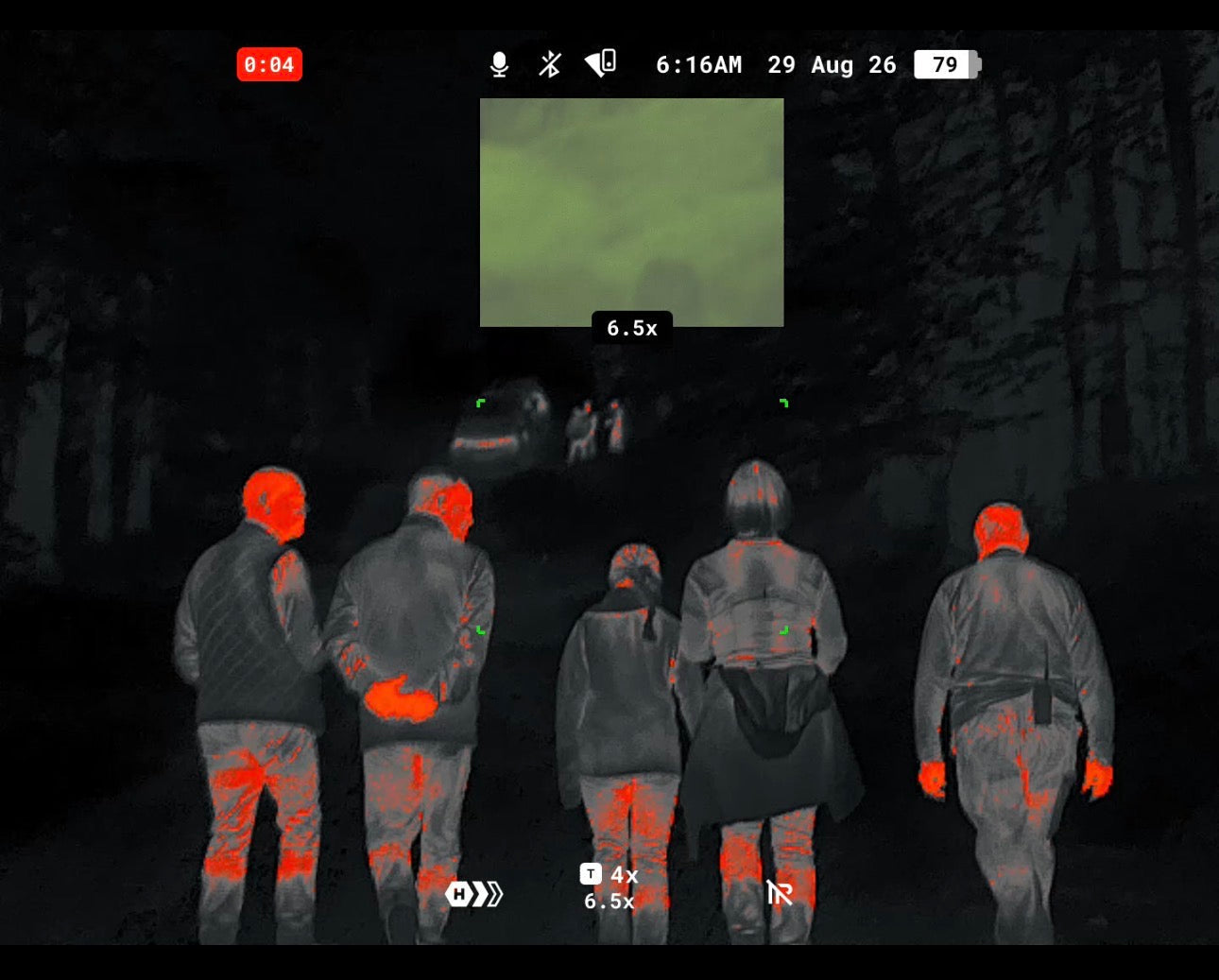
The second stage is monitoring. Cameras should be repositioned where previous routes have been disrupted. Thermal observation can help identify where deer have moved, particularly during the first weeks after the fire. Field signs should be checked in surviving woodland, alongside fresh browsing on seedlings, shrubs, bramble and coppice.
The third stage is management review. Existing cull plans, access routes and high seat locations may no longer be appropriate. Where deer have concentrated into neighbouring woodland, targeted control may need to increase. Where the fire has removed cover and made safe management temporarily impossible, effort may need to shift elsewhere until conditions improve.
The fourth stage is longer-term habitat observation. Burned ground should be monitored as vegetation recovers because deer use may change again when fresh growth appears. Woodland managers should pay particular attention to natural regeneration and planted trees near the burn edge, where deer may combine the security of surviving cover with access to new growth.
A post-fire deer assessment should therefore not be a single visit. It is better understood as a sequence: immediate safety and displacement, short-term concentration, medium-term vegetation recovery, and eventual re-establishment of more stable movement patterns.
Wildfire Planning Must Become Part of Deer Management
The recent Sussex incidents should change how deer managers think about risk. Wildfire cannot remain entirely outside the deer management plan. It may not be possible to predict exactly where or when a fire will occur, but the consequences can be anticipated.
Landowners and deer managers should know where animals are likely to escape, where fences might restrict them, which neighbouring woods could receive displaced deer and which roads present the greatest collision risk. Contact arrangements should be clear. Cameras, high seats and other equipment should be recorded so that damage can be assessed. Carcass and welfare procedures should be understood before an emergency occurs.
Deer management can also contribute to wider land awareness. Those working regularly at night and across remote parts of estates may be among the first to notice smoke, illegal fires, abandoned barbecues or suspicious activity. They should know how to report an incident promptly and should never attempt to continue routine operations where wildfire risk or active fire makes the site unsafe.
Vegetation management and deer management also interact in complicated ways. Browsing can influence vegetation structure, while vegetation structure influences fire behaviour and deer cover. It would be too simplistic to claim that deer either prevent or cause wildfire. The relationship depends on habitat, grazing intensity, fuel type and management history. What is clear is that land should be managed as a connected system rather than through isolated decisions.
Wildfire planning should therefore sit alongside access planning, deer impact assessment, public safety and woodland resilience. In a hotter and more fire-prone South of England, the professional deer manager needs to understand not only the animal, but the disturbance reshaping the landscape around it.
The Fire Ends Before Its Effects Do
The recent Sussex wildfires provide a visible warning. Ashdown Forest, Devil’s Dyke, the Eastbourne Downs and Battle are different landscapes, but each demonstrates how quickly dry vegetation, difficult access and prolonged heat can create a serious incident.
For wild deer, the consequences do not end when the flames are extinguished. Animals may be injured, displaced or concentrated into surviving habitat. Familiar routes may disappear. Fencing may fail. Road crossings may change. Browsing pressure may increase in neighbouring woodland, before later shifting again as burned ground begins to recover.
The correct response is neither alarm nor assumption. It is evidence-led reassessment. Landowners need to understand where deer have moved, what habitat remains, which areas are receiving greater pressure and whether existing management plans are still fit for purpose. The period after wildfire should be treated as a new baseline, not as a temporary interruption before business continues as normal.
Wild deer are adaptable, but adaptation does not mean absence of impact. Their response to fire can transfer ecological pressure into woodland that escaped the flames. If that woodland is already struggling to regenerate, the secondary effect may be significant. Professional deer management therefore has a role not only in the burned area, but in the wider landscape carrying the animals displaced from it.
The fire front may pass in hours. The change to deer behaviour, woodland condition and land management can last far longer. In southern England, understanding that difference is becoming part of responsible deer and woodland management.