The phrase cull buck is used far too easily.
It appears beneath photographs of strong, mature roe bucks carrying well-developed antlers. It is added to social media posts after the animal has already been taken, often alongside familiar explanations: too dominant, going back, poor genetics, past his best or preventing younger bucks from developing. The language sounds selective and professional, but in many cases the reasoning appears to have been created after the event rather than forming part of a genuine management decision beforehand.
That should concern anyone who claims to take deer welfare, sustainable populations and ethical management seriously. A buck does not become a suitable cull animal simply because it presented an opportunity or because the stalker wanted to retain the head. Nor does a large, healthy and established animal become a management priority because somebody later applies a convenient label to it.
There is nothing inherently wrong with taking a mature trophy where the local population, landowner’s objectives and wider management plan support that decision. What damages the credibility of the sector is the need to disguise every desirable animal as defective, declining or unsuitable. Honest trophy selection is more defensible than retrospective justification dressed up as deer management.
A genuine cull decision should be capable of standing on its own before the rifle is raised. It should be based on knowledge of the local population, the condition and history of the individual animal, the management objectives for the ground and an understanding of what its removal is likely to achieve. It should be possible to explain the reason clearly to the landowner, another professional deer manager and, increasingly, a public that expects wildlife management to be ethical and accountable.
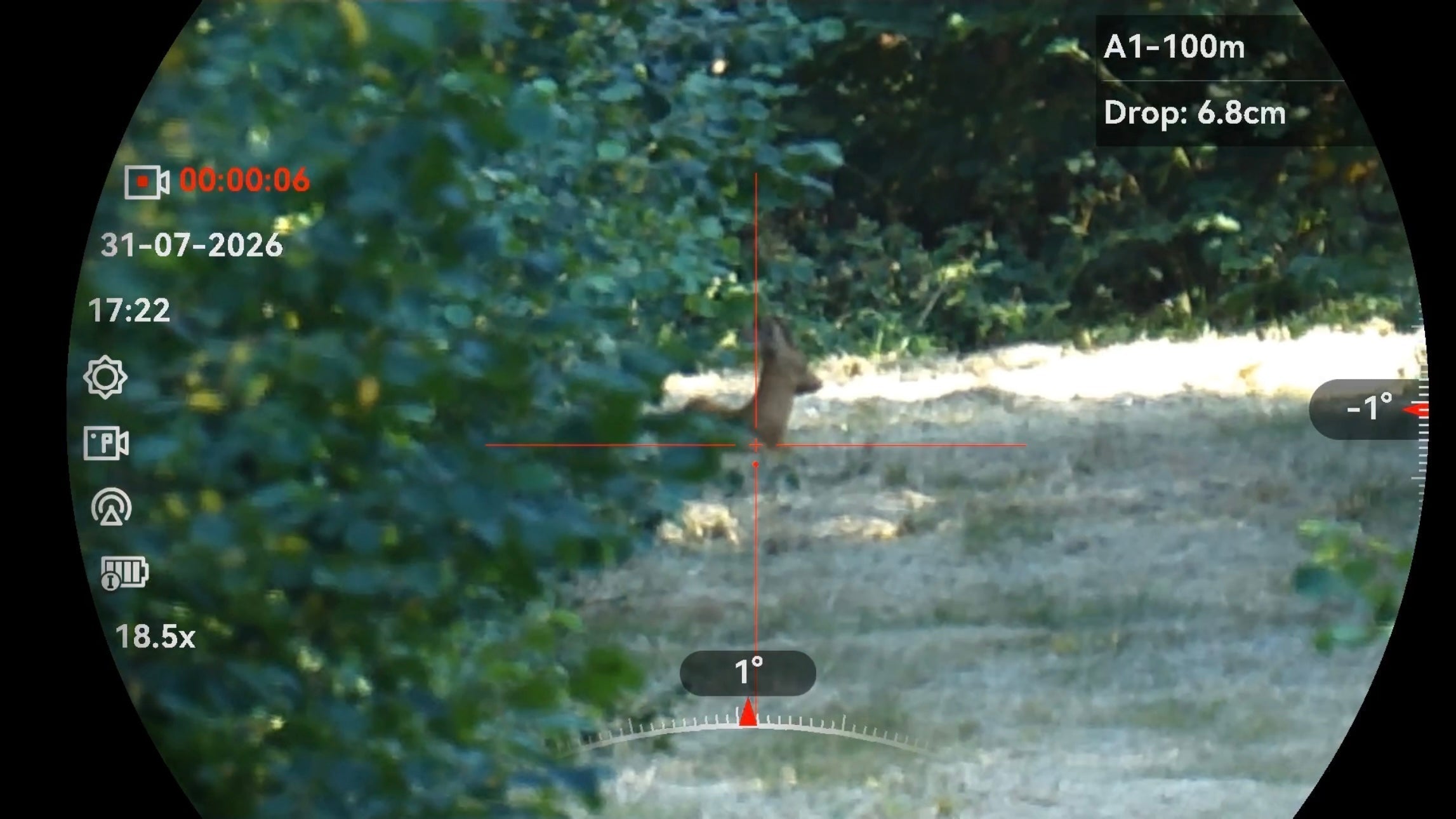
The buck shown in the accompanying photographs is a useful example. He had clearly lost the effective use of one eye, most likely following previous trauma, although the precise cause cannot be confirmed from appearance alone. This is the kind of known physical impairment that can justify prioritising one animal ahead of another. The decision is not based on the size or shape of the antlers. It is based on welfare, future risk and the condition of the animal within the local population.
That is the distinction the sector needs to recover.
A Cull Buck Is a Management Decision, Not an Antler Category
One of the most persistent misconceptions in roe management is that antlers alone can tell us which bucks should be removed. This is attractive because it simplifies a difficult decision. An uneven head becomes poor genetics, short beams become evidence of weakness and a heavy, mature six-pointer can be described as over-dominant or in decline depending on what best supports the outcome.
In reality, antlers are only one part of a much larger picture. They are renewed annually and are influenced by age, nutrition, physical condition, habitat quality, injury and the environmental pressures experienced during growth. A buck carrying an irregular head in one season may produce something markedly different the following year. Damage to a pedicle, injury elsewhere on the body or temporary poor condition can all affect antler development without providing any reliable evidence that the animal is genetically inferior.
This does not mean antlers are irrelevant. They can help distinguish individuals and contribute to an assessment when combined with repeated observation. What they should not become is a substitute for understanding the buck itself. The professional question is not whether the head looks desirable or undesirable. It is what is known about the animal, how it fits within the local population and why its removal is expected to improve welfare, population structure or the management outcome for the ground.
Once antlers become the main criterion, almost any buck can be described as a cull animal. A young animal with an undeveloped head can be dismissed before it has had time to mature. A prime adult can be removed because it is supposedly too dominant. An old buck can be taken because it is declining. The category becomes so broad that it ceases to mean anything.
A proper cull buck is not defined by appearance alone. It is defined by the evidence and reasoning that support the decision.
Good Selection Begins With Knowing the Population
Roe bucks cannot be managed properly as isolated individuals. Each animal exists within a local population that has an age structure, sex balance, territorial pattern and history. The same buck may be an appropriate candidate on one estate and an important animal to retain on another.
A manager who knows the ground should have an understanding of which bucks are resident, which are transient and which younger animals are beginning to establish. This knowledge develops through repeated observation, trail-camera records, photographs, field signs and continuity over several seasons. It also requires communication with neighbouring landowners and stalkers because roe do not recognise ownership boundaries.
Without that context, selection becomes little more than reaction. The next visible animal is assessed quickly and made to fit whatever category allows the shot to be taken. A genuine management decision works in the opposite direction. The priorities are established before the encounter, and the animal is assessed against them.
Age structure is particularly important. Ground from which mature territorial bucks are removed repeatedly may become occupied by younger or transient animals. That may not be a problem where the objective is broad population reduction, but it should not be confused with maintaining a settled and balanced structure. Removing an established buck creates a vacancy, and that vacancy will often be contested or filled.
This does not mean mature bucks should be protected indefinitely. Population management may require their removal, and a properly planned mature-buck allocation can form part of sustainable stalking. The point is that their role should be understood. A strong territorial animal is not automatically a problem simply because it behaves like a strong territorial animal.
Professional selection begins with the population, not with the trophy.

The One-Eyed Buck: A Credible Management Candidate
The one-eyed buck provides a much clearer example of a genuine cull consideration than many of the apparently healthy animals routinely labelled online.
The visible damage suggests a significant and longstanding impairment. It may have resulted from fighting during a previous rut, an impact with vegetation or fencing, infection, or another form of trauma. The exact cause is less important than the effect it may now have on the animal.
Wild deer are remarkably resilient. The loss of sight in one eye does not automatically mean that a buck is incapable of feeding, moving or maintaining condition. Many animals adapt successfully to old injuries. A visible defect should therefore not be treated as automatic permission to shoot, particularly where the buck is otherwise moving confidently and appears in good health.
However, the impairment creates legitimate welfare concerns. Reduced vision may affect how the animal detects danger, negotiates roads and boundaries, responds to dogs or people and competes with other bucks. It may also place him at greater risk during another rut, when close territorial encounters can be violent and unpredictable.
Where the buck is known, the damage is permanent and the population can sustain his removal, prioritising him ahead of a healthy animal is a defensible decision. It reduces the likelihood of further injury and demonstrates that selection is being guided by welfare rather than trophy value.
The reasoning should still be proportionate. A cloudy eye does not prove constant suffering, and no responsible manager should invent additional symptoms simply to strengthen the justification. The correct approach is to observe body condition, movement, feeding behaviour and response to disturbance. Where possible, the animal should be monitored over time and examined carefully after removal.
That process matters because welfare must not become another convenient label. The standard should remain the same: evidence before action, not explanation afterwards.
Dominance Is Not a Defect
The description of a mature roe buck as “too dominant” is one of the weakest justifications in modern stalking.
Dominance is not a disease, injury or failure. A mature territorial buck is expected to defend ground, challenge rivals and control access to areas used by does. These behaviours become more visible as the rut approaches, but they are a normal part of roe ecology.
There may be management reasons for removing such an animal. The total population may need to be reduced. The buck may be part of an agreed mature allocation. He may be a known individual whose age and condition indicate that removal is appropriate. These are legitimate reasons when they are supported by the wider plan.
What is not credible is describing a fit, healthy animal as a cull buck solely because he has established himself successfully. A dominant buck may be exactly the type of animal the local population requires, particularly where mature age classes are poorly represented.
Repeatedly taking the most visible and successful bucks while passing younger animals can create a very different structure from the one suggested by the language of selective management. It may be consistent with trophy stalking, but it should not automatically be presented as improving the herd.
There is no shame in acknowledging that a healthy mature buck was selected as a sustainable trophy. That is a clearer and more honest account than inventing a problem that did not exist. Ethical standards are strengthened when the reason given matches the real reason for the decision.
The Myth of Removing Poor Genetics
Claims about removing genetically inferior roe bucks should be treated with caution.
The appearance of one set of antlers is not enough to diagnose the hereditary quality of an animal. Antler growth reflects both genetic potential and the conditions under which that potential is expressed. Nutrition, stress, age, physical condition and injury can all change what appears above the coronets in a particular year.
The manager also sees only one side of the genetic contribution. Does have an equal influence on the next generation, yet their genetic quality cannot be assessed by looking at a buck’s head. Young animals may disperse into and out of the management area, while neighbouring populations can have more influence than any selection carried out on a single estate.
Open populations are not controlled breeding programmes. Removing a buck because of an unusual or weak head does not guarantee that the trait will disappear, just as retaining the largest animal does not guarantee exceptional offspring.
There is also a risk that trophy-led selection places disproportionate pressure on the very characteristics that stalkers claim to value. If the largest and strongest heads are removed consistently before animals reach older age classes, the management is not preserving quality. It is harvesting it.
A responsible deer manager should therefore be modest about claims of genetic improvement. The realistic objective is a healthy population with an appropriate density and balanced age structure, living at a level compatible with the habitat. That is a meaningful management outcome. Attempting to improve genetics through occasional visual selection is usually far less certain than the language used to describe it.
Age Should Be Understood, Not Invented
Age is another explanation frequently applied with greater certainty than the evidence allows.
Estimating the precise age of a live roe buck is difficult. Body shape, neck development, facial appearance, behaviour and antler characteristics can help place an animal within a broad category, but they do not support the confident precision sometimes attached to social media posts.
The best age assessments come from knowing individual animals over several seasons. A manager may recognise changes in antler form, body condition, territorial behaviour or the ability to hold ground. That history provides a genuine basis for deciding when an older buck should be taken.
An unfamiliar animal encountered for the first time does not provide the same certainty. Describing it as mature, prime or older may be reasonable. Declaring a precise age and attaching a detailed history of decline is much harder to defend.
Again, honesty is the stronger position. A buck may have been selected as part of the planned mature cull without being described as ancient, deteriorating or biologically redundant. The management decision does not become weaker because uncertainty is acknowledged.
Professionalism is not the performance of absolute confidence. It is knowing where the evidence ends.
Social Media and Retrospective Justification
Social media has changed the way stalking decisions are presented.
A photograph of a large roe buck attracts attention. The full management history is harder to communicate, and in many cases may not exist. The result is a familiar caption that describes the animal as a clear cull candidate, often using the same combination of dominance, age, genetics and decline.
Nobody viewing a photograph can know every circumstance behind the decision. It would be unfair to judge every case from an image alone. However, the repeated use of identical explanations beneath apparently healthy, prime animals raises a legitimate question about the standards the sector presents publicly.
The problem is not that mature bucks are being taken. The problem is that the language of management is being used to shield decisions from scrutiny. Once every desirable animal is described as a cull buck, the genuine meaning of selective culling is lost.
This matters beyond the stalking community. Public confidence in deer management depends partly on whether the sector appears thoughtful, honest and proportionate. A succession of trophy photographs accompanied by weak or interchangeable justifications does little to demonstrate those qualities.
Those managing deer professionally should be able to explain decisions in clear terms. The buck was selected because of a known welfare issue. It formed part of a planned population reduction. It was allocated as a sustainable mature trophy. It was a known older animal whose condition had declined. These explanations are different and should remain different.
The credibility of deer management depends on resisting the temptation to make them all sound the same.

Discipline Is Demonstrated by the Buck That Is Passed
The greatest evidence of selective management is often the animal that remains alive.
A strong buck may present in perfect conditions. The season may be open, the backstop safe and the opportunity unlikely to repeat. Yet none of those facts makes him the correct animal to remove.
Passing a desirable buck requires discipline because the decision must overcome excitement, expectation and the possibility of regret. It requires the stalker to remain loyal to the management plan rather than rewrite it during the encounter.
That discipline is easier when priorities have already been agreed. Known injured or declining animals can be identified. Age classes and population objectives can be set. Mature trophy allocation can be separated from welfare-led selection. The stalker then enters the field with a framework rather than a blank justification waiting to be filled.
Circumstances will always require judgement. New animals appear, known animals disappear and populations change. A management plan should guide decisions without becoming inflexible. What it should prevent is the habit of classifying whichever buck happens to present as the one that supposedly needed to be taken.
A person’s commitment to sustainable management is not measured by how convincingly they describe the animal afterwards. It is measured by whether they can lower the rifle when the evidence does not support the shot.
What Makes a Good Cull Buck?
A good cull buck is the animal whose removal is best supported by the available evidence and the objectives for the ground.
That may be a buck carrying a significant and permanent injury. It may be a known older animal whose condition is declining. It may be a mature individual selected within a balanced annual cull, or a younger buck removed as part of a broader requirement to reduce population density. It may be an animal repeatedly occupying a location where specific management pressure is required.
The antlers may help identify the individual, but they do not make the decision by themselves.
The manager should understand what other bucks are present, whether age classes are balanced and whether the wider population is increasing, stable or declining. Buck selection should also sit within management of does and recruitment because population control cannot be delivered through antlered animals alone.
The reasoning does not need to be complicated. It does need to be genuine. Where welfare is the reason, the condition should be described accurately. Where population reduction is the reason, the local evidence should support it. Where the animal is taken as a trophy, that should be acknowledged without inventing a defect.
This is what separates professional selection from retrospective storytelling.

The Right Buck for the Right Reason
The one-eyed buck shown here represents a credible candidate for selective removal. The visible impairment raises legitimate concerns about future welfare, territorial competition and the animal’s ability to move safely through the landscape. Where he was known and the local population could sustain his removal, prioritising him ahead of a healthy animal was a defensible decision.
Even in a case such as this, the reasoning should remain measured. Loss of sight in one eye does not prove that an animal is incapable of surviving, and the cause of the injury cannot be established with certainty from appearance alone. Recognising that uncertainty does not weaken the decision. It demonstrates professional judgement.
A genuine cull buck is not simply the animal that was available. It is not the trophy somebody wanted and later found a management phrase to justify. It is the animal selected through observation, population knowledge, welfare assessment and a clear understanding of what the ground requires.
There is nothing wrong with taking a sustainable trophy. There is something wrong with calling every trophy a cull animal because the truth feels less comfortable.
The standard should be straightforward: understand the population before selecting the individual, decide the reason before the encounter and be prepared to pass an impressive buck when the evidence does not support its removal.