There is a point with most new thermal equipment where the specification sheet stops being useful. Resolution, NETD, detection range and magnification all matter, but none of them tells you what a unit is actually like after several weeks of being carried through woodland, passed between different users, used in changing weather and expected to perform as part of a professional working day.
We have been using the Pulsar Symbion LRF DXR50 over the last few weeks, and it is an interesting unit because it represents where I increasingly believe observation equipment is heading. Not simply towards better thermal, but towards genuinely useful multispectral systems that allow the observer to move between thermal detection and a detailed digital image without changing devices.
That distinction matters.
I remain a huge supporter of good conventional binoculars. There are situations, particularly on open ground and in the Highlands, where quality glass remains difficult to better. But for professional deer management in the wooded landscapes of southern England, I increasingly find thermal-only observation unnecessarily limiting. Thermal is superb at telling me that an animal is there. What I want next is more information, and I want it immediately.
The Symbion DXR50 provides that. It combines a 640 × 480, 12 μm thermal sensor with a 4K digital sensor, an 850 nm infrared illuminator and an integrated laser rangefinder. The thermal channel starts at 4× magnification and extends to 32× digitally, while the digital channel runs from 6.5× to 26×. Pulsar quotes thermal detection to 2,300 metres and ranging to 1,500 metres, although those headline distances are less important to me than what the unit allows us to do at normal deer-management ranges.
After several weeks of use, the image quality is not really the part I question. It is excellent. The more interesting discussion is around how Pulsar has packaged that capability, what works particularly well and what I would change if these binoculars were going to spend several years being used hard by professional controllers.

Why I Continue to Prefer Multispectral
Thermal has changed deer management beyond recognition. Anyone who spent years searching woodland edges with conventional optics before thermal became commonplace understands just how significant that change has been. Animals that would once have remained unseen within vegetation can now be located almost immediately, and for population observation, habitat-impact work and professional control that has been transformational.
But thermal remains a detection tool first.
A heat signature tells us something is present. It does not necessarily give us all the information we want about the animal. Species, sex, condition, antler development, behavioural detail and what is immediately around the deer can all be easier to interpret through a good optical or digital image.
That is why I have become such a supporter of multispectral binoculars.
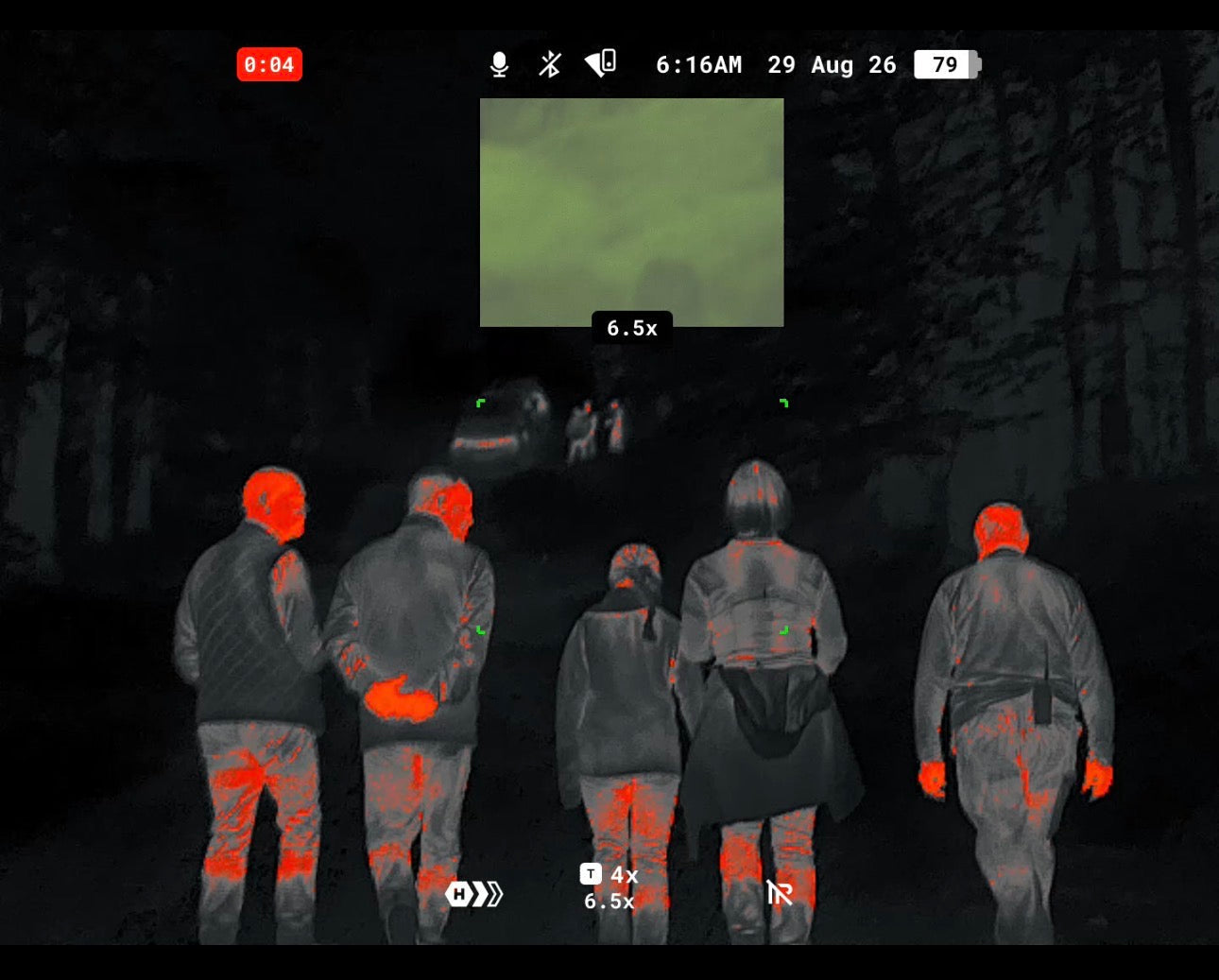
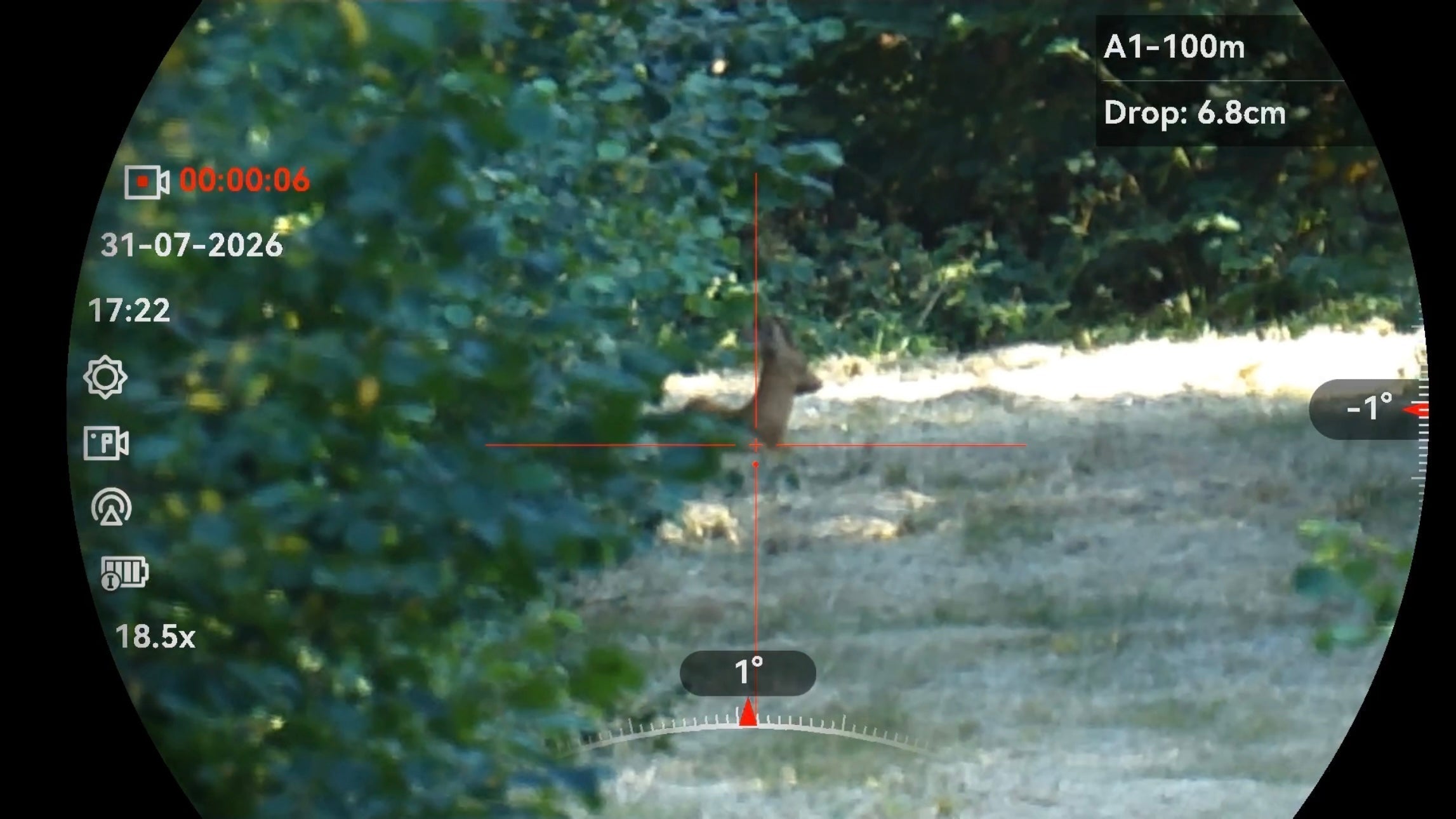
With the Symbion, thermal can be used to scan and detect. Once something is located, the user can change to the 4K digital channel or use Pulsar's combined picture-in-picture functions to bring both sources of information together. Pulsar has deliberately designed the platform around full-colour daytime, twilight, digital night and thermal observation rather than treating the digital channel as an afterthought.
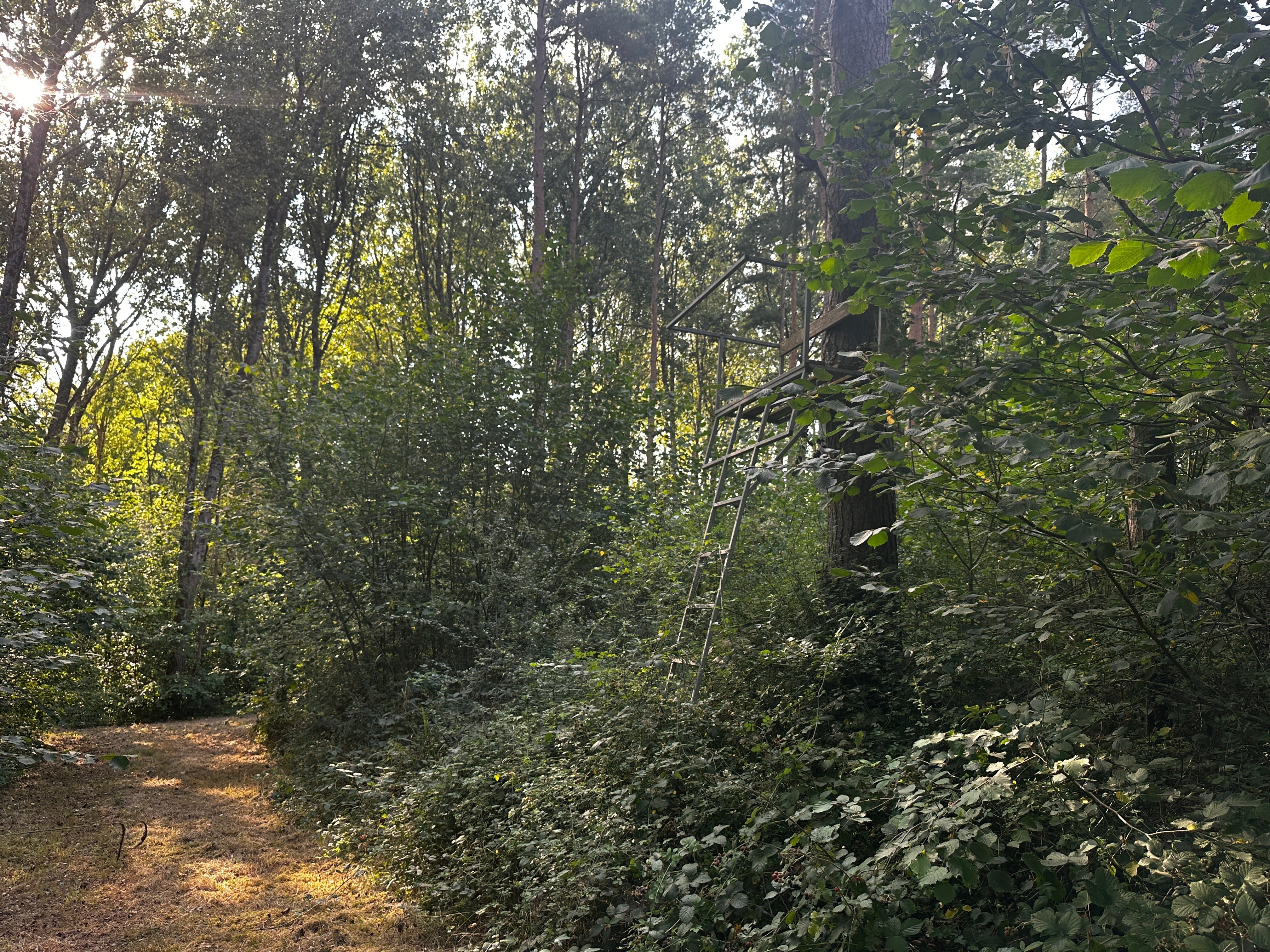
In professional deer management that makes considerable sense. We may be trying to establish whether a group of fallow contains a particular sex or age class, confirm whether the heat source in dense woodland is a muntjac or something entirely different, or simply gather better information before deciding how to approach an area. Being able to detect thermally and then obtain a recognisable digital image without lowering one device and finding another is genuinely useful.
It also reduces the tendency to stare endlessly into thermal.
That may sound trivial, but it is not. Thermal is extraordinarily good at directing attention towards heat. A good visible image restores context. You start looking at the deer within the landscape rather than simply looking at a bright object against a thermal background. For management work, I think that is valuable.

The DXR50 Is Clearly Built With Distance in Mind
There are two Symbion models, and it is worth understanding where the DXR50 sits. The DXR50 uses the 640 × 480 thermal sensor and begins at 4× thermal magnification, providing a thermal field of view of 15.4 metres at 100 metres. Pulsar itself positions the DXR50 as the longer-range version of the platform. The DXT50, by comparison, uses a higher-resolution 1280 × 1024 sensor with 2× base magnification and a substantially broader field of view.
That character is noticeable.
The DXR50 gives a detailed, purposeful image and feels particularly comfortable when observing animals at some distance. Across larger estates, downland, woodland edges and agricultural ground, that magnification can be extremely useful.
In really tight southern woodland, however, there will inevitably be occasions when a wider thermal field of view would be useful for rapid scanning. This is not a criticism so much as a consequence of the way the DXR50 has been configured. Someone spending almost all of their time in enclosed woodland should understand the difference between the two models rather than simply assuming that more magnification is always better.
For the mixture of ground we work across, the DXR50 has performed very well. I would simply describe it as a unit with a bias towards reaching out rather than trying to fit as much woodland as possible into the display.
Image Quality Is Where the Money Has Gone
These are not inexpensive binoculars, and at this level the image needs to feel premium.
It does. Once the settings are dialled in correctly, both channels produce the sort of image you expect from a modern flagship observation platform. The DXR50's thermal system is quoted with a system NETD below 18 mK and operates at 50 Hz, while both eyepieces use 1920 × 1080 AMOLED displays. The digital side uses a 3840 × 2160 CMOS sensor.
Numbers aside, the practical result is a clear and detailed view that allows prolonged observation without constantly wishing for something better.
There are plenty of settings available to optimise that image. The thermal channel includes Normal, High and Ultra sensitivity amplification levels, smoothing options and multiple colour palettes. Brightness and contrast can be adjusted through the quick menu, while the digital channel offers daytime colour, twilight and two night modes. The infrared illuminator also provides three output levels.
The danger with this level of adjustment is that users can spend their first few outings fiddling rather than observing. That was certainly part of our early experience. Once you understand how the unit wants to be operated and settle on the settings that suit the conditions, it becomes considerably easier. But there is a learning curve.
I suspect that says almost as much about the age and habits of the operator as it does about Pulsar's interface.
Apparently the Controls Aren't That Difficult After All
There is nothing quite like watching somebody twenty or thirty years younger pick up a piece of technology you have been methodically trying to understand.
We had the Symbions with us during a walkabout with guests. While some of us had spent time working through settings, buttons and menus, one of the younger members of the group took them, downloaded the Stream Vision 2 app, connected the binoculars to his phone and was sharing images through WhatsApp within a matter of minutes. So perhaps Pulsar's setup is not the problem.
The connectivity is genuinely good once configured. The DXR50 has built-in 2.4 and 5 GHz Wi-Fi, 64 GB of internal memory and supports Pulsar's Stream Vision 2 platform. Video and photographs can be recorded internally, with the manufacturer specifying 1440 × 1080 files, and video can also include sound through the built-in microphone.
For professional deer management, I see more value in this than simply collecting interesting footage. Being able to capture an observation and then get it onto a phone quickly gives us useful evidence. It can support discussions between controllers, provide a record of deer using a particular compartment, demonstrate animal condition, capture unusual behaviour and contribute to reporting back to a landowner.
A photograph showing exactly what was observed can often communicate more effectively than several paragraphs of description.
The recording and screen-capture functions on the Symbion are excellent. They are the sort of features that could easily become a gimmick, but in this case they complement the core observation function rather than distracting from it.

There Are a Lot of Buttons
This brings us to one of my reservations. There are a lot of controls across the top of the Symbion.
Pulsar lists separate controls for recording, back/zoom, calibration and image stabilisation, DUO mode, image mode, laser rangefinding and menu access, alongside a controller ring. There are also separate focus controls for the thermal and digital channels and a physical IR focusing control.
There is a good reason for most of them. This is effectively several devices packaged together, and keeping commonly used functions outside layers of menus has obvious benefits. Once muscle memory develops, direct controls are generally preferable to digging through software while an animal is moving. Even so, I am not convinced every control needs to occupy prime real estate on the top surface.
A professional user tends to settle into a relatively small number of frequently used functions. Detection mode, channel change, rangefinding, recording and basic image adjustment need to be immediately accessible. Some of the less frequently used controls could perhaps sit elsewhere on the body without compromising operation. This is particularly relevant when wearing gloves. A row of buttons that makes perfect sense when studying the unit indoors can feel rather different when you are trying to distinguish one control from another in darkness.
Interestingly, even Pulsar's own published field review acknowledges that there are plenty of buttons to learn, while praising the tactile separation of the main controls. I would describe it in much the same way. It is not badly designed, but it asks the user to learn it.
Once you have, the experience improves considerably.

The Body Feels Almost Over-Engineered
Pick the Symbion up and it feels expensive. At approximately 1 kg including batteries and measuring 207 × 132 × 72 mm, this is a substantial binocular rather than a pocket thermal. The housing is magnesium alloy, and Pulsar rates the device to IP67 for water and dust protection. The manufacturer quotes an operating range down to -25°C and up to +50°C.
There is reassuring solidity to it. The hinges, eyepieces and body feel as though they have been designed for proper outdoor use rather than delicate handling. In some respects it feels almost over-engineered, and I mean that largely as a compliment.
For professional equipment, I would much rather start with something that feels capable of absorbing daily use than something beautifully lightweight that makes me nervous every time it is placed on the bonnet of a truck.
The real question will come later.
I would be genuinely interested to see what a set of Symbions looks like after two or three years of near-daily professional use. That is the test manufacturers cannot reproduce completely in a specification sheet. Repeated wetting and drying, grit, sweat, gloves, vehicle storage, constant lens-cap use and thousands of button presses expose the weak points of any equipment. Nothing we have seen so far suggests that the core body will struggle. It feels very well put together.
My concerns are around some of the smaller external details rather than the main chassis.
Lens Caps: Small Details Become Big Irritations
The lens-cap arrangement is one example.
Pulsar's manual confirms that the caps can be removed, which may ultimately be the solution for some users. As supplied, however, I can see the retaining arrangement becoming a snag point during regular woodland use. Bramble has an almost supernatural ability to find the one loose component hanging from an otherwise streamlined piece of equipment. Add straps, coat zips, rifle slings and fencing and anything projecting away from the body will eventually be caught.
For recreational use this may be little more than annoying. For someone walking through thick woodland several days each week it becomes the sort of small design feature that gradually drives you mad.
Protection for the lenses is obviously essential, especially on equipment at this price, so simply discarding the caps is not an ideal answer. I would like to see how they stand up over a prolonged period and whether a more integrated solution might eventually be possible. Again, this is not a criticism of the optics themselves. It is precisely because the main unit feels so refined that the small external details become more noticeable.
The IR Focusing Control Raises a Question
The other physical feature I will be watching closely is the focusing control associated with the infrared illuminator.
The Symbion uses a focusable 850 nm IR illuminator, and the physical focusing switch allows the beam to be adjusted. The infrared system itself is useful, particularly when using the digital channel in complete darkness, and the three output levels allow the illumination to be matched to distance.
It is the external control rather than the IR performance that interests me. Any recess, slider or external mechanism on equipment used constantly in southern England is going to spend a considerable amount of time wet. Pulsar rates the complete unit IP67, so there is no suggestion that the binoculars are not designed to withstand rain and immersion within the limits of that rating. But IP ratings and long-term field durability are not exactly the same question.
My concern is whether the area around that control will retain water, mud or grit after several hours in sustained rain and how the mechanism will look after years rather than weeks. Recessed external controls historically tend to become collection points for whatever the weather throws at them.
At present this is simply an observation, not evidence of a problem. Our unit has not failed, and the manufacturer's ingress rating is substantial. It is nevertheless one of those areas I would inspect periodically if the Symbions became part of a controller's daily working kit.
The Laser Rangefinder Completes the Package
The integrated laser rangefinder is another feature that makes more sense in a professional context than it might initially appear.
The DXR50 is specified to range to 1,500 metres with ±1 metre measurement accuracy and can operate in single measurement or scan mode. We are clearly not taking management decisions at anything approaching those maximum distances. But accurate ranging is useful for understanding the landscape, checking known observation points, assessing animals on large fields and giving less experienced operators a more realistic sense of distance.
It also prevents another device being carried.
That is a recurring advantage of multispectral binoculars. Thermal, digital observation, infrared capability, ranging, photography and video are all integrated within one package. Each individual feature can be replicated by separate equipment, and in some cases a specialist standalone device may do one task better. The strength of the Symbion is that the complete combination is available immediately.
For a professional controller already carrying enough equipment, consolidation has genuine value.

Battery Arrangement Works for a Working Day
The DXR50 uses two removable APS5 batteries, with Pulsar quoting up to ten hours of operation at 22°C. USB-C external power is also supported.
Actual battery endurance will inevitably depend on temperature, Wi-Fi use, recording, IR illumination and how much time the device spends fully active. I am generally cautious about treating any manufacturer's laboratory figure as a guaranteed working shift. What I do like is the replaceable battery arrangement.
Professional users need to be able to continue working without tethering expensive binoculars to a power bank halfway through an operation. Carrying charged spare packs is straightforward, and removable batteries can be rotated as part of the normal charging routine.
The power-saving functions are also sensible. The proximity sensor can switch the displays off when the binoculars are lowered, and the unit includes a physical On/Sleep/Off switch. These are relatively small features, but over a long evening they help.

The Strap Is the Part I Would Change Tomorrow
If there is one part of the Symbion package I would change immediately, it is the supplied carrying arrangement.
For binoculars costing this much and weighing around a kilogram, the strap and particularly its attachment/catch arrangement do not inspire the same confidence as the binoculars themselves. That matters more than it might appear.
Professional controllers spend a great deal of time bending down. We cross fences, climb into and out of vehicles, inspect deer, work around carcasses and push through woodland. If binoculars are hanging freely, the moment you lean forward they become the first expensive object looking for something hard to strike.
At 1 kg, there is enough weight behind them to do damage. A strap for this type of equipment needs to do more than prevent the user dropping it while standing upright. It needs to control the binoculars against the body while climbing, bending and working. It should remain comfortable after several hours and inspire complete confidence in every attachment point.
The supplied system does not feel as though it has received the same level of development as the binoculars. That is surprising because Pulsar actually supplies both a binocular harness and neck strap in the package. The underlying idea is clearly recognised; I simply think the execution deserves another look for equipment intended to survive demanding professional use.
For recreational observation, it may be perfectly adequate. For repeated deer-management work, I would be looking for a more substantial harness arrangement with secure retention against the chest. When a £4,000-class piece of equipment is bouncing towards a gate post, the quality of its thermal sensor suddenly becomes irrelevant.
Glass Still Has a Place
For all the capability of the Symbion, I am not ready to leave conventional binoculars behind.
Good glass provides something electronic systems still struggle to replicate: a completely natural view, immediate readiness, no battery dependency and the ability to observe for long periods without feeling as though you are looking at a screen. On an open Scottish hillside, particularly in good daylight, I would still be very happy carrying quality conventional binoculars. They are lighter, simpler and exceptionally good at what they do.
The case for multispectral becomes strongest when the environment is changing constantly.
In a southern woodland, I might begin by scanning thermally beneath a canopy, move to the digital channel to identify an animal, use the rangefinder to understand its position and then record an image to discuss with another controller. Later the same evening, light disappears and the same device continues working. That is where the Symbion earns its weight.
It is not necessarily about replacing every other optic. It is about reducing the compromises between them.

What Matters for Professional Deer Management
It is easy for equipment reviews to become competitions over specifications.
For our work, the questions are simpler. Does the equipment help us find deer? Does it help us identify them? Does it provide information that improves a decision? Can it survive the weather? Can it be operated after several hours on the ground without becoming irritating? Can we depend upon it tomorrow morning after using it all evening?
The Symbion DXR50 answers most of those questions extremely well.
The thermal image is excellent. The digital channel adds genuine value rather than existing merely to justify the multispectral label. The integration between the two is precisely why I continue to favour this type of device over thermal-only binoculars. The rangefinder, recording capability and Stream Vision integration make sense for professional observation and reporting, while the overall build quality is what I would expect from equipment at this level.
The criticisms are mostly ergonomic.
There are more buttons than I think absolutely necessary, even if experience makes them much easier to navigate. The lens caps and external fittings provide potential snag points. I will be interested to see how the IR focusing control copes with years of rain, grit and mud despite the very good IP67 rating. And the supplied strap arrangement is, for me, the clearest area for improvement.
None of those points changes the quality of what you see through the eyepieces.
An Excellent Multispectral Platform That Needs to Be Judged in Years, Not Weeks
After several weeks with the Pulsar Symbion LRF DXR50, my strongest impression is that multispectral observation has moved beyond being an interesting additional feature.
Used properly, it makes sense.
Thermal provides exceptional detection. The 4K digital channel provides context and identification. The rangefinder adds another useful layer, while recording and smartphone connectivity allow observations to become evidence that can be stored and shared rather than simply remembered. The specification is impressive, but more importantly much of that specification translates into genuinely useful capability in the field.
It takes a little time to learn.
There are numerous settings and a substantial number of physical controls, although watching a younger guest connect the unit to his phone and start sharing images within minutes suggests that some of our initial difficulties may have belonged to the operators rather than Pulsar.
The binoculars themselves feel extremely well made. The magnesium body is reassuringly substantial, the image quality is excellent and the complete unit has the sort of solid construction expected at this price. What I cannot tell after only a few weeks is how all of the smaller external components will look after two or three years of daily professional use. That is ultimately the test that interests me most.
I would improve the harness before almost anything else. Professional binoculars need to remain secure against the body when crossing fences, handling a carcass or simply bending down, and the retention system should feel as over-engineered as the binoculars it is protecting.
Beyond that, the Symbion DXR50 makes a persuasive case for multispectral observation.
I still want good glass in the right landscape. I still see situations where a smaller thermal has advantages. But if I am heading into southern woodland and want one observation device capable of taking me from daylight through twilight and into darkness, thermal alone increasingly feels like only half the answer.
The Pulsar Symbion LRF DXR50 gives us the other half as well.