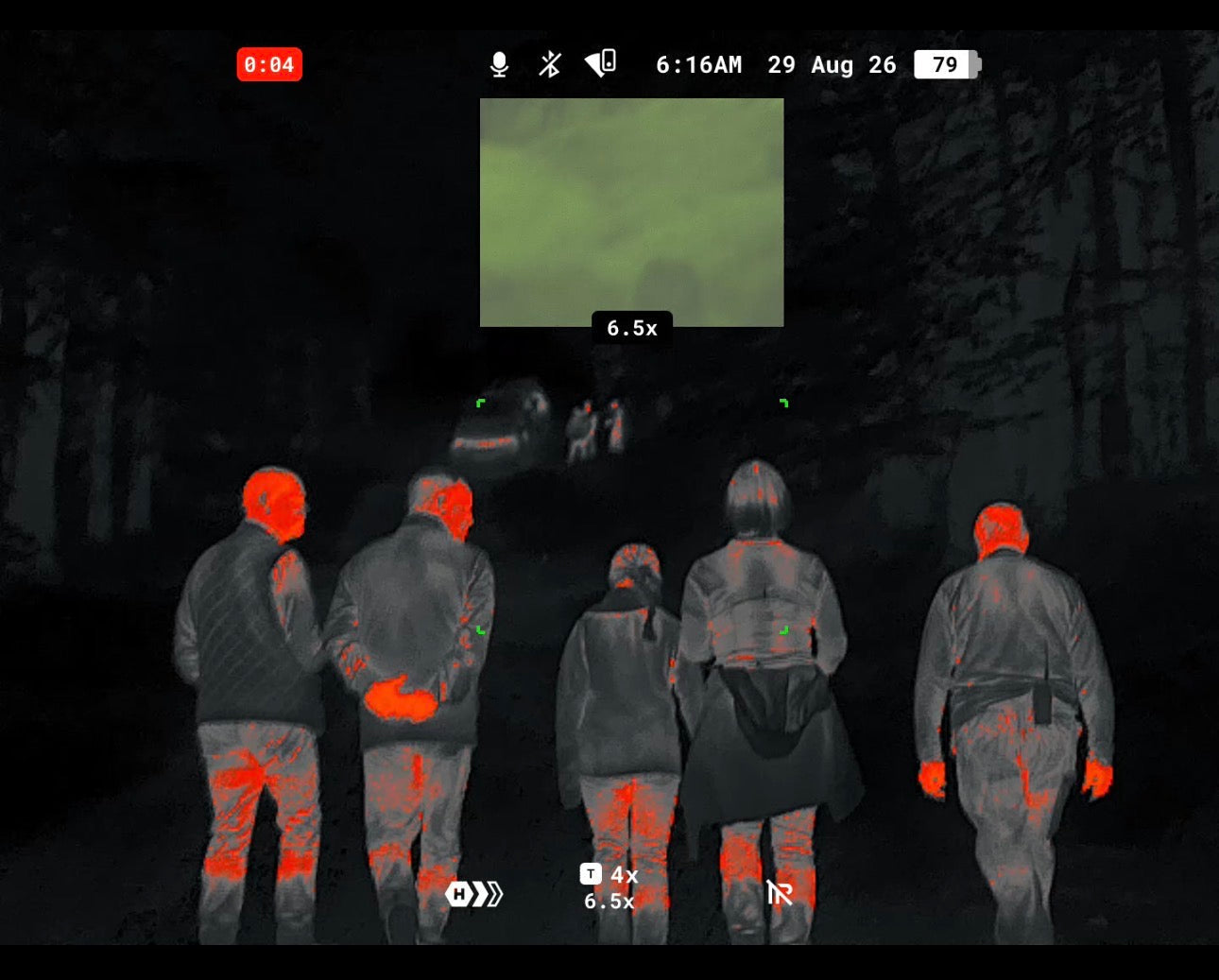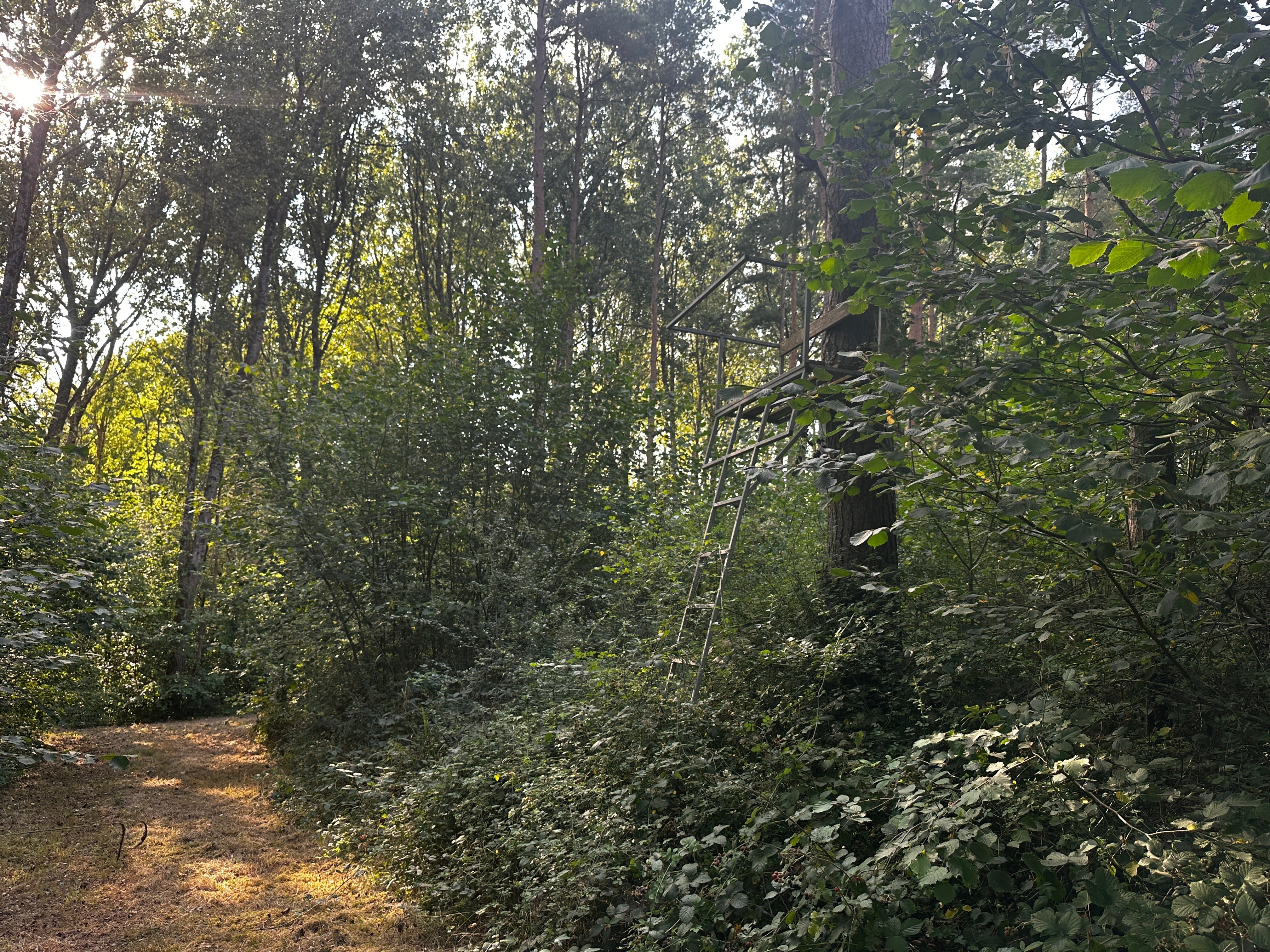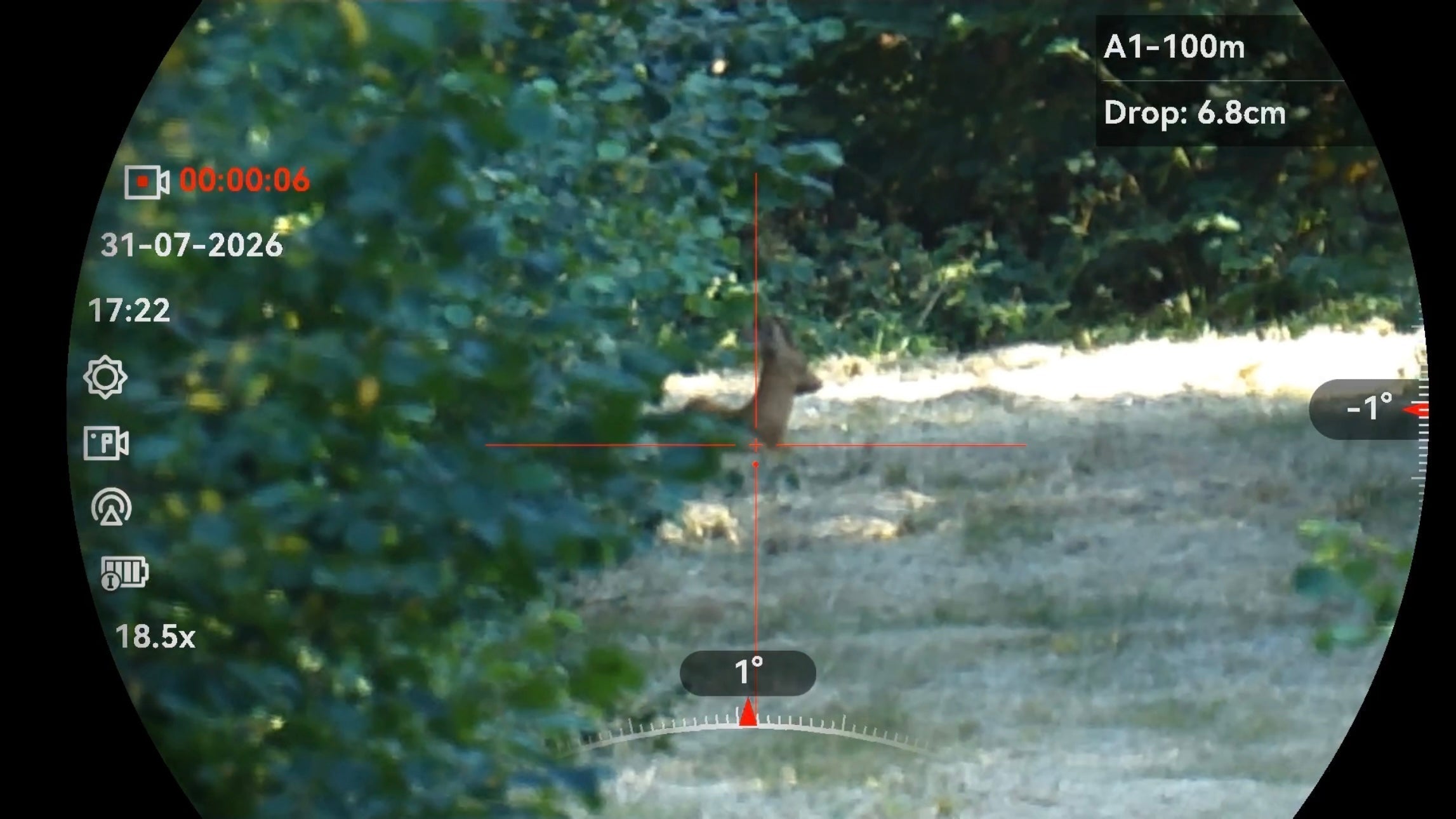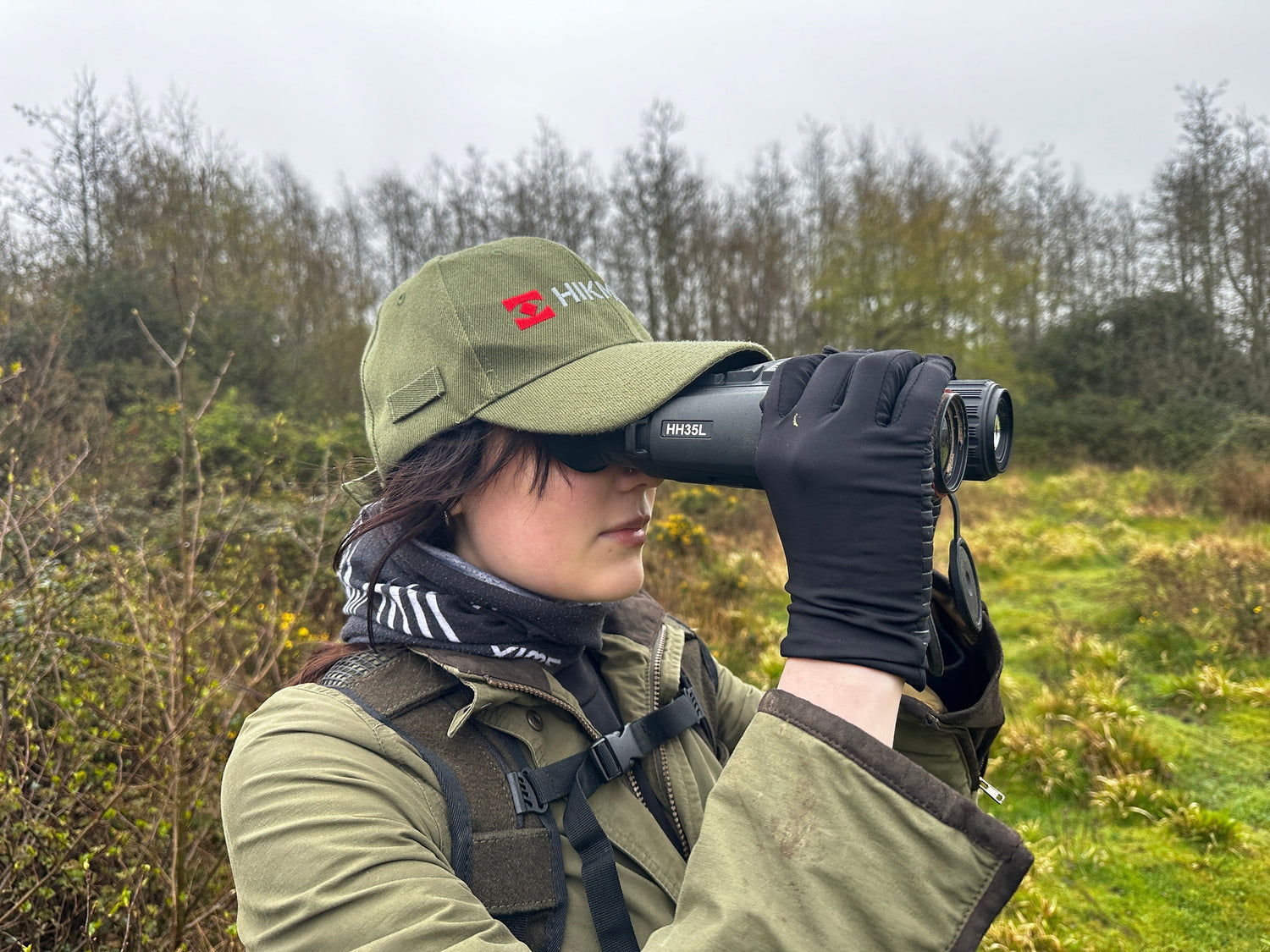
There is a difference between kit that looks impressive in a retailer’s cabinet and kit that earns its place after a couple of months of real use. Most people in our line of work know that difference quickly enough. New optics nearly always arrive looking tidy. The better question is what they look like, and more importantly how they behave, once they have been dragged through ordinary field life. Wet rides, muddy gloves, vehicle floors, hedge lines, extraction work, awkward weather, repeated scanning, and the sort of handling that comes not from carelessness but from proper use.
That is where the HIKMICRO Habrok HH35L has been interesting.
We have been testing these from Scott Country over the last couple of months and, for professional deer managers, they make immediate sense as a tool designed to be used as intended. Not admired, not fussed over, and certainly not treated as something too precious to leave the truck. Used. That matters, because too much discussion around thermal kit still leans on first impressions and not enough on the slower question of whether the unit remains worth carrying once the novelty has gone.

In fairness to the Habroks, we have not exactly been gentle with them. Not deliberately, but in the ordinary way real working kit gets treated. Mud around the objective housings, repeated use in poor weather, in and out of the vehicle, set down where it probably should not have been, handled with cold hands and dirty hands, and used in the sort of conditions that quickly expose whether something was made for actual fieldwork or simply for careful ownership. So far, they have been faultless.
That matters more than any polished unboxing ever will.
What the HH35L actually is
On paper, the Habrok HH35L is still a serious bit of field kit. It is built around a 384 × 288 thermal sensor with sub-20 mK sensitivity, a 35 mm F1.0 thermal lens, a 2560 × 1440 day and night optical channel, an integrated 1000 metre laser rangefinder, an 850 nm infrared illuminator, an OLED display, IP67 weather protection, and quoted runtime of more than six hours.
Those numbers are useful, but only up to a point. What matters more in practice is the sort of workflow they produce. In simple terms, the HH35L gives you the two things many deer managers increasingly want to keep in one chassis. First, a thermal channel that is good enough to locate life quickly and remain useful when the weather begins to flatten the scene. Second, an optical channel that is genuinely worth using in its own right rather than feeling like an afterthought bolted onto the thermal story.
That matters because deer work is rarely just about detection. It is usually a sequence of locating, checking, confirming, ranging, and deciding. A unit that keeps those stages together, rather than scattering them across separate pieces of kit, has obvious value in the field.

The binocular format still makes sense
One of the quieter strengths of the HH35L is the binocular format itself. Two-eyed viewing remains more comfortable over longer sessions, and for managers who spend genuine time observing rather than simply scanning and moving on, that matters. It steadies the image, reduces fatigue, and encourages a calmer way of reading ground.
That may sound like a small point, but it is not. Deer management is not only about spotting heat. It is about reading movement, shape, background, body language, and context without overcommitting too quickly to the first impression. The Habrok format helps with that because it feels more observational and less reactive than some smaller handheld units.
The chassis also remains compact enough to feel practical. It is not so large that it becomes burdensome over longer sessions, but it is substantial enough to settle in the hands properly. That balance is part of why it works well as a genuine field unit rather than just a specification exercise.

Thermal performance where it actually matters
A great many optics are perfectly acceptable in kind weather. That is not a demanding test. The harder question is what happens when the air is wet, the ground is holding moisture, and the whole landscape begins to flatten in the way lowland England is so good at producing.
This is where the HH35L has impressed.
The quoted sub-20 mK sensitivity is not just brochure language. In practical terms, it is one of the reasons the thermal side keeps enough separation and detail to remain useful in conditions where lesser devices begin to slide towards a far less helpful picture. It is not magic, and no thermal is immune to poor atmospheric conditions, but it remains readable at the exact point a working tool needs to remain readable.
That matters because many of us are not choosing outings based on aesthetic conditions. Contracts, access, deer behaviour and available windows rarely allow that sort of luxury. If the weather is poor but the work still needs doing, the tool has to remain worth carrying. The HH35L has done that.
For lowland managers in particular, where mixed woodland, ride edges, fields, scrub lines and awkward half-open country often sit side by side, the 35 mm lens feels like a sensible middle ground. There is enough reach to remain useful and enough practicality to avoid becoming overly specialised.
The optical channel is more useful than many expect
This is one of the areas where multi-spectrum devices either justify themselves or quietly expose their own compromises. If the optical side is poor, then you are carrying a feature rather than gaining a proper tool.
That is not the case here.
The HH35L’s optical side is built around a high-resolution detector and, in practice, it is more than a token addition. It gives you a visual channel that helps move you beyond simple thermal detection and into actual observation, especially in those low-light periods where thermal shows presence perfectly well but not always the full context you need.
That is one of the reasons the unit works well for deer managers. You are not only finding deer. You are often trying to understand what you have found, how it is moving, what sits around it, and whether the next decision is sensible. The optical channel helps with that and justifies its place properly.
The built-in IR also adds value, particularly where you need to work the digital side harder in darker conditions rather than simply dipping in and out of it.
The laser rangefinder and joined-up use
The integrated 1000 metre laser rangefinder is another one of those features that sounds obvious until you start using it repeatedly and realise how much friction it removes. Range information does not replace judgement, but it does support it, particularly in poor light and across ground where distance can easily deceive.
One of the things the Habrok does well is reduce the need to break sequence. You are not moving between separate pieces of kit simply to go from locating to checking to ranging. That matters more on hard ground and in poor weather than it ever does in a showroom. Less faff, less movement, fewer interruptions, and fewer chances to disturb what you are trying to understand.
That joined-up feeling is one of the quiet strengths of the unit. It does not simply offer features. It makes those features usable in the order you need them.

Where the newer Habrok 4K 2.0 has clearly moved things on
This is also where a little honesty helps.
In my earlier field test of the Habrok 4K 2.0 HE25L, one of the practical points I made was that the newer thermal and digital toggle, along with the revised control layout, does make a noticeable difference in use. That is not marketing fluff. It is a genuine workflow improvement. The ability to move more fluidly between channels and the more natural control arrangement are exactly the sort of changes that matter in the field far more than they do on a specification sheet.
Using the HH35L again only reinforces that point.
That is not a criticism of the HH35L, which remains a solid and faultless working tool. It is simply a reminder of how quickly this category is evolving and how much small interface changes matter once you are actually using the device in poor light, under pressure, and on mixed ground. The newer 2.0 platform has improved the speed and feel of that part of the process, and that is worth acknowledging honestly.
What it does not do is suddenly make the HH35L irrelevant. It simply places it more accurately. The HH35L remains a capable, durable, field-proven unit from an earlier stage in a category that is still improving.
Durability is still what decides whether it stays with you
For us, this is probably the most important part.
The HH35L has now had the sort of treatment that separates working kit from kit people talk about carefully. Mud packed around the front. Dirt sitting in places a careful owner would rather not see it. Repeated use in bad weather. The usual indignities of lowland stalking, wet ground, woodland work and vehicle life. It has taken that without complaint.
That counts for a lot. A device that stays reliable once it stops looking new is usually a device worth trusting. Plenty of field optics can impress during the first week. Far fewer retain confidence once they begin to show the reality of use. So far, the HH35L has done exactly that.
And for professional managers, that is usually the point at which a piece of equipment stops being interesting and starts becoming dependable.
Where it makes most sense
For professional deer managers, the HH35L still makes the most sense where the job involves steady observation across mixed lowland ground and where the value of keeping thermal detection, optical confirmation and rangefinding together in one unit outweighs the faster switching refinements offered by the newer 4K 2.0 line.
It particularly suits managers who spend proper time on the glass rather than simply quick-scanning and moving on. The binocular format helps there. The thermal remains effective in the sort of weather that matters. The optical side is genuinely useful. The rangefinder reduces friction. And the whole thing feels built to be carried as a working tool rather than a delicate possession.
There is also, increasingly, a value argument here. As an older-generation Habrok, the HH35L can now make a great deal of sense for buyers who want serious multi-spectrum capability without stepping all the way up to the newest platform. That balance between performance, durability and maturing price point only becomes more attractive if the unit in question still feels entirely capable on the ground.

A word on service
It is also worth saying that good field kit sold badly is still a poor experience. In this case, thanks are due to Paul at Scott Country for the sort of professional service that still matters in this sector. A working manager buying a genuine tool needs more than a transaction. They need people who understand what the unit is likely to be used for, and why that matters.
That relationship still counts.
In a nutshell
The HIKMICRO Habrok HH35L remains a serious working tool. The core specification is still strong, the thermal side remains genuinely useful in poor conditions, the optical channel is far more than an afterthought, the built-in rangefinder adds practical value, and after a couple of months of real use it has remained reliable and unfussy.
My earlier Habrok 4K 2.0 HE25L field test highlighted how useful the newer thermal and digital toggle is in practice, and that improvement is real. But using the HH35L hard over the last couple of months has been a useful reminder that the older unit still stands up very well on working ground. It may not be the newest stage of the Habrok story, but it remains a proper tool. And for many professional deer managers, that still matters more than anything else.