One of the quieter privileges of this work is that it reminds you how unnatural modern life has become.
Most people now live at a pace that leaves very little room for stillness. The day begins with noise and ends with noise. Phones, emails, traffic, responsibilities, pressure, other people’s needs, and the endless sense that your attention belongs everywhere except where your feet actually are. Even rest has become crowded. People sit down, but they do not switch off. They stop moving, but the mind keeps grinding on.
That is why time out matters more than most people admit.
Not in the vague, performative way the phrase is often used, but in the simple and practical sense of stepping outside the usual machinery of the day and being somewhere that asks something different of you. Somewhere that reduces the noise rather than adding to it. Somewhere that pulls you back into the present because the present is the only thing that matters while you are in it.
That is one of the things deer management, and the wider countryside sector around it, still gives us in a way very few other lines of work can.
We spend enough of our time talking about outputs. Deer seen. Deer culled. Habitats recovering. Contracts delivered. Policies shifting. All of that matters. But alongside the visible work there is another value, one that is easier to overlook precisely because it does not fit neatly into a report or an invoice. This work places us in landscapes and at times of day that most people never get to know properly. It teaches patience by force. It teaches quiet observation. It teaches the discipline of slowing down enough to notice what is actually around you.
And sometimes, if we are sensible, it allows us to offer a small part of that to other people.
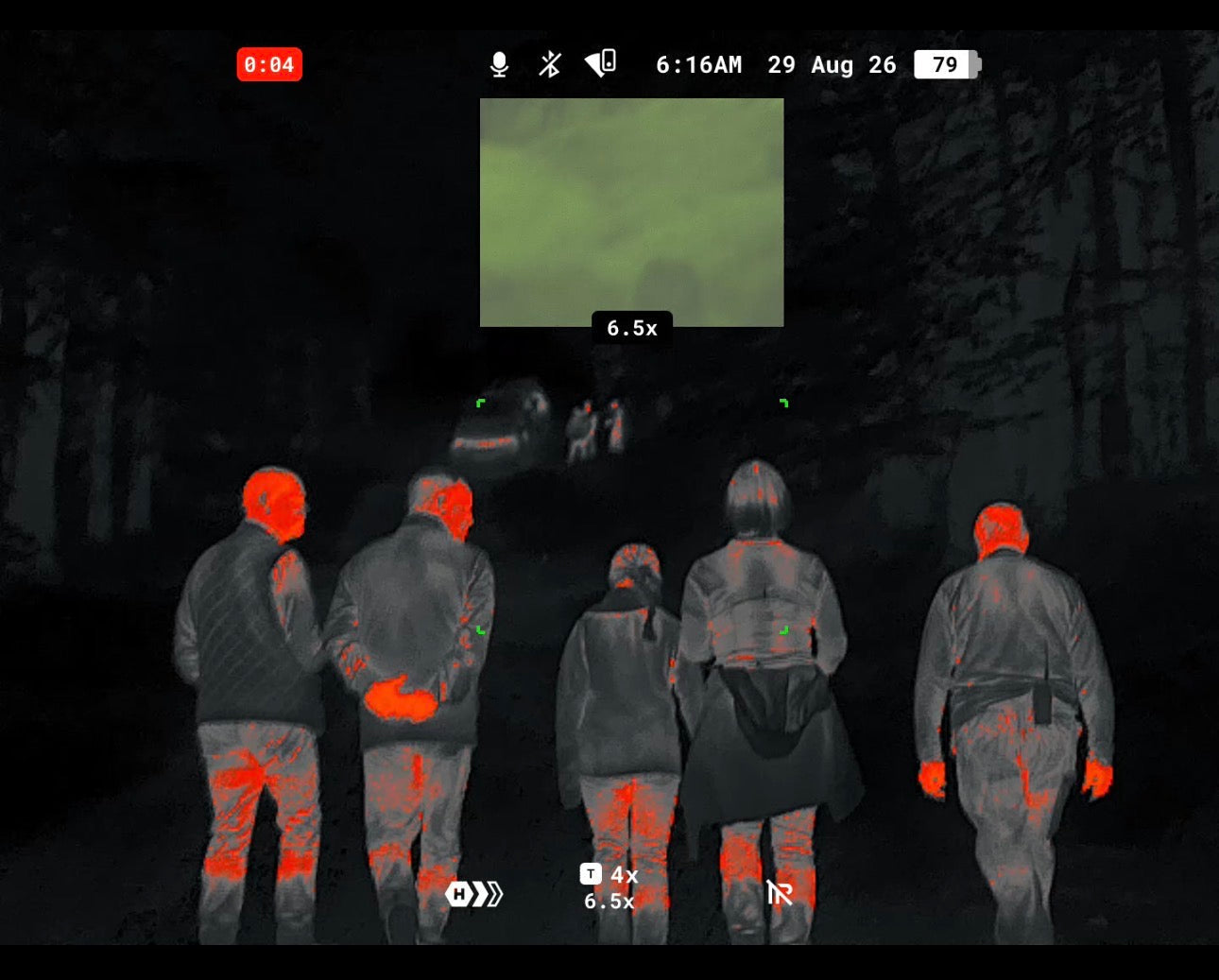
That was what stayed with me after taking my son-in-law out this week. Not just his surprise at the darkness, or his curiosity about how the woodland changes once the last light has gone, but the more human part underneath it. The fact that for a few hours he was somewhere that did not want anything from him beyond attention. No kitchen pace. No constant demand. No family logistics. No phone-led fragmentation. Just space, darkness, weather, ground, and the simple requirement to be where he was.
That is more valuable than it sounds.

The countryside still offers something most daily life does not
The modern working day has a way of flattening people. It trains them to move from one demand to the next without any real transition. Even leisure is often just another form of consumption, another stream of information, another screen, another shallow distraction dressed up as recovery.
Nature does something else. Real contact with it, not the curated version, but the inconvenient, slightly cold, slightly awkward, properly present version, has a way of narrowing life back down to something manageable.
A woodland at dusk does not care about your inbox. A dark ride does not care what meeting you have tomorrow. Uneven ground and changing wind have no interest in your calendar. And because of that, a person who steps into those spaces often finds themselves doing something increasingly rare: paying attention to one thing at a time.
That is not sentimental. It is restorative.
For many people, especially those carrying intense or public-facing jobs, the countryside offers one of the few remaining environments where the nervous system can begin to settle without being constantly pulled outward. The body slows. Breathing changes. The eyes adjust. Hearing sharpens. Thoughts become less scattered. You do not always notice it immediately, but it happens.
What feels at first like “just being outside” is often something deeper. It is reconnection, not only with nature, but with the neglected parts of yourself that normal life keeps too busy to hear.
What deer managers can offer beyond the work itself
This is one of the things people perhaps do not say enough about this sector. As deer managers, we are not only custodians of a task. We are often custodians of access to a kind of experience that many friends and family members would never otherwise have.
That does not mean turning every outing into a lesson or pretending the countryside is some kind of therapy package. It means something simpler and more honest. It means recognising that the places we move through routinely, the hours we take for granted, and the sort of quiet we stop noticing can be deeply valuable to someone who does not live in that world.
Sometimes the greatest thing you can offer a friend, a son, a daughter, a partner, or a son-in-law is not a big speech about deer, habitat, or fieldcraft. It is simply the chance to come with you and stand in a wood while the light goes. To feel what darkness in a real landscape is like. To hear how different silence sounds when it is not manufactured. To see how the ground changes, how the trees flatten and then return in a different form, how presence becomes less abstract and more necessary.
For people whose lives are governed by pace, responsibility, and noise, that small glimpse can matter far more than they expected.

The importance of stepping out of the grind before it hardens into habit
There is another reason this matters. Most people do not realise how tired they are until they stop.
Daily grind has a way of becoming self-justifying. You get used to being pulled in every direction. You accept permanent low-level stress as normal. You tell yourself you are managing, because the alternative would require you to admit that your life has become too crowded to hear yourself think. Over time, that hardens into habit.
A few hours in the countryside will not solve that. But it can interrupt it.
That interruption has value. It reminds people that there are still places where time moves differently. It reminds them that attention is not supposed to be endlessly fragmented. It reminds them that stillness is not empty. In fact, stillness is often where the mind begins to recover its shape.
For those of us who work in this sector, it is easy to forget that. We can become so focused on the operational demands of the job that we stop recognising the quieter gift embedded inside it. But it is there all the same.
The early starts. The late finishes. The walks in. The waits. The deepening cold. The strange peace of woods settling down while the rest of the country is pushing through traffic, kitchens, screens, deadlines and domestic noise. These things become ordinary to us. They are not ordinary at all.
A small glimpse is often enough
What I was reminded of this week is that people do not always need a grand countryside experience. Often what stays with them is much smaller. A short period without signal mattering. The shape of a ride in last light. The first proper darkness. The way sound travels in woodland. The quiet surprise of realising that for an hour or two, they have not been mentally somewhere else.
That is one of the most understated benefits of what we do. Through deer management and the life around it, we can sometimes offer friends and family a small glimpse into a way of being that modern life does not offer easily anymore. Not an escape from reality, but a reintroduction to parts of reality that have been crowded out.
A little connection with nature. A little quiet. A little perspective.
And sometimes that is enough to remind someone that life is not supposed to feel like a permanent rush between obligations.
The work itself matters. The habitat objectives matter. Welfare matters. Professional standards matter. But alongside all of that, there is something else this sector can still give, if we let it.
It can give people a brief way out of the daily grind. It can give them stillness without emptiness, quiet without loneliness, and contact with something older and steadier than the pace most of us now live at. It can give them, even briefly, the experience of being fully present in a real place at a real hour, with no demand beyond noticing.
For friends and family, that may be one of the best things we can offer.
Not a lecture. Not a performance. Just a small glimpse of connection with nature, and a reminder that there is still another rhythm available if you are willing to step into it.