Night work has become a normal part of professional deer management in the South East, particularly for those of us operating under Natural England night licences on high-pressure sites. With that shift comes a quiet but important question: how do we demonstrate, not merely to ourselves but to landowners, agents and regulators, that we treat this work with the gravity it demands?
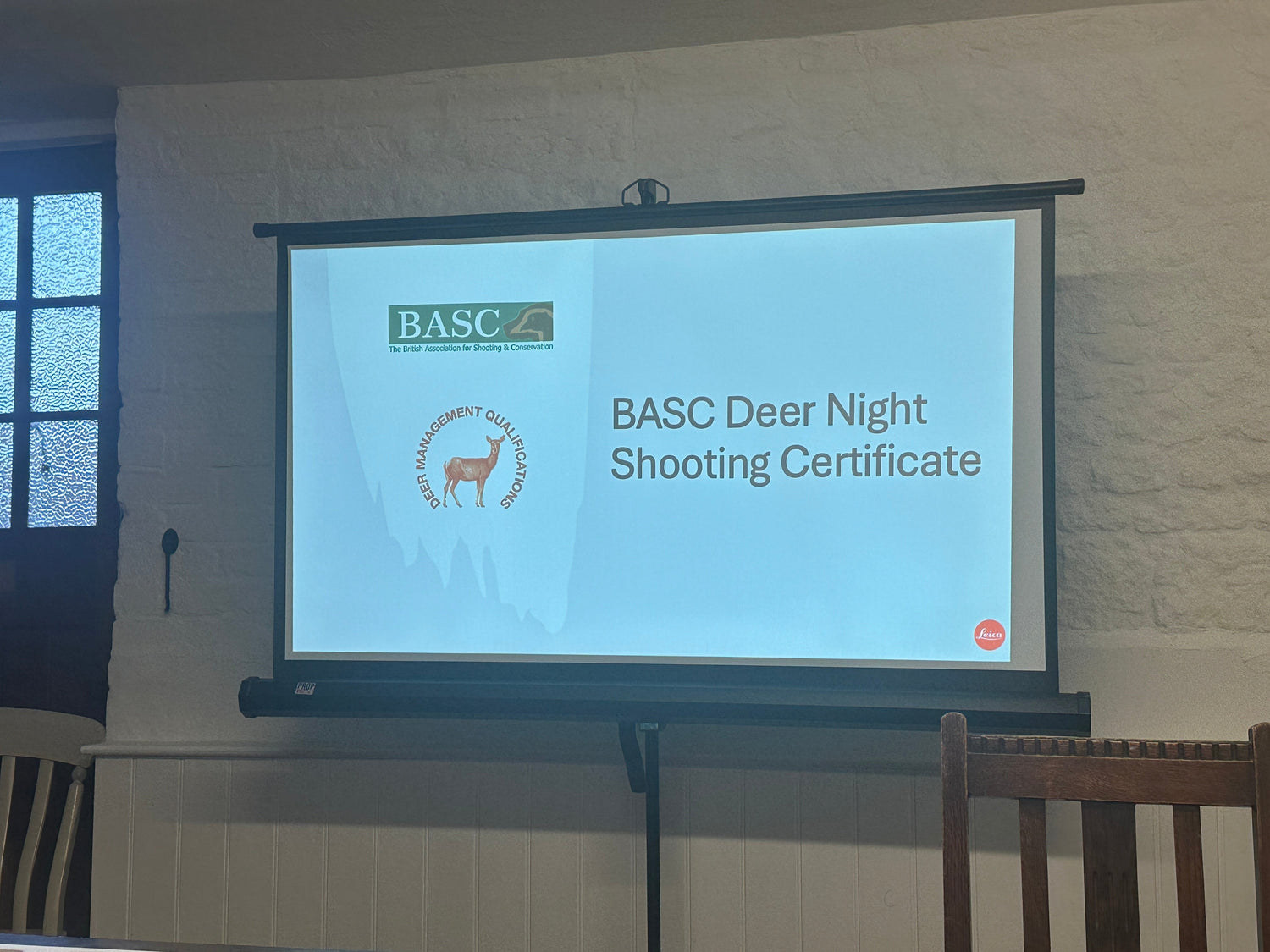
Earlier this week I attended the BASC Deer Night Shooting Certificate at Cowdray Estate. On paper it is a straightforward training day. In practice it is a useful reminder of why structured training still matters, even for those of us who have been doing the job for years. This is not a sales pitch and it is not formal advice. It is a reflection on the value of going back into the classroom, refreshing skills, and submitting oneself to the scrutiny we often expect of others.
Training, Trust and Professional Standards
In professional deer management there is plenty of talk about standards, yet standards must be demonstrated, not declared. One of the most direct ways to do that is to invest in further training and accept assessment.
Most serious contracts are built on trust. A landowner needs to know that the person on their ground, carrying a rifle in the dark, is not only competent but current. Certificates do not replace real experience, but they do send a clear signal: you are willing to be questioned, measured and held to account.
Completing the BASC Night Shooting Certificate does exactly that. It communicates that night work is not something you have drifted into because a licence bears your name. It shows you understand the additional risk, have revisited fundamentals, and can sit and pass an exam on safety and judgement, not just marksmanship.
For those of us who took DSC1 fifteen or twenty years ago, it closes the gap between once learnt and actively remembered. Legislation evolves, best practice evolves, expectations evolve. Training acknowledges that you have not finished learning simply because you hold an older certificate.
A Solitary Profession
Deer management can be isolating. Much of the work happens when everyone else sleeps. Early starts, late finishes, long drives home in silence. Decisions in the field are often yours alone, which is precisely why continuous self-scrutiny matters.
One underrated benefit of courses like this is the chance to be around people who speak the same language. Gamekeepers, stalkers, forestry staff and conservation officers face similar pressures from different angles. The value lies not just in passing a test, but in stepping out of the usual rhythm to see your practice through a wider lens.
The conversations between sessions are as useful as the slides. You realise others wrestle with the same problems: balancing reduction targets with public perception, navigating the night licence process, maintaining standards when the weather turns and the diary is full. You also notice where your habits have drifted and where others have found cleaner methods. That rarely happens if you never leave your own bubble.
Holding the course at Cowdray matters. Training in a working landscape anchors every slide to a real counterpart on the ground. After a brief introduction from BASC staff, we went straight to content. That set the tone. This was not a day of gear chat. It was a structured look at safety and legality in a specific context: shooting deer at night under licence.
Safety First, Second and Third
The morning opened where it should: safety. Backstop, backstop, backstop. Repetition is a feature, not a flaw. Daylight gives you more certainty. At night the margin for error narrows. Shadows mislead, distances compress, and what appears obvious in a thermal image may hide a footpath, a lane or a building.
We revisited topics such as shooting from vehicles, and the added complexity of artificial light and digital optics. The principles echo DSC1, yet applying them in the dark, under licence, with the public never far away, gives them different weight. The refrain was clear. There is no necessary unsafe shot. If the backstop is not adequate, you do not fire. Night licences exist to support necessary reduction where other methods fail, not to legitimise shortcuts.
Species Identification and Night Versus Day
From safety we moved to species identification and the realities of night work. Much of this sits within DSC1, but revisiting it with a night focus is valuable. Slides tested the speed and accuracy of species and sex identification in less-than-ideal conditions. It is one thing to pick a fallow pricket at 150 metres in daylight. It is another through a digital scope in rain with time pressure.
Behavioural differences matter too. How deer move under artificial light, how they react to vehicles, how thermal and night vision distort your sense of context. The message was to spend the extra seconds confirming not only species and sex, but the foreground and background as well.
We revisited the legal framework. Firearms legislation, certificate conditions, night authorisations and the limits of what is permissible. Choosing to operate at night is choosing a space with high expectations and little room for error.
Testing Judgement: Safe or Unsafe
Mid-morning brought a practical exercise using real-world slides. The task was simple: safe or unsafe, and why. Some images were obvious. Others were deliberately ambiguous. A deer on a bank with woodland cover behind. A tempting angle with a poor backstop. Vegetation that might hide unseen walkers. The aim was not to catch people out, but to show how often marginal situations arise in a normal season.
You start to see your tendencies. Are you excessively cautious, missing necessary opportunities, or too willing to rationalise a shot you would not want to defend after the fact. Exercises like this are usefully uncomfortable. They force you to articulate reasoning, not merely trust habit.
Lunch, Questions and Quiet Reflections
Natural England provided lunch, along with more of the informal conversation that makes these days worthwhile. Night licence criteria, local pressures on fallow, differences in estate policy. The strength of the format sits in that blend: the official view from the front of the room alongside the on-the-ground reality from the person next to you.
Written Tests: Knowledge Under Scrutiny
After lunch the tone shifted to assessment. A short species and sex identification test came first, followed by twenty questions focused on night safety, legality and good practice. No trick questions, but thought required. Reciting rules is not enough. You must understand why they exist. For those who have not sat a written test since DSC, it is a healthy check that knowledge remains testable.
Simulated Stalk and Shooting
The range phase began with a safety-led simulated stalk in darkness. You moved through potential opportunities, some safe and some not, and were expected to act as you would during a real outing. Habits reveal themselves when someone else is watching.

Then the shooting test. A five-inch target, two rounds from the back of a truck, reflecting common night-licence practice. Prone at 100 metres, then 70 metres off sticks, and finally an advance to 20 metres off sticks into a two-inch target. That last distance caught many out. Twenty metres sounds simple. It is not. A rifle zeroed at 100 makes the line-of-sight and trajectory relationship very obvious up close. If you have not thought about it, you will print low. Remembering initial bullet rise and drop from your chosen zero is not academic; at night it is the difference between a clean shot and a poor one.
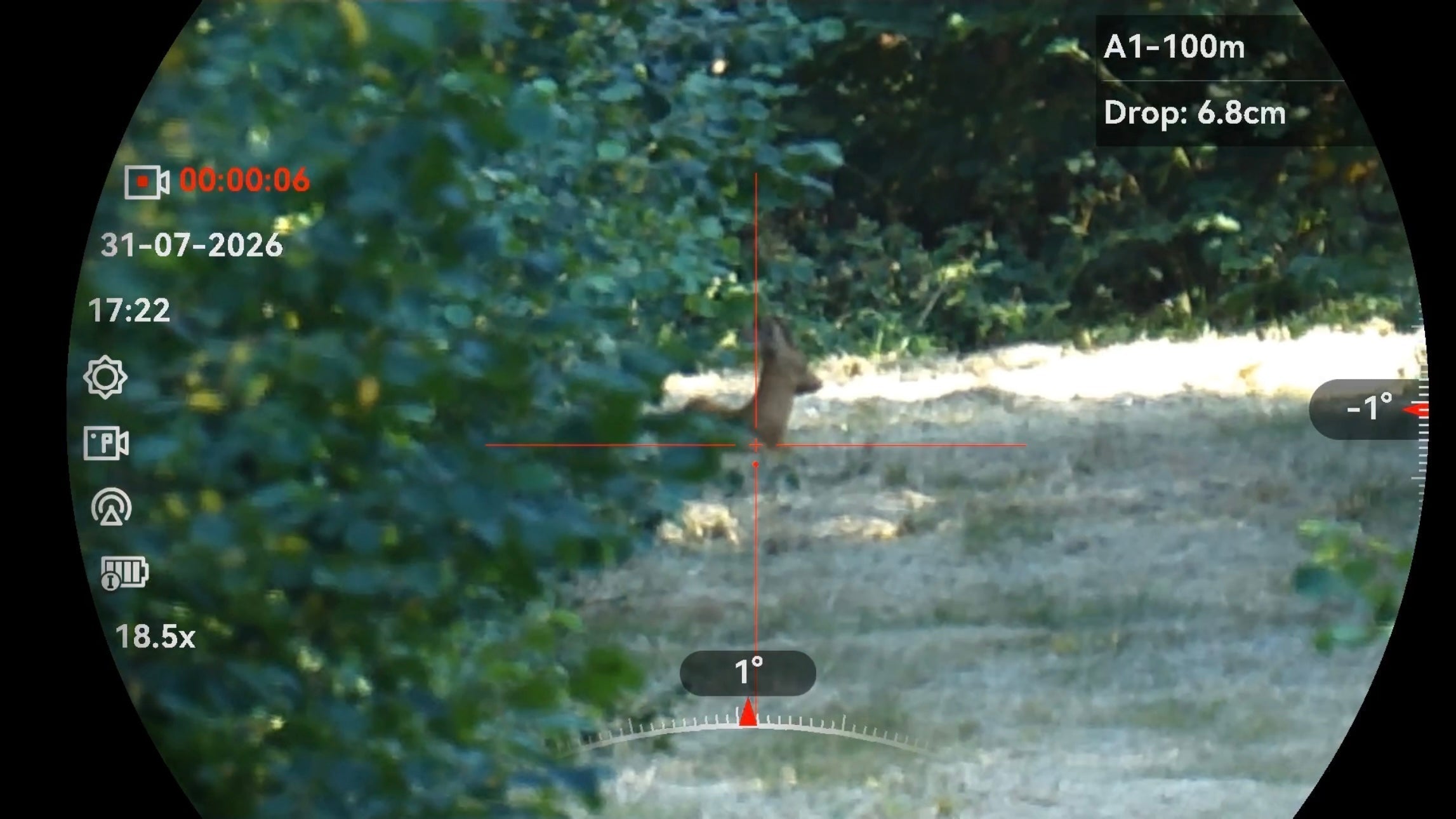
I ran the course using my Hikmicro Apex, as I would on a live night session. That validated the entire system in a controlled setting. Scope, ammunition, point of impact, reticle behaviour under artificial light and mild stress. All worth confirming. Also, bring your head torch. Treat the range like the real thing. The kit you forget tells you something about your habits.
Passing, Reflection and What It Means
Once the scores were tallied, those who met the standard were signed off and ferried back to vehicles. On paper you leave with a certificate. In reality you leave with a slightly altered posture. Night shooting is not something to drift into because demand is high and licences exist. It requires structured thought, tested knowledge, demonstrated judgement and competent shooting. Mistakes in this space have a long reach for individuals and for the sector.
The instructors were experienced, direct and approachable. No ego, no theatrics, just a persistent message that we should keep raising the bar. If we want influence over policy on deer and night licences, it helps to point to concrete examples of the sector voluntarily tightening its own standards. That is how a hierarchy of competence is built.
Why It Matters Beyond the Certificate
The value of the day sits beyond the paper. It lives in the conversations, the quiet corrections to your own practice, and the admission that you are not above being taught. This industry contains a great deal of lived experience. Gamekeepers who have seen more seasons than some of us have had rifles. Stalkers who understand every estate type from upland to urban fringe. Forestry officers trying to balance regeneration with access and expectation. Events like this give access to that accumulated knowledge in a way few other things do.
In a solitary profession it is easy to believe your way is the way. Structured training and peer scrutiny keep that tendency in check.
The BASC Night Shooting Certificate at Cowdray was a well-run, relevant refresher. It covered safety, legislation, species identification, judgement under pressure and practical shooting in a way that reflects what we actually do on the ground. For those working under Natural England night licences, it offers a practical way to show that we take the responsibility seriously. For clients, it is further reassurance that their ground is being managed by people willing to keep learning.
Night work is not going away. Pressures on fallow and other species in the South East make it essential in places. If we are going to use it, we owe it to ourselves, to our clients and to the deer to do so at the highest standard we can reach. Training will not solve everything, but it is one of the clearest ways to show that we intend to shoulder the responsibility properly.