Tree planting has become one of the most visible environmental commitments of the present decade. It is attached to climate resilience, biodiversity recovery, carbon storage, flood mitigation, timber security, farm diversification and the repair of damaged landscapes.
Across England, landowners are being encouraged to create woodland, public funding is being directed towards new planting, and the wider language of woodland expansion has moved well beyond traditional forestry circles. Trees are now expected to do many things at once: lock up carbon, restore nature, improve soils, slow water, soften landscapes, support rural businesses and demonstrate visible environmental action.
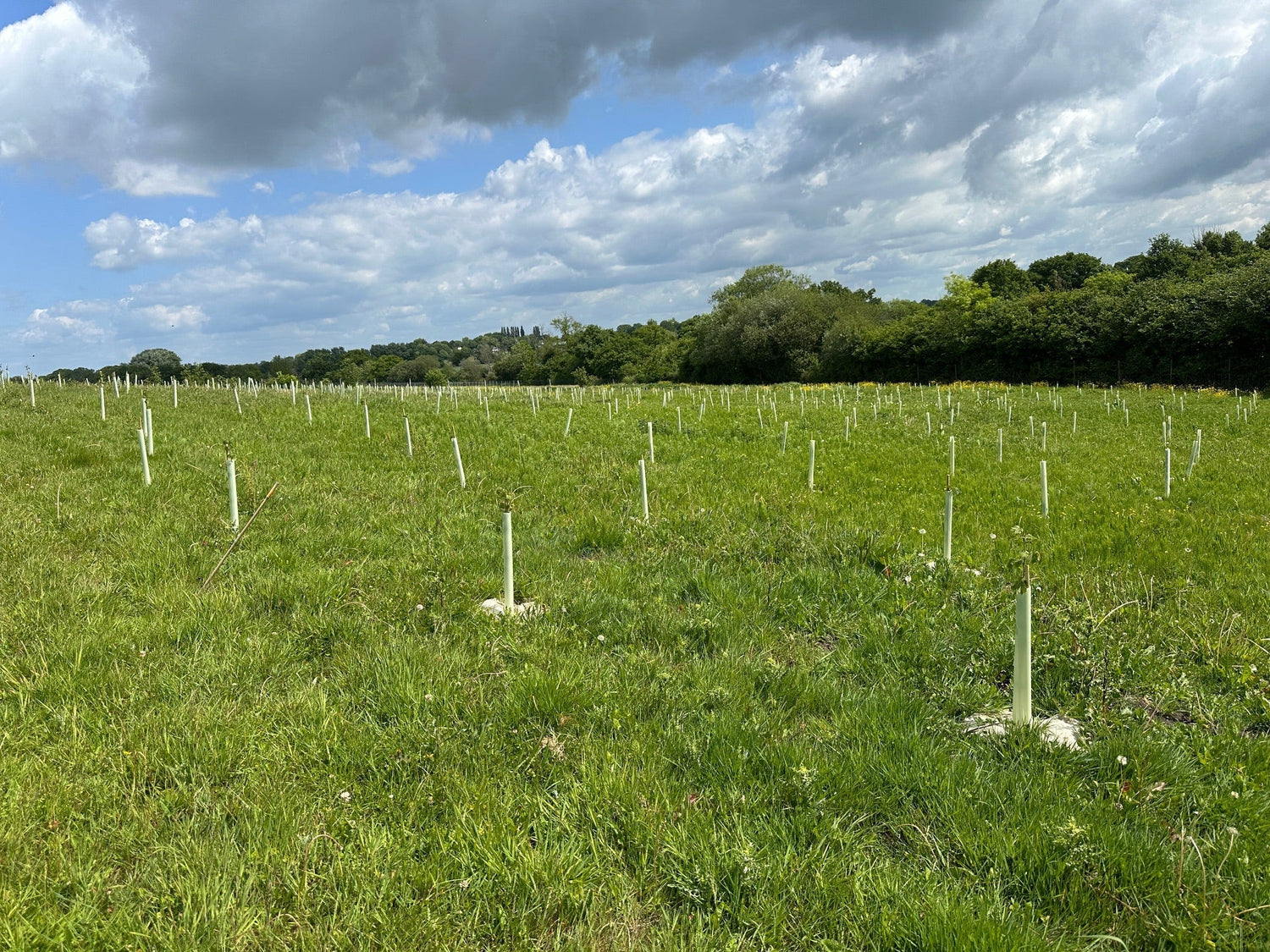
Yet there is a danger in confusing tree planting with woodland creation. A tree placed in the ground is not yet a woodland. It is an intention. It is a future claim on the landscape. It may become part of a resilient, functioning woodland, but only if it survives the years in which it is most vulnerable. During that period it must compete with grass, weeds, drought, poor maintenance, pests, disease, storm damage, vandalism and browsing. In many parts of England, deer are one of the most serious pressures acting on that young woodland before it has had any chance to establish.
This distinction matters because woodland creation is ultimately judged by establishment, not by planting day. A scheme may look excellent in a design document, satisfy grant requirements, use appropriate species, and be planted to a high standard, yet still fail to develop into the woodland originally intended. Browsed leaders, distorted form, suppressed natural regeneration, damaged shelters, missing shrubs and repeated loss of palatable species can quietly undermine the entire investment. By the time the problem is fully visible, several growing seasons may already have been lost.
The national direction is now clear. The Deer Impacts Policy Statement for England recognises that wild deer can cause serious damage to planted and naturally regenerated trees in new and existing woodlands, as well as damage and loss of woodland plants, and it sets a ten-year direction for ensuring deer impacts do not threaten environmental, social or economic goals. Forestry Commission guidance on woodland creation also makes clear that all planted trees, and trees establishing through natural colonisation, are vulnerable to browsing where deer are present, and that the tolerability of deer impact depends on the purpose of the woodland. The practical message for landowners is simple: deer management must not be added after damage appears. It should be built into woodland creation from the start.
The Real Risk Exists Before the First Tree Is Planted
Good woodland creation begins before the first tree goes into the ground. It begins with a proper reading of the site and its surrounding landscape. Soil, drainage, exposure, species selection, landscape design and access are all fundamental, but so too is the question of deer. Which species are present? Where are they travelling? What cover lies nearby? Are there established browse lines, slots, couches, racks, fraying, dung groups or regular crossing points? Is the site connected to mature woodland, scrub, hedgerows, game cover, farmland, shelterbelts or unmanaged neighbouring land that may already support deer activity?
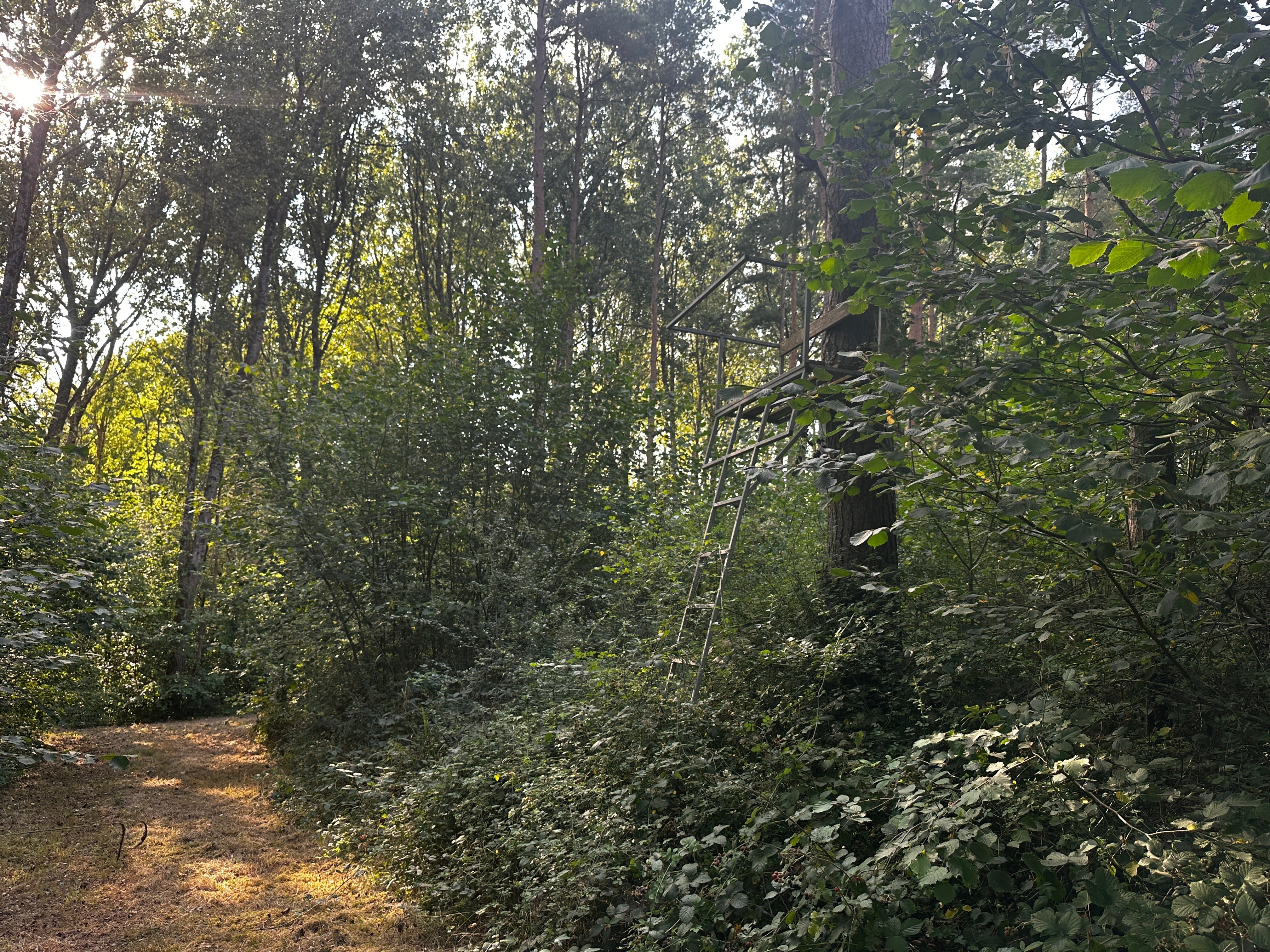
These questions are not minor details. They affect the whole design of the scheme. Deer pressure can influence whether fencing is justified, where access should be retained, where rides might be placed, where high seats could be safely located, how monitoring points should be established, whether natural regeneration is realistic, and whether active deer management is likely to be needed alongside physical protection. A woodland design that considers deer properly is stronger because it recognises the landscape as it actually functions, rather than as it appears on a planting plan.
The mistake is often one of timing. Deer are considered after the planting is complete, after the guards are installed, after the maintenance contract has started and after browsing becomes obvious.
At that point, the landowner is already reacting. The access may be poor, safe shooting positions may not have been considered, neighbouring conversations may not have happened, and the budget may already be committed elsewhere. What should have been a planned element of establishment then becomes an urgent attempt to rescue a vulnerable scheme.
A professional deer impact assessment before planting gives the landowner a clearer position. It does not assume that every site requires the same intervention, nor does it treat deer as a problem everywhere in equal measure. Instead, it identifies risk, records evidence, considers surrounding habitat, and recommends proportionate mitigation. On some sites, physical protection may be enough. On others, planned control will be essential. In many landscapes, the correct answer will be a combination of fencing, shelters, monitoring, neighbour engagement and sustained professional management.
Survival Is Not the Same as Establishment
Woodland creation is often discussed in terms of survival, but survival is only one measure. A tree may be alive and still not be establishing properly. It may survive repeated browsing but remain trapped below the browse line. It may lose its leading shoot year after year, developing poor form and reduced vigour. It may persist as a living stem without contributing meaningfully to future canopy, structure or woodland function. In that situation, the site may appear superficially stocked while failing in ecological and silvicultural terms.
This is especially important in the first five to ten years. Young trees are vulnerable because their growing points are low, their stems are weak, and their ability to recover from repeated damage is limited. Deer do not need to kill every tree to compromise a scheme. They only need to prevent enough trees from recruiting into the next stage of growth. Over time, repeated browsing can delay canopy closure, reduce species diversity, favour less palatable species, suppress shrubs and extend the period during which the site depends on guards and maintenance.
Recent Forest Research work has examined regeneration, deer activity, browsing damage and tree recruitment across 82 woodland creation sites in England and Scotland, reflecting the importance of understanding how deer activity can limit tree recruitment over time. That is an important point for practice. The issue is not merely whether trees are present, but whether they are moving successfully from planting or germination into established woodland structure.
For landowners, this changes the question. It is not enough to ask, “How many trees are still alive?” The better question is, “Is the woodland developing as intended?” Are leaders intact? Are palatable species being retained? Is height growth progressing? Are shrubs appearing? Is natural regeneration visible? Are trees beginning to escape browsing height? Is the site becoming less dependent on intervention? These are the signs of establishment. Without them, a scheme may remain alive on paper while failing in the field.
Fencing Protects a Site, But It Does Not Manage a Population
Deer fencing has an important place in woodland creation. On some sites it is indispensable. Where deer pressure is high, where fallow are present in significant numbers, or where the woodland objective is especially sensitive, a well-designed and well-maintained fence may provide the only realistic opportunity for young trees to establish. Fencing can create a protected window in which trees gain height, root systems strengthen and the site begins to develop structure.
But fencing is not a complete deer management strategy. A fence excludes deer from a defined area; it does not reduce the surrounding population. It may protect one site while displacing pressure onto neighbouring woodland, restock areas, crops or unfenced regeneration. It can also create a false sense of security. Once the fence is up, the landowner may feel the deer issue has been solved, while deer numbers and movement patterns outside the fence continue unchanged.
Fences also require maintenance. Trees fall across them, gates are left open, animals breach weak points, public access creates pressure, ground conditions shift and vegetation grows through lines. A fence that is not checked is not a guarantee; it is a liability waiting to reveal itself. When a breach occurs, deer can enter a vulnerable site and cause significant damage before the problem is discovered. Where the surrounding population remains high, the consequence of failure can be severe.
The strongest approach is therefore integrated. Physical protection may be needed, but it should sit alongside deer assessment, monitoring, access planning, neighbour engagement and active management where necessary. Fencing protects the young woodland. Deer management reduces the pressure acting around it. Woodland creation is most resilient when both are considered together rather than treated as alternatives.
The Most Serious Damage Is Often What Is Missing
Some deer damage is obvious. A browsed leader, a frayed stem, a broken guard or stripped bark can be seen and recorded. More serious, however, is often the damage that appears as absence. The seedlings that never rise above the vegetation. The shrub layer that does not form. The coppice stool that fails to throw usable regrowth. The bramble that remains low. The field layer that becomes simplified. The woodland that should be gaining structure but instead remains open and static.
This is why deer impacts are frequently underestimated. They do not always announce themselves as dramatic loss. They may act by quietly preventing recovery. A landowner may conclude that natural regeneration is poor because of soil, shade, seed source or vegetation competition, when in fact seedlings are being repeatedly removed before they become visible. Without monitoring, the site may be misread and the wrong intervention chosen.
Exclosures are one of the most useful tools for demonstrating this. A small fenced plot can show what the site is capable of producing when browsing pressure is removed. If regeneration, shrubs or ground vegetation respond strongly inside the exclosure but remain suppressed outside it, the comparison is immediate and persuasive. It turns deer impact from an opinion into visible evidence.
Forest Research’s wider work on large herbivore impacts highlights how deer and other herbivores can influence woodland vegetation, tree recruitment and forest dynamics. For woodland creation, this reinforces a practical point: the damage that matters most is not always the damage that is easiest to photograph. Sometimes the most important question is not “what have deer damaged?” but “what has deer pressure prevented from developing?”
Natural Regeneration Raises the Stakes
The increasing interest in natural colonisation and natural regeneration makes deer management even more important. Planted trees can be counted, guarded, inspected and replaced. Natural regeneration is more subtle. Seedlings may emerge unevenly, appear in small numbers, and be removed quickly if browsing pressure is high. The landowner may never see what the site was capable of producing because deer pressure removes the evidence before it becomes obvious.
Natural regeneration can create woodland that is locally adapted, structurally varied and ecologically valuable. It can also support a more natural pattern of establishment, particularly where seed sources and site conditions are favourable. But it is not a passive option. It still requires management. Light, competition, seed source, soil conditions and browsing pressure all determine whether young trees successfully recruit. Where deer pressure is excessive, natural regeneration can be suppressed so effectively that the landowner wrongly assumes the site lacks potential.

The Deer Impacts Policy Statement notes the growing interest in using natural colonisation to establish new woodlands and natural regeneration to expand existing woods, while recognising that tree shelters will not be appropriate in these situations. This changes the protection equation. If individual guards are unsuitable, the emphasis moves towards managing impacts across the site. That may mean fencing, but it may also mean active deer management and careful monitoring to ensure browsing remains within tolerable limits.
For Wildscape Deer Management, this is a crucial area of professional advice. The question is not simply whether deer are present, but whether their impacts are preventing recruitment. A good assessment helps distinguish between a site that needs planting, a site that needs protection, and a site that needs deer pressure reduced before natural regeneration can express itself. That distinction can save money, improve outcomes and avoid unnecessary intervention.
Deer Management Belongs in the Woodland Creation Budget
One of the most common weaknesses in woodland creation is financial rather than ecological. Planting is budgeted. Guards are budgeted. Fencing may be budgeted. Maintenance and beating-up are usually budgeted. Deer management, however, is sometimes left uncertain, informal or reactive. This creates a gap between the investment made in creating the woodland and the protection needed to secure that investment.
That is a false economy. Where deer pressure is capable of compromising establishment, professional deer management is part of the establishment cost. It should be considered alongside fencing, maintenance and protection, not added reluctantly after damage has occurred. The cost of early assessment and planned management is often modest compared with the cost of repeated failure, replacement planting, extended maintenance and delayed woodland development.
The financial case becomes even stronger when public funding, grant outcomes and long-term land objectives are involved. A failed or underperforming scheme does not only represent lost trees. It represents lost time, reputational risk, administrative difficulty, reduced confidence and weakened delivery against environmental objectives. Deer management protects more than stems; it protects the purpose of the scheme.
This is also where professional standards matter. A landowner investing in woodland creation needs more than casual stalking. They need safe access planning, competent operators, proper equipment, carcass handling, records, impact monitoring and clear reporting. The service should be proportionate to the risk, but it should be professional. Woodland creation is too important, and too expensive, to leave one of its major risks unmanaged.
Planting Is the Promise, Establishment Is the Proof
The ambition to create more woodland is necessary and welcome. England needs resilient woods capable of supporting biodiversity, storing carbon, producing timber, strengthening landscapes, improving water management and recovering ecological function. But woodland creation is not achieved by planting alone. It is achieved when young trees establish, structure develops and the site begins to function as woodland.
Deer are not the only risk to that process, but they are one of the most consistently underestimated. Their impacts can be visible or hidden, sudden or cumulative, local or landscape-wide. They can damage planted trees, suppress natural regeneration, simplify habitat structure and weaken the return on woodland investment. Where they are ignored, they can quietly turn a well-designed scheme into an expensive disappointment.
The answer is not to remove deer from the countryside. Deer are part of the landscape and should remain so. The task is to manage their impacts at a level that allows woodland to establish, recover and become resilient. That requires evidence before planting, monitoring after planting, professional standards, realistic budgeting and the confidence to act before failure becomes obvious.
Planting trees is easy compared with securing the woodland they are meant to become. The landowner who understands that distinction is far better placed to succeed. The scheme that considers deer from the outset is stronger, more defensible and more likely to deliver the outcomes for which it was created. In modern woodland creation, deer management is not an afterthought. It is part of turning ambition into woodland.