Having read a number of reviews online, it felt as though I was increasingly being pushed towards trying the Nocpix NITE D70R ahead of some waits elsewhere. So, here we are.
It is worth saying from the outset that the unit I have been using is a prototype and on loan and that matters. It matters because some of the rougher edges may well be the sort of thing that gets ironed out before wider release, and it also matters because if you are going to review something honestly, you need to be fair about where it sits in its own development. That said, prototype or not, if a scope is being put in front of working users then it still needs to justify itself in real conditions. It does not get a free pass simply because it arrived early.
I took it out on one of our usual contracts to trial for exactly that reason. Toward the end of the season, when there is still pressure to hit targets and the work itself does not stop just because you happen to be trying a new bit of kit, I had no interest in faffing about with drama. If a scope is going to come out at that stage in the calendar, it needs to behave. There is not much patience left for excuses, and even less for anything that complicates the job when the job still needs doing.
On that front, the D70R made a respectable start.

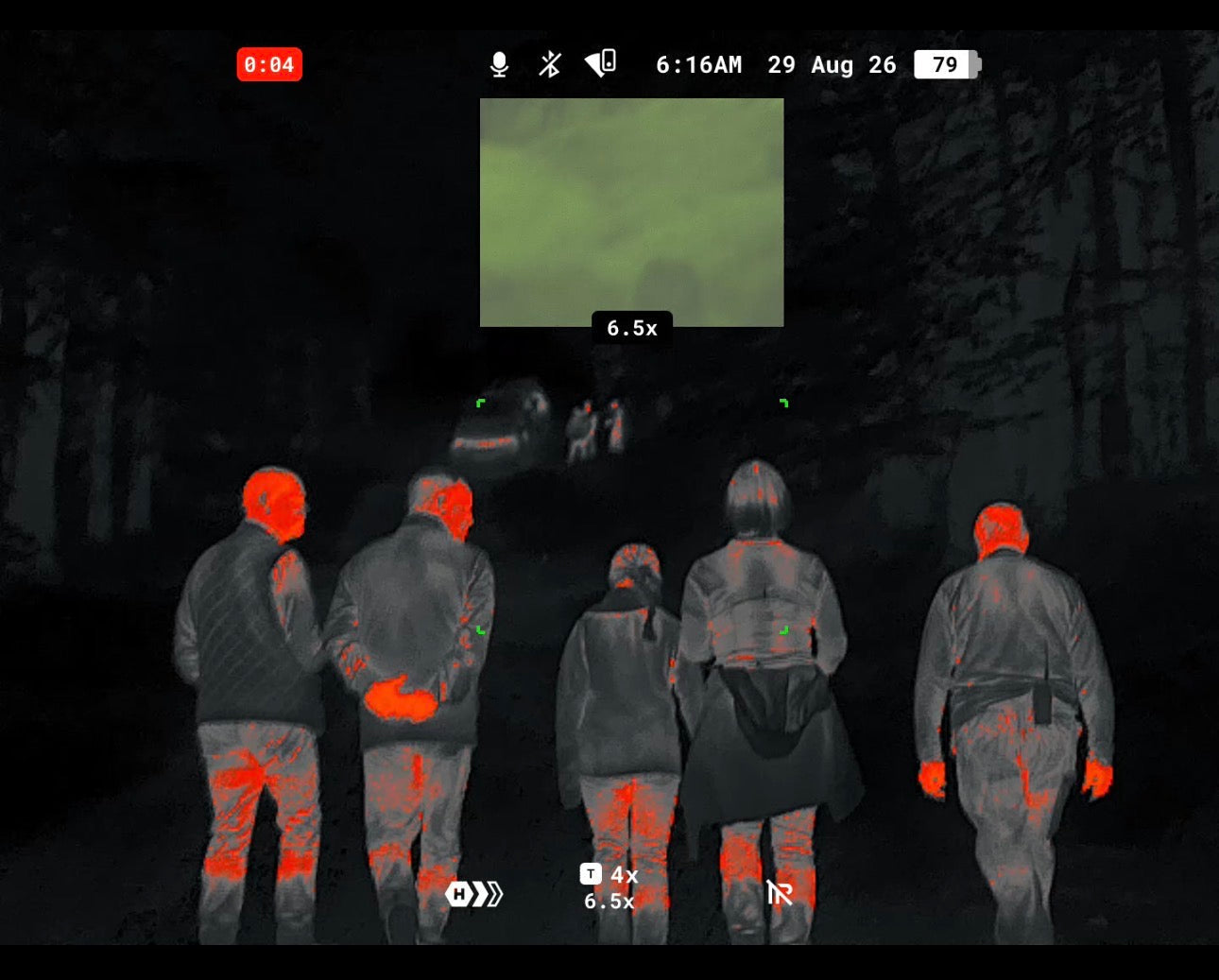
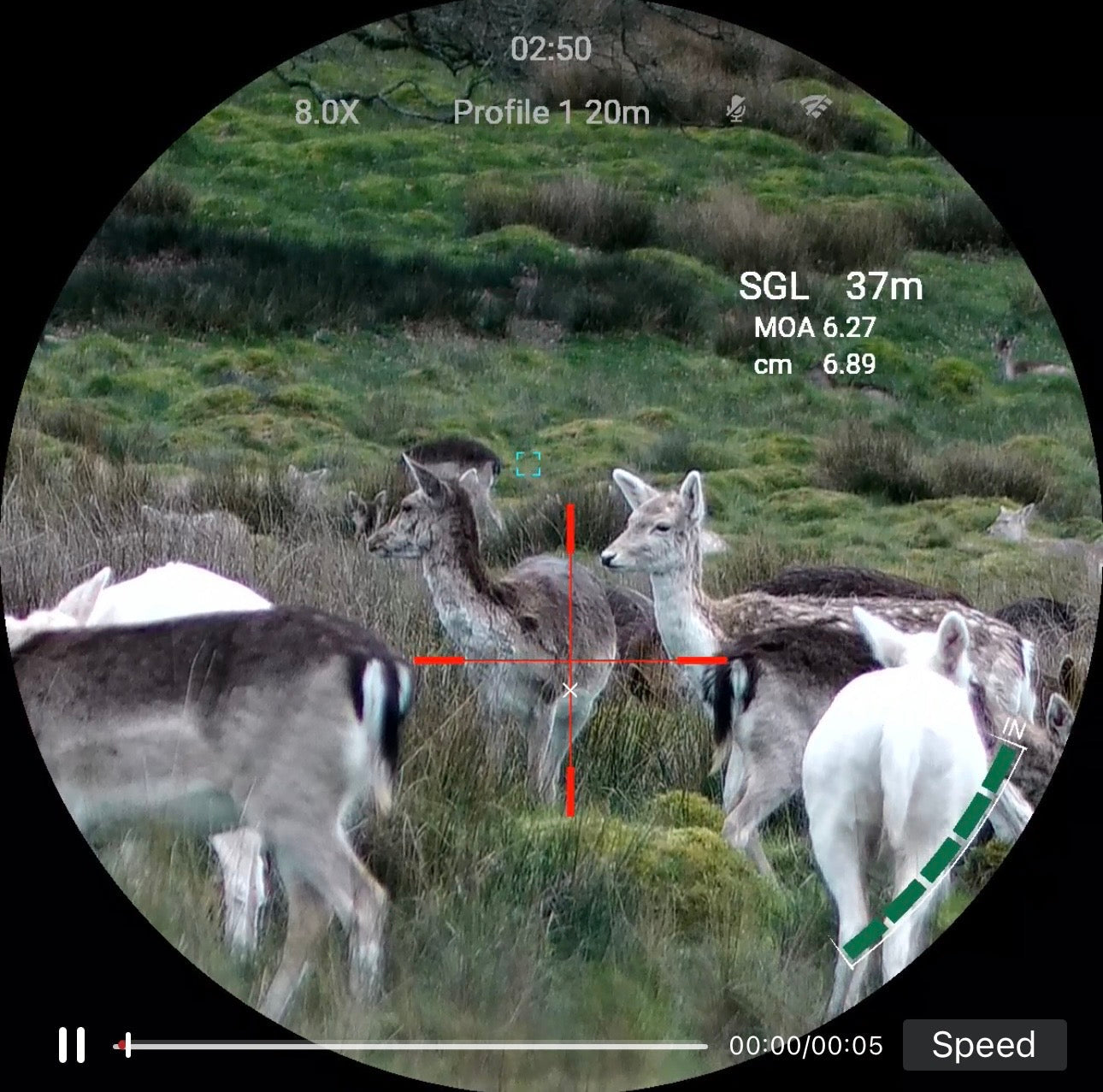
Image shown was off the rifle and in a deer park.
The image is the story
For me, there is no real question about where the strength of this scope sits. The image is the story.
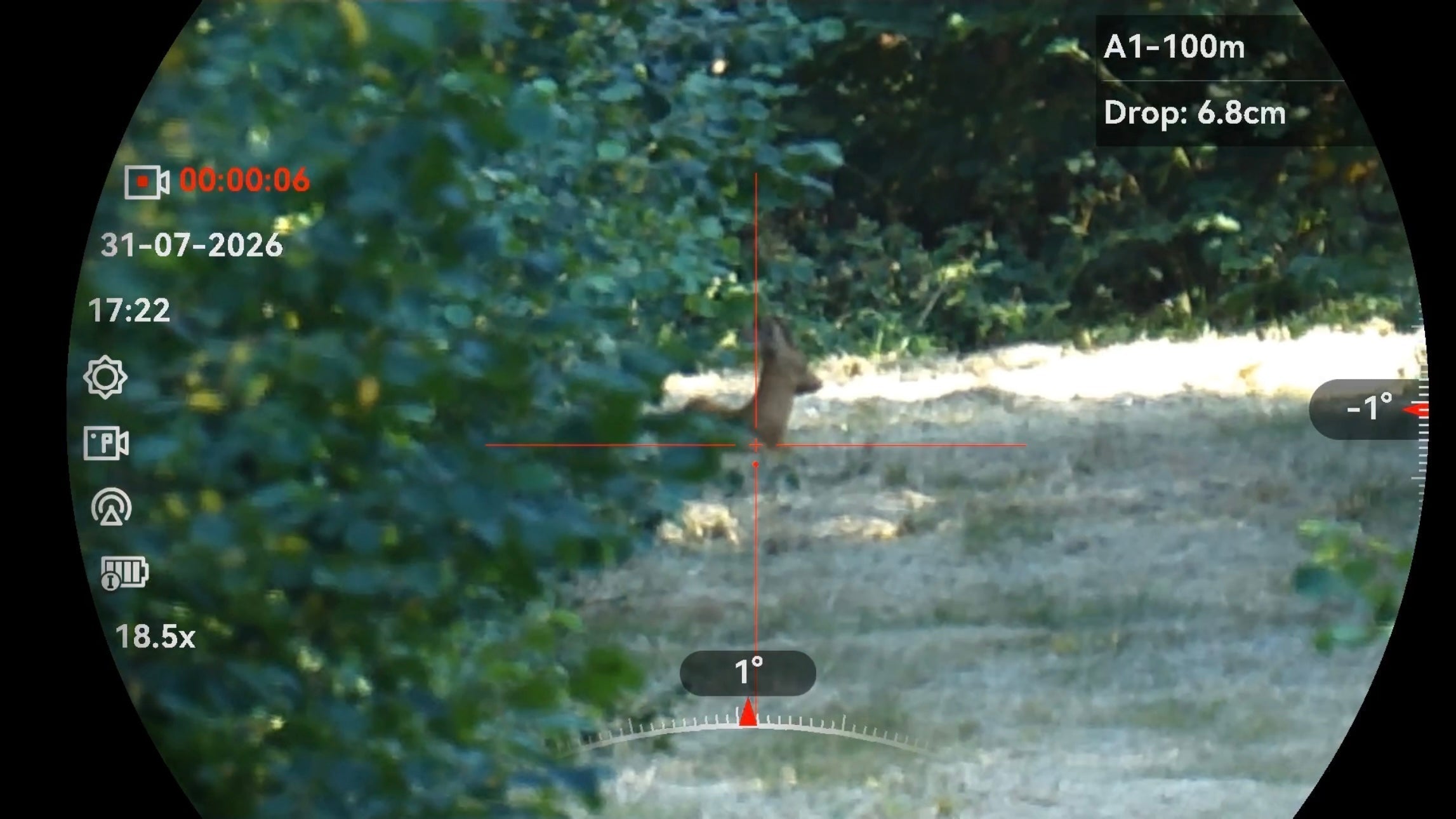
It is clear, and more than that, it is comfortable. That matters more than people sometimes admit. Some digital scopes can be technically impressive while still feeling slightly tiring to spend time behind. The Nocpix does not really fall into that category. The image is not only sharp, it is easy on the eye, and if you are new to plug-in day and night digital, it offers a serious benchmark for what modern clarity can now look like.
That is the part I kept coming back to. The image looked very good. Good enough that any real criticism has to begin somewhere else, because the visual side of the experience is strong enough to carry the scope a long way on its own. It settles quickly. It does not feel as though it is constantly asking the user to forgive it for being digital. It simply presents well.
Did I mention the clarity was awesome.
Why that matters in practical use
This sort of praise is only useful if it translates into something real on the ground, and in this case it does. A good image is not just a marketing point. It is about confidence. It is about whether you can settle into the scope properly, distinguish cleanly, and carry on using it without feeling as though the optic is constantly inserting itself between you and the job.
That was one of the better things about the trial. This was not a neat, controlled demonstration in perfect conditions. It was a real outing at a point in the season where there was still something to do, and in that setting the D70R did not feel like a novelty. It felt like a serious optic that deserved to be assessed properly.
For anyone stepping into the digital day and night market for the first time, that is not a small thing. The scope gives confidence early, and that is usually one of the hardest parts to get right in this category.

Where Nocpix seems to be positioning itself
The D70R feels very much like an optic trying to bridge two different user instincts. On one side, there are still shooters who want digital to feel as close to traditional glass as possible. On the other, there are those already very comfortable with digital systems, menus, integrated features, app support and the slightly different logic that comes with them.
I can see why Nocpix is trying to appeal to both. But I also think the market is now beginning to split more clearly than some brands want to admit. There are glass users, there are digital users, and then there are some of us who enjoy and use both, but even within that middle ground the two worlds are beginning to feel more distinct.
That does not mean Nocpix has misjudged the direction. It just means the D70R feels like a scope arriving at an interesting point in that shift. It wants to bring the traditionalist in, but it is also competing in a market where many digital users are already comfortable with a more overtly digital workflow.

My first Nocpix, and the familiarity problem
This is my first real experience with Nocpix, and on the whole I like it. The image quality earns that reaction quickly enough. But if I am being honest, and this is an honest review after all, some of the usability side did not feel quite as instinctive to me as platforms I have spent more time with.
Part of that is almost certainly familiarity. I am used to the HIKMICRO ecosystem, and once you spend enough time with one system, a great deal of the logic behind it becomes automatic. You stop consciously navigating menus and features and simply get on with the work. Move to another platform, however good it may be, and some drag is almost inevitable.
That is why I try to be fair about first impressions. Not every frustration is a flaw in the optic. Sometimes it is just the honest friction of using something different.
A few usability edges that still need tidying
That said, there were still a few parts of the user experience that felt a little rougher than ideal.
The app, for one, felt a little clunky. Not disastrous, and not unusable, but clunky enough that you notice it. The syncing process was not the smoothest in the world, and uploading also felt limited for some reason. Whether that sits with the prototype status, the app itself, or some part of the device-to-phone relationship, I could not say with certainty, but it is still worth saying because it shapes the experience.
The same goes for the screenshot function. I could find the record option easily enough, but the screenshot was another matter. I could not find it. That may well be user error, and I am happy to wear that. Perhaps I should simply have read the manual more carefully. That is fair enough. But this is also exactly the sort of thing an honest review should include. If something is not immediately intuitive, then that is part of the lived experience, even if the fault ultimately sits with the user rather than the scope.
Taken together, none of these things ruin the unit, but they do stop the overall experience from feeling as polished as the image quality suggests it ought to be.
Battery life and the charging question
Battery life in real use was respectable enough. Running on the internal battery only, I still managed to get both an AM and PM session out of it before needing to plug in again. In practical terms, that is fair. For many outings it will be enough, and certainly enough that it does not feel immediately limiting.
For a deer manager out all week, though, it remains a consideration. Digital optics are now systems, and systems need planning. If you are using the scope hard across repeated outings, then battery discipline becomes part of the job whether you like it or not. Stay on top of charging or throw in an additional power solution, and the problem becomes manageable quickly enough.
The other point, and one I would want to watch over a longer period, is the charging port location. Our winters are cruel enough to us southern folk, and the further north you go the more challenging it gets. That is one of those small design details that only really tells the truth after a hard season rather than a few neat sessions. I would want to run that properly through a full south-to-north winter pattern before becoming too definite about it. It may prove perfectly fine. But it is the sort of thing I would keep a close eye on.

The one fault that kept coming back
My one real criticism of the scope itself remains the jump while zooming.
That is the point that stayed with me. It may sound minor on paper, but it is not minor in use. Traditional glass does not do that, and once you are used to the cleaner flow of optical zoom, anything that interrupts the image in that way tends to pull you out of the moment more than it should.
That is what happens here. The image is good enough, and easy enough on the eye, that the zoom jump becomes more noticeable than it otherwise might. If the whole scope were mediocre, this would simply disappear into a longer list of general compromises. But because the visual performance is strong, the interruption stands out more sharply.
It is not enough to kill the scope. Not even close. But it is the one point that stopped me from praising it without qualification.
Where it still deserves proper credit
For all that, there is a lot the D70R does well, and it would be unfair not to say so clearly.
It feels like a serious attempt to build a capable day and night optic that can genuinely hold its own. It does not feel flimsy. It does not feel gimmicky. It does not feel as though it has been built around one headline feature at the expense of the rest of the experience. The image quality carries a lot of the praise, yes, but there is enough competence elsewhere that it feels like a properly intended product rather than a collection of ideas.
Our trial reinforced that. This was not a carefully arranged best-case demonstration. It was brought out in a setting where the scope needed to behave because there was still work to do, and it did. That alone gives it credibility.

Where I currently land with it
If I step back from the detail, the view is fairly simple.
It is good. Very good in places. The image is excellent. It is easy on the eye. It does enough right that it deserves to be taken seriously, even in prototype form. For a first Nocpix experience, that is a strong place to start.
I am still open to my view evolving with more time, particularly around the usability side, because some of that may simply come down to familiarity and some of it may be prototype-related. I have not tried their binoculars, and some of my instinctive preferences are still shaped by what I know best elsewhere. But based on this scope alone, there is clearly a lot here to like.
My main reservation remains the zoom jump, with the smaller frustrations sitting around app feel, upload limitations, screenshot function, and the longer-term question over how that charging point will feel after a hard winter. None of those erase the core strengths of the scope, but they do stop it from feeling fully settled just yet.

A final thought
There are digital scopes that feel like a list of features. The Nocpix NITE D70R feels better than that. Even as a prototype, it feels like a serious optic with a clear purpose and enough real performance to justify attention.
Whether it fully bridges the gap between traditional glass users and established digital users is another question, and I am not entirely convinced it does. But there is no question at all that the image quality gives it credibility from the outset.
So the verdict, for me, is straightforward. It is clear. It is capable. It is easy to like. It sets a serious benchmark for anyone stepping into this space.
And if Nocpix can smooth out some of the smaller usability frustrations before the final version settles properly, then they will have something even stronger on their hands.