There are few phrases used more readily in modern deer management than landscape scale. It appears in policy papers, funding discussions, woodland creation advice, conservation strategies and professional conversations between landowners, foresters and environmental bodies.
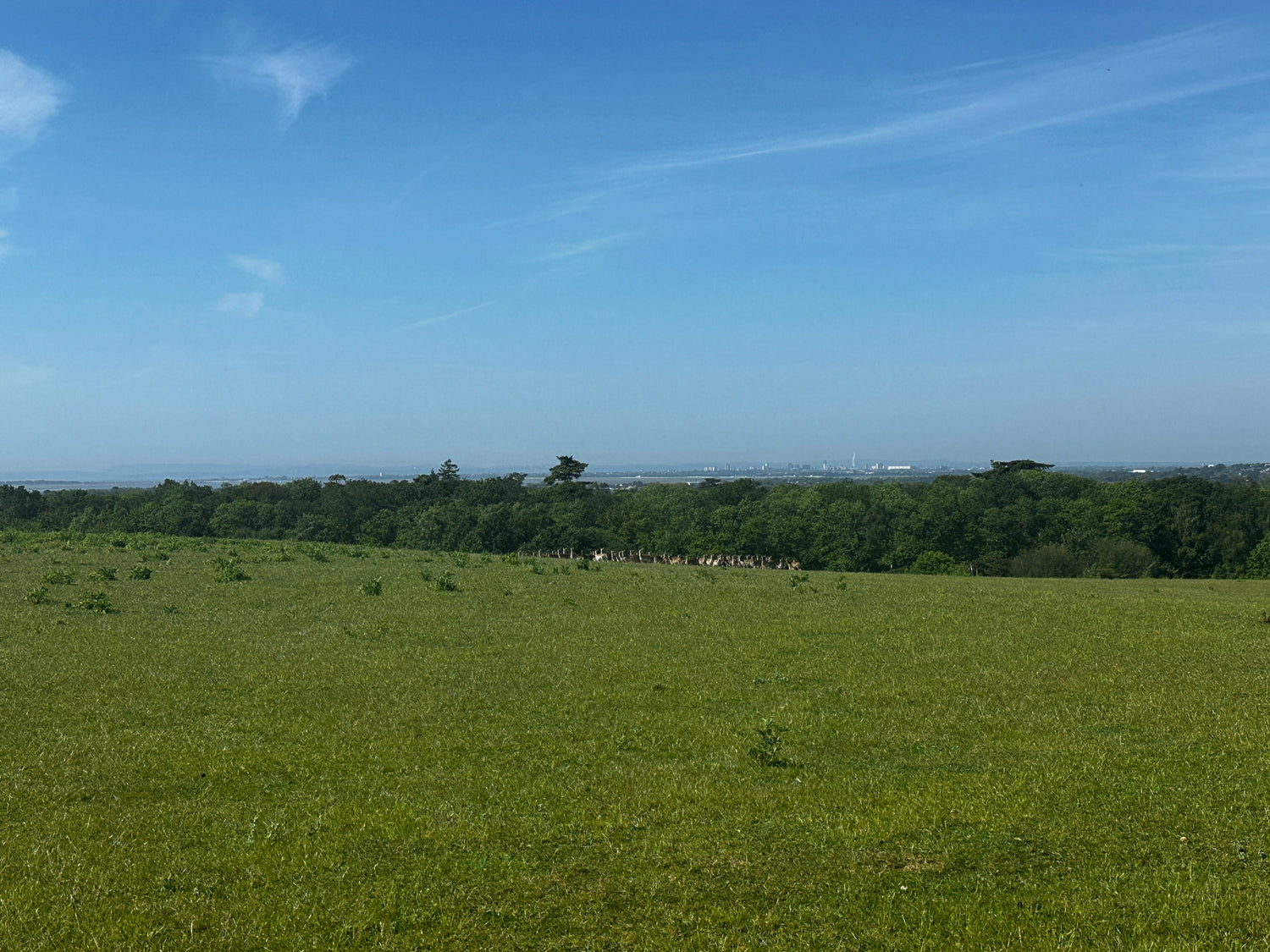
The phrase is attractive because it captures something obviously true. Deer do not live according to ownership boundaries. They move through woods, fields, hedgerows, scrub, rides, shelterbelts, valleys, estates, public land and private holdings according to food, shelter, safety and disturbance. If the animals operate across the landscape, then management must do the same.
The difficulty is that this simple principle becomes complicated the moment it meets real land ownership. A landscape is not a single managed unit. It is a mosaic of priorities, personalities, budgets, liabilities, histories and expectations. One landowner may be investing in woodland creation. Another may be restoring ancient woodland. A neighbouring farm may be focused on crop protection. A sporting estate may regard deer as part of its wider rural enterprise. A conservation organisation may be working towards habitat recovery, while another nearby owner may not yet see deer as a problem at all. All may occupy the same deer landscape, but they are not necessarily trying to achieve the same thing.
This is why landscape-scale deer management is easy to advocate and difficult to deliver. It is not simply a question of persuading more people to cull more deer. Nor is it solved by drawing a larger boundary on a map. It requires evidence, trust, professional coordination, consistent standards, safe access, competent operators, carcass handling infrastructure, realistic funding and a shared understanding of what success actually looks like. Without those elements, the phrase risks becoming a policy comfort: reassuring in principle, but weak in delivery.
The current direction of national policy makes this more important, not less. The Deer Impacts Policy Statement for England recognises that wild deer can cause serious damage to planted and naturally regenerated trees, woodland plants, habitats, crops and wider environmental objectives, and sets a ten-year direction for managing those impacts more effectively. The Forestry Commission’s strategy for 2023–2028 also places woodland resilience, sustainable forest management, tree health, evidence and nature recovery at the centre of its work. In that context, deer management is no longer a narrow operational issue. It is part of the wider question of whether England’s woodlands can establish, recover and become resilient.
The Woodland Does Not Recognise the Boundary Fence
The first weakness in many deer management plans is that they begin at the ownership boundary. That is understandable, because the boundary defines who can grant permission, who carries liability, who receives funding, who commissions work and who must answer for outcomes. In legal and practical terms, boundaries matter. In ecological terms, they are far less important. Deer may cross several ownerships in a single night, and the pressure experienced by one woodland may be created by animals that spend much of their time somewhere else.
A newly planted woodland may appear well planned on paper. It may have the right species mix, suitable protection, good maintenance arrangements and a clear grant agreement.
Yet if it has been planted within a wider landscape holding significant fallow, roe or muntjac pressure, its success may depend as much on neighbouring land as on the quality of the planting itself. The same applies to restocking, coppice restoration and natural regeneration. Trees fail locally, but the cause is often landscape-wide.
This is particularly important where different types of habitat sit close together. Mature woodland may provide daytime security. Farmland may offer feeding. Scrub, old railway lines, hedgerows and field corners may provide movement corridors. New planting may offer highly palatable growth at exactly the height deer can reach. What appears to the landowner as a series of separate fields and woods may appear to deer as one connected habitat network. Management that ignores this network is likely to underestimate the problem.
Forest Research continues to examine how large herbivores influence woodland vegetation, tree recruitment and forest dynamics, including the effects of browsing on vegetation structure and regeneration. Recent research on woodland creation sites in England and Scotland has also assessed how deer activity, browsing damage, regeneration and tree recruitment vary across sites and over time. This matters because woodland success cannot be assumed once trees are planted. It has to be protected through an understanding of the pressures acting upon the site.
The practical conclusion is clear. A landowner should not ask only, “How many deer are on my land?” They should ask, “How is my land being used within the wider deer landscape?” That question leads to better evidence, better conversations and better management. It also prevents the common mistake of treating deer damage as a purely local failure when it may be the visible symptom of a much wider unmanaged system.
Collaboration Is a Human Problem Before It Is a Deer Problem
Many discussions about landscape-scale deer management begin with deer density, cull figures or habitat impact. These are important, but they are not where delivery starts. Delivery starts with people. Before neighbouring landowners can coordinate management, they must trust one another enough to share information, discuss sensitive issues and accept that their own decisions may affect others.
This is often the hardest part. Rural land management is shaped by long memories, previous disputes, different business models and differing attitudes to deer. Some owners are highly proactive. Some are cautious. Some are supportive in principle but reluctant to allow access. Some have concerns about public perception, safety or disturbance. Others may have experienced poor-quality control in the past and are understandably wary of letting another operator onto their land. A professional plan has to acknowledge these realities rather than pretend they do not exist.
Trust is built through competence and consistency. Landowners need to know that those undertaking deer management are properly qualified, insured, discreet, safe and respectful of the wider estate. They need confidence that gates will be left as found, livestock will not be disturbed, neighbours will not be alarmed, carcasses will be handled correctly and agreed reporting will be completed. These details may seem ordinary, but they are often what determine whether collaboration survives beyond the first conversation.
The role of the professional deer manager has therefore changed. It is no longer enough to be effective only in the field. The modern deer manager must be able to interpret woodland impacts, communicate with land agents, understand grant objectives, work around public access, record evidence, advise on infrastructure, support venison routes and build confidence between parties.
In landscape-scale management, the person holding the rifle is only one part of the system. The more valuable role is often the ability to turn individual concerns into coordinated action.
This is where a professional service adds value beyond the cull. It can act as a neutral bridge between landowners who may not otherwise coordinate. It can translate field evidence into practical recommendations. It can help identify where effort is being wasted and where it should be concentrated. Most importantly, it can keep the conversation focused on woodland outcomes rather than personal preference.
Different Deer, Different Landscapes, Different Problems
One of the reasons deer management advice can fail is that it treats “deer” as a single issue. In reality, species behaviour matters. Fallow, roe and muntjac do not use the landscape in the same way, and a strategy that works for one may be ineffective for another. Landscape-scale management must therefore be species-specific, otherwise it becomes too general to be useful.
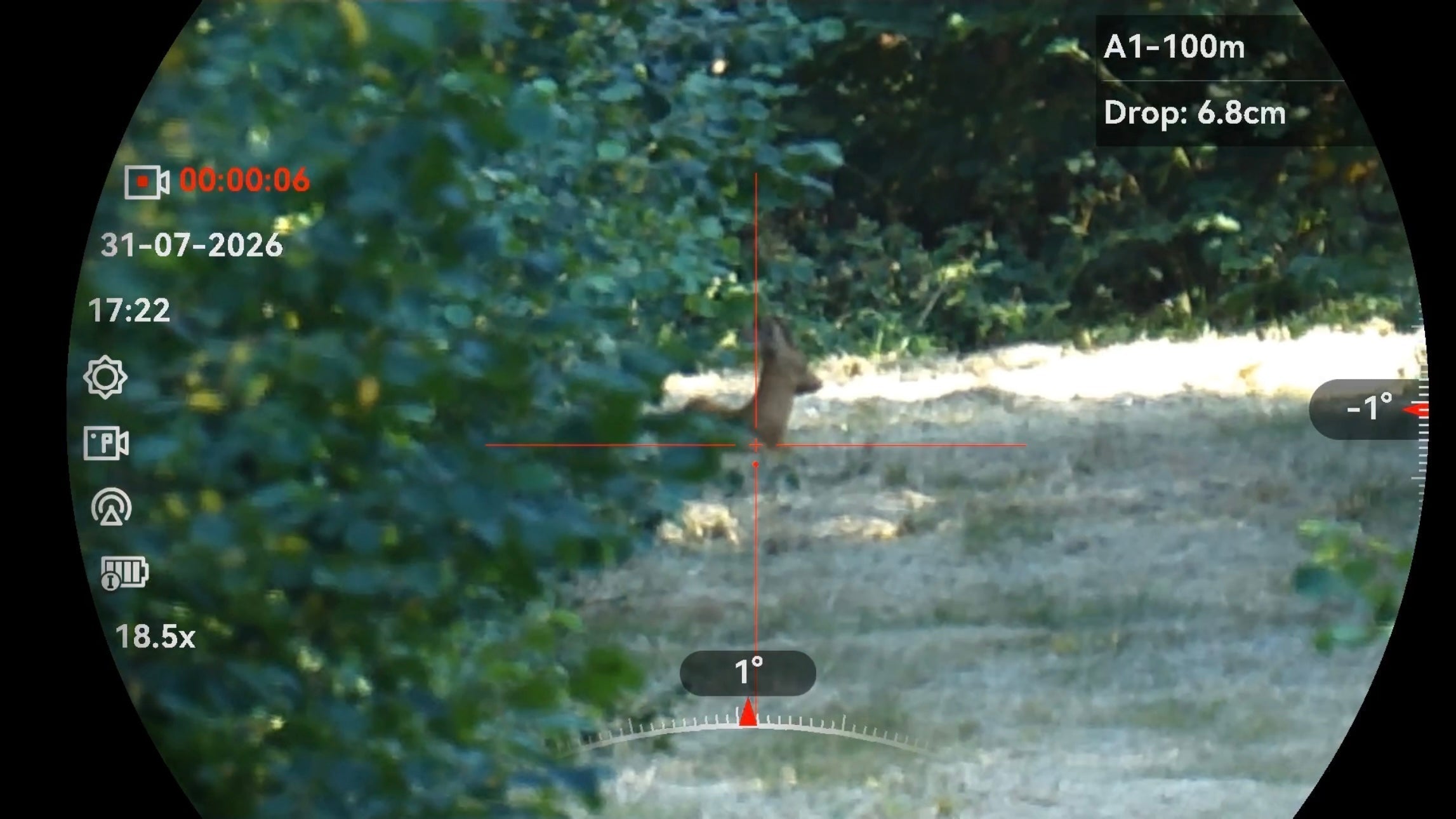
Fallow deer often provide the clearest example of why boundaries fail. They are social, mobile and capable of using extensive areas of connected habitat. A large herd may rest in one woodland, feed on another holding and cause damage in a third. Their behaviour can also change quickly in response to pressure. Where control is applied on one property but neighbouring land remains a refuge, fallow may adapt their movement patterns, become more nocturnal or concentrate in areas where access is limited. A landowner may increase effort and still feel as though the problem is returning each season.

Roe deer can create a different challenge. Their territories are smaller and their impacts may be less dramatic, but they can still suppress regeneration, damage young trees and influence woodland structure. Because roe are often more evenly distributed and less visibly concentrated than fallow, their impact may be underestimated until regeneration is assessed properly. They may be manageable at estate level where ownerships are large and consistent, but in fragmented landscapes their populations are still shaped by neighbouring habitat and dispersal.
Muntjac are more difficult again. They are often present before they are fully acknowledged. Their small size, secretive behaviour and use of dense cover mean that numbers are easily underestimated. Their browsing is concentrated low in the woodland structure, affecting coppice regrowth, natural regeneration, shrubs and ground flora. Because they can persist in small woods, gardens, scrub belts and peri-urban fringes, they are particularly difficult to address through occasional or isolated control.
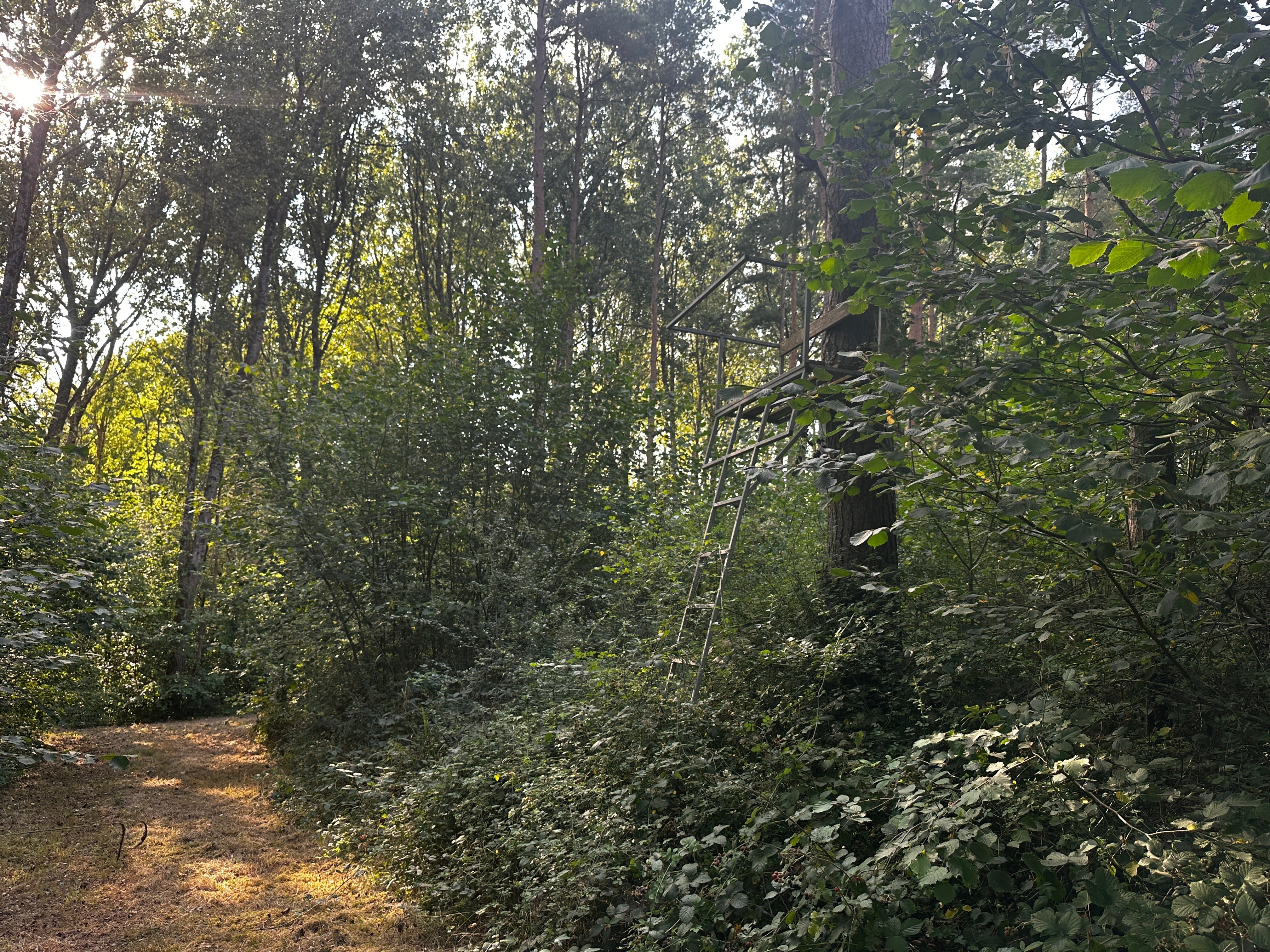
The strength of a landscape-scale approach is that it does not apply the same answer everywhere. It asks which species are present, where they feed, where they rest, how they move, what pressures alter their behaviour and what habitats are being damaged. That level of understanding leads to practical decisions: where to place high seats, where to improve access, where to focus effort, where to use cameras, where to speak to neighbours and where fencing or temporary protection may still be necessary.
Deer Management Must Be Measured by Recovery, Not Activity
One of the most important shifts in modern deer management is the move away from measuring effort alone. Cull figures matter, but they are not the final measure of success. A high cull may still fail if browsing pressure remains above the level the woodland can tolerate. A lower cull may be successful if it is targeted, sustained and produces measurable regeneration. The woodland, not the spreadsheet, is the ultimate test.
This point is particularly important for landowners commissioning professional work. It is tempting to judge a contractor by the number of deer removed. That may be part of the assessment, but it should not be the only one. Good deer management should also produce evidence of changing impacts.
Are seedlings establishing? Is coppice regrowing? Are browse lines reducing? Are shrubs recovering? Is ground flora returning? Are tree shelters being damaged less frequently? Is natural regeneration becoming visible outside exclosures? These questions are where management becomes ecological rather than merely operational.
Baseline assessment is therefore essential. Without a starting point, it is difficult to know whether a site is improving. A deer impact assessment, supported by photographs, mapped observations, browsing indicators, regeneration data and field signs, gives landowners something to measure against. Repeated over time, it can show whether management is moving the woodland in the right direction. It also provides evidence that can support discussions with agents, neighbours, funders and regulators.
Exclosures remain one of the most powerful tools in this context. A small fenced area can show what the woodland is capable of producing when browsing pressure is removed. If vegetation inside the exclosure responds strongly while the surrounding woodland remains suppressed, the evidence becomes difficult to ignore. It turns a general concern into a visible comparison. For many landowners, that is the point at which deer impacts become real.
Landscape-scale management should therefore be built around outcomes. The aim is not to remove deer from the countryside. The aim is to bring impacts to a level at which woodland can regenerate, planted trees can establish, coppice can recover and habitats can develop. Deer remain part of the landscape, but they cannot be allowed to prevent the landscape itself from functioning.
The Economics Are Stronger Than Many Landowners Realise
The financial case for deer management is often underplayed. Many landowners see it as an additional cost, particularly where deer have historically been managed informally or through recreational stalking. That view is increasingly outdated. Where woodland creation, restocking, coppice restoration or habitat recovery is involved, unmanaged deer pressure can become one of the most expensive risks on the site.
The cost of failure is rarely limited to the lost tree. It includes replacement planting, additional labour, extended maintenance, damaged guards, delayed establishment, failed grant outcomes, lost time and reduced confidence in future schemes. Where natural regeneration is the objective, the cost may be less visible but no less real. A woodland that cannot regenerate is steadily losing resilience. It may look stable in the short term, but over time its structure, species composition and future value decline.
Professional deer management should therefore be considered part of woodland investment, not an optional extra. If a landowner is prepared to invest in planting, fencing, design, maintenance and grant compliance, it is inconsistent to ignore the browsing pressure that may compromise the whole scheme. In many cases, the cost of early assessment and coordinated management is modest compared with the cost of repeated failure.
Collaboration strengthens the economic case. Shared evidence can reduce duplication. Coordinated access can increase efficiency. Neighbouring effort can prevent one landowner carrying a disproportionate burden. A wider plan can identify where management will have the greatest effect and where expenditure is unlikely to succeed without neighbouring involvement. The aim is not necessarily to make deer management cheap. It is to make it effective.
Venison also has a role, though it should not be romanticised as a complete solution. A functioning venison route can help make management more sustainable, reduce waste and improve public confidence. However, it requires carcass handling, inspection, storage, transport and market access. In many landscapes, the lack of infrastructure is one of the reasons management is harder to sustain. If deer are to be managed professionally, the carcass must be treated professionally too.
Public Confidence Depends on Professional Standards
Deer management increasingly takes place in landscapes where public access, conservation expectations and local scrutiny are significant. Woodland owners may support control in principle but worry about how it will be perceived. This is particularly true around footpaths, permissive access, villages, public forests, nature reserves and high-profile landscapes. Poor communication or careless practice can quickly damage confidence.
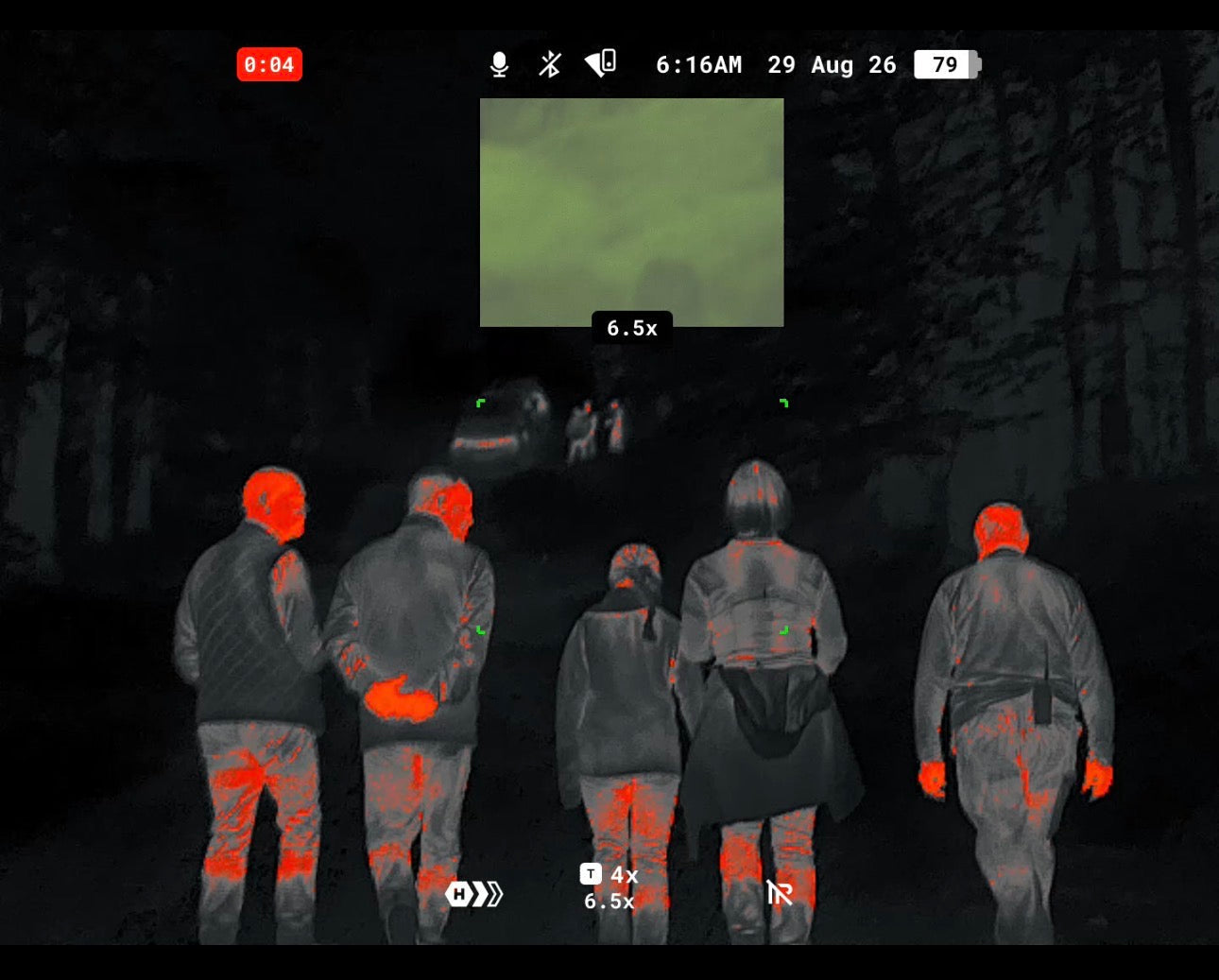
Professional standards are therefore not cosmetic. They are central to delivery. Risk assessments, safe backstops, appropriate timing, clear communication, trained operators, suitable equipment, incident procedures and proper carcass handling all help demonstrate that deer management is being undertaken responsibly. Where night shooting, thermal equipment or coordinated operations are required, that professionalism becomes even more important.
Public confidence is also shaped by language. Deer management should not be presented as a battle against deer. It should be explained as part of responsible woodland stewardship. The objective is to protect woodland regeneration, habitat condition, tree establishment, biodiversity and long-term resilience. When the public understands that the issue is not simply about shooting deer but about allowing woodland to recover, the conversation becomes more balanced.
This does not mean avoiding difficult truths. Lethal control is often necessary. In many landscapes, there is no credible alternative capable of reducing impacts at the required scale and pace. But it must be undertaken competently and explained honestly. Attempts to hide or soften the reality can be counterproductive. Professional deer management earns confidence by being clear, careful and accountable.
For landowners, this is another reason to move beyond informal arrangements. Recreational stalking may have a place, but it is not always the same as professional deer management. Where public money, woodland recovery, protected habitats, safety, venison and long-term reporting are involved, the standard must be higher. The countryside increasingly requires deer managers who can operate with the professionalism expected of any other land management contractor.
The Future Is Coordinated, Evidence-Led and Long Term
The future of deer management in England will not be defined by isolated effort. It will be defined by whether landowners, foresters, conservation bodies and professional managers can coordinate action at the scale needed to protect woodland recovery. The policy direction is already clear. Deer impacts are recognised nationally as a serious pressure on trees, habitats and environmental objectives. The forestry sector is being asked to deliver more woodland, more resilience and better ecological outcomes. That cannot be achieved if browsing pressure is treated as an afterthought.
This does not mean every landscape needs a complicated formal partnership. In many cases, practical collaboration can begin with a small group of neighbouring landowners, a shared survey, a common reporting format and a clear plan for coordinated effort. The most important step is to move beyond isolated assumptions. Once landowners begin to share evidence and recognise the connected nature of the problem, the quality of decision-making improves.
The best landscape plans are not theoretical. They identify who owns what, where deer are moving, which species are present, where impacts are occurring, where access is possible, where sanctuary exists, what infrastructure is missing and what success will look like in woodland terms. They are practical documents designed to support action. They should be reviewed, adjusted and improved as evidence develops.
For Wildscape Deer Management, this is the space where professional practice matters most. The work is not simply about controlling deer. It is about helping landowners understand the relationship between deer, woodland condition and long-term land value. It is about turning evidence into action and action into recovery. It is about ensuring that deer remain part of the countryside without preventing the woodland beneath them from renewing itself.
Landscape-scale deer management is easy to say because the principle is obvious. Delivering it is difficult because landscapes are complicated, people have different priorities and woodland recovery takes time. But difficulty is not a reason to avoid it. It is the reason professional standards, evidence and collaboration matter.
If England’s woodlands are to establish, recover and become resilient, deer management has to move beyond boundaries and become what the landscape already is: connected.