One of the more uncomfortable truths in deer management is that many of the problems now being described as modern are not especially modern at all. The language changes. The policy language becomes sharper. New funding terms appear. Nature markets, green finance, natural capital, biodiversity uplift, private investment. All of it sounds newer than it is. But underneath the newer language, the same old structural weaknesses are still sitting there waiting for someone to deal with them properly.
Labour still has to be paid for. Sustainable yield still has to be protected from short-term thinking. Training still has to be taken seriously. Certification still has to mean something. Deer management sales, venison handling, public confidence, and professional delivery still have to be treated as part of one joined-up system rather than a loose collection of separate interests. And unified management, which should by now be an obvious requirement in many landscapes, is still too often spoken about as though it were some ideal rather than a practical necessity.
Richard Prior was writing about those very pressures more than thirty years ago in Roe Deer. That should bother us a little more than it does.

Because if the same warning can sit on the shelf for three decades and still feel current, then the issue is not simply lack of insight. The issue is that as an industry we have not yet been willing enough to organise ourselves around the truths we already know.
The world around us is moving, whether we move with it or not
What has changed now is not the underlying weakness, but the context around it.
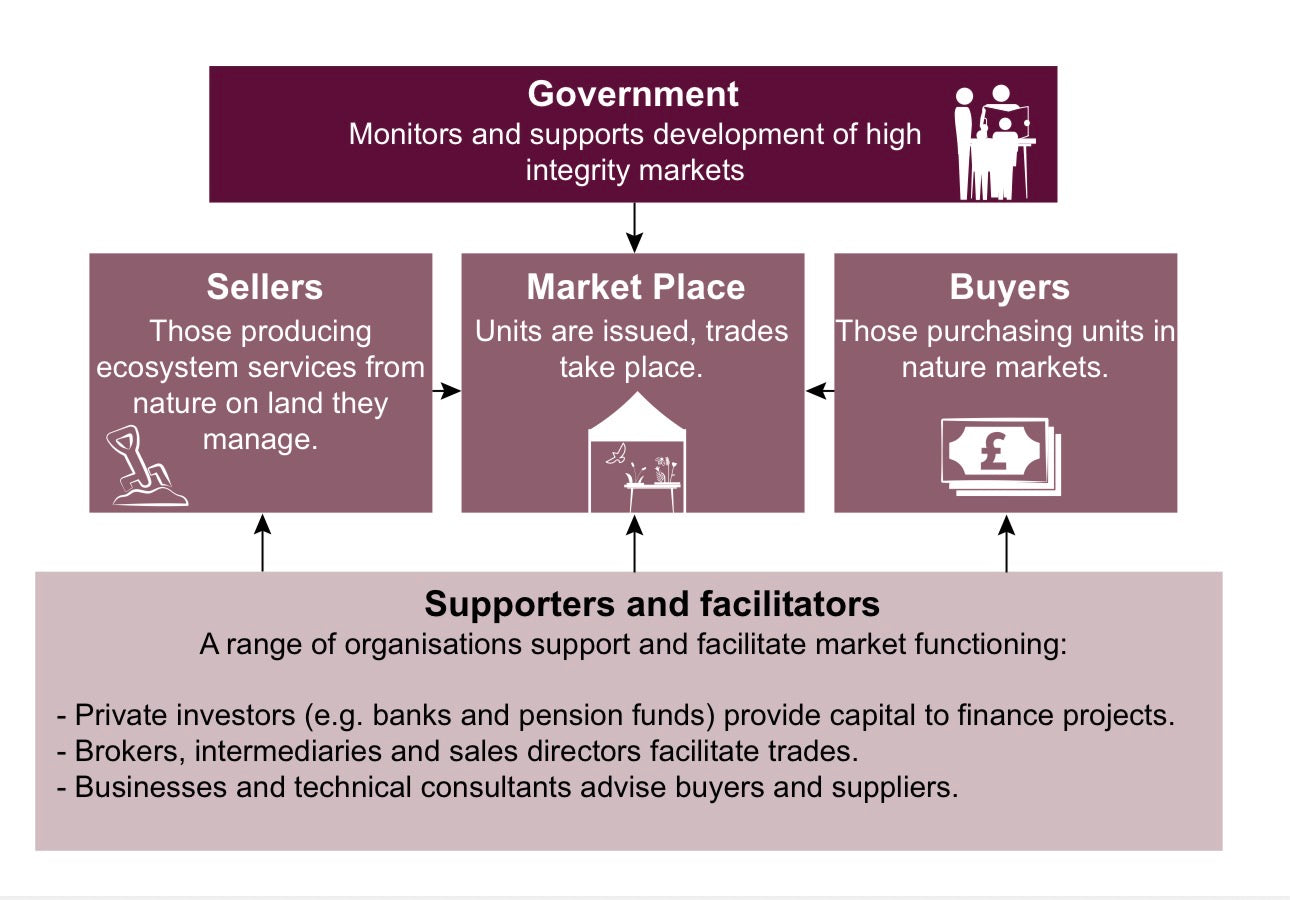
Government is now speaking far more directly about private investment in nature, and green finance is no longer an abstract concept sitting off to one side of estate management. Defra is explicitly pushing the development of nature markets and private investment in environmental outcomes, while the Green Finance Institute has a free Farming Toolkit, commissioned by Defra, specifically to help England’s farming and land management community understand and assess nature market opportunities.
That matters because it means estates and larger landholdings can no longer say quite so easily that there is no route to think differently. The route is there. It may not be right for every holding. It may not be simple. It may not yet feel fully settled. But the wider direction of travel is now obvious enough. Public finance is not expected to carry the whole burden forever, and private finance is being invited into the same conversation about land use, habitat recovery and resilience. Defra’s own response on private sector nature recovery says exactly that.
The deer sector needs to take that more seriously than it currently does.
Because whether the conversation is about woodland resilience, biodiversity gain, habitat condition, carbon, or wider natural capital, deer pressure sits inside that story much more centrally than many still seem willing to admit.
Deer management is still too often treated as an isolated problem
This is one of the habits we need to get rid of.
Too often, deer management is still treated as though it sits somewhere off to the side of the “main” land management conversation. Something necessary, certainly. Something annoying, perhaps. Something expensive, usually. But still somehow separate from the bigger picture of woodland condition, regeneration success, biodiversity outcomes and estate resilience.
That way of thinking is now becoming increasingly hard to defend.
You cannot speak seriously about woodland recovery, habitat function or long-term natural capital value while allowing browsing pressure to remain one of the reasons the next generation of woodland cannot get away. You cannot talk confidently about restoration and resilience while the practical enabling work needed to protect that recovery remains underpriced, fragmented, or left to historical arrangements that no longer fit the ground. And you cannot claim to be thinking strategically about environmental value while treating deer control as if it were still a narrow sporting or pest question detached from all the rest.
It is not detached. It has not been for a long time.
If anything, the emergence of green finance and nature market thinking should make that clearer, not blur it.

More money will not fix weak structure
There is a mistake people sometimes make when new funding language arrives. They imagine that the new mechanism itself is the answer. A grant, a market, a private finance route, a blended investment model. As though access to money is the same thing as access to professionalism.
It is not.
More money does not automatically strengthen a weak system. It usually exposes how weak the system already was.
That is why this is not really a finance story first. It is a professionalism story first, and a finance story second.
If deer management is still being delivered through underpriced labour, mixed standards, thin reporting, weak commercial logic and an uneasy cultural divide between hobby, sport, service and profession, then more money alone will not solve that. It will simply make the contradiction more obvious. The same is true if training is treated as optional, certification as decorative, venison sales as secondary, or unified management as something nice to talk about rather than something that should already be built into the working structure of an estate.
Green finance is not a rescue package for an industry that refuses to organise itself professionally. But it may reward one that does.
That is a very different thing.
Estates now have fewer excuses than they used to
This is where the conversation becomes a little more pointed.
For years, many estates could reasonably say that while the deer issue was clear enough, the financial and structural routes to doing something more comprehensive were limited. They may have wanted better planning, more coherent management, proper monitoring, more accountable labour, and improved infrastructure, but the route to justify that investment was often blurred by the old logic of “deer work pays for itself if done properly” or “we have always managed like this”.
That logic is looking increasingly tired.
The Green Finance Institute’s toolkit is specifically intended to help farming and land management businesses assess which nature market opportunities may fit their land, goals and wider commercial model. Defra is also actively promoting greater private investment into environmental outcomes and the growth of nature markets.
That does not mean every estate should suddenly chase biodiversity units or carbon discussions without understanding the risks. It does mean estates should stop pretending there is no wider strategic framework through which to think about woodland, resilience, biodiversity and the enabling work needed to protect those outcomes.
And deer management is enabling work. Increasingly, it is some of the most important enabling work on the ground.
Labour still matters, and still gets treated badly
If there is one issue that continues to sit at the centre of this whole conversation, it is labour.
This was true when Richard Prior was writing, and it is still true now. Professional deer management requires time, consistency, physical effort, training, reporting, risk management, travel, equipment, insurance, carcass handling, and the ability to keep delivering under conditions that are often awkward, public-facing and unpredictable. Yet the sector still too often behaves as though commitment should somehow make up for poor economics.
It does not.
A fair day’s pay for a fair day’s work should not be a radical idea in a sector now being asked to support biodiversity recovery, woodland resilience, habitat protection, landscape-scale coordination and increasingly formal accountability. And yet we still tolerate arrangements that price deer labour as though it were an optional extra rather than a core operational requirement.
That is not only unsustainable for the people doing the work. It weakens the whole industry.
Because if labour is undervalued, then consistency falls. If consistency falls, outcomes weaken. If outcomes weaken, the habitat case becomes harder to defend. If the habitat case weakens, then every wider claim about land recovery becomes less credible. This is not complicated. It is just too often ignored.
Sustainable yield still matters just as much
There is another trap here as well.
Whenever new opportunities emerge, there is always the risk that people hear “value” and start thinking only in terms of extraction. But sustainable yield still matters, and perhaps now more than ever. If the sector simply wraps the same old overexploitation instinct in the language of green finance or environmental value, then it will have learned nothing.
That would be a serious mistake.
A mature deer industry should be able to hold two truths at once. It should be able to reduce pressure where habitat needs relief, and still think carefully about sustainability, structure, long-term planning and the consequences of treating deer as a short-term commodity. If it cannot do that, then it is not serious enough yet for the financial and strategic future it wants to be part of.

Training, certification and sales are not side issues
This is another area where we continue to undermine ourselves.
Training and certification are too often treated as polish. Useful, yes. Desirable, yes. But somehow still not fully recognised as part of the core professional spine of the sector. The same is true of sales and venison handling. Too many still talk as though the “real work” is done once the deer is down, and the rest can be sorted afterwards.
That is not serious industry thinking.
If the deer sector wants to be respected by estates, public bodies, investors and the wider land-use world, then the people on the ground have to look like part of a credible professional system. That means properly maintained competence, meaningful certification, traceable processes, and a commercial chain that does not treat product quality and presentation as optional.
Because the public and policy legitimacy of deer management rests partly on whether the whole system looks coherent, not just whether one part of it happens to function on a good day.
The real risk is that the world moves on without us
This, in truth, is the part that should concern the sector most.
The wider land management world is moving. Private finance for nature is being encouraged. Nature market standards are being developed. Toolkits and frameworks are now sitting in front of land managers. Environmental value is being drawn more directly into commercial and policy thinking.
If deer management remains too fragmented, too underpriced, too culturally divided, or too casual in how it presents itself, then it will increasingly find itself treated as a side service rather than a central discipline. Estates will keep moving into new forms of environmental planning anyway. Investors and land managers will continue building nature-based models anyway. The question is whether deer management will be seen as part of that future, or as something still stuck in an older story of its own making.
That is where unity matters.
Not unity as a slogan, but unity around standards, around professionalism, around labour, around certification, around sustainable yield, around the seriousness of the work, and around a shared refusal to keep accepting the same structural weaknesses just because they have become familiar.
Richard Prior was right to talk about labour, sustainable yield, training, certification, deer management sales and unified management all those years ago. The fact that those same issues still sit at the centre of the conversation should tell us something.
Green finance is not the answer on its own. But it is a signal. It tells us the wider world is beginning to place clearer value on the very habitat and resilience outcomes deer management has long claimed to support. It tells estates they now have more routes open to them than they once did. And it tells the deer sector, whether it likes it or not, that the old fragmented, underpriced, semi-professional model is becoming harder to defend.
If we do not respond to that properly, we risk following exactly the same course of action that was being warned about thirty-one years ago, only this time with fewer excuses.
If we do respond properly, then perhaps for the first time in a long while the industry has a real opportunity not merely to complain about being overlooked, but to behave like a profession worth backing.