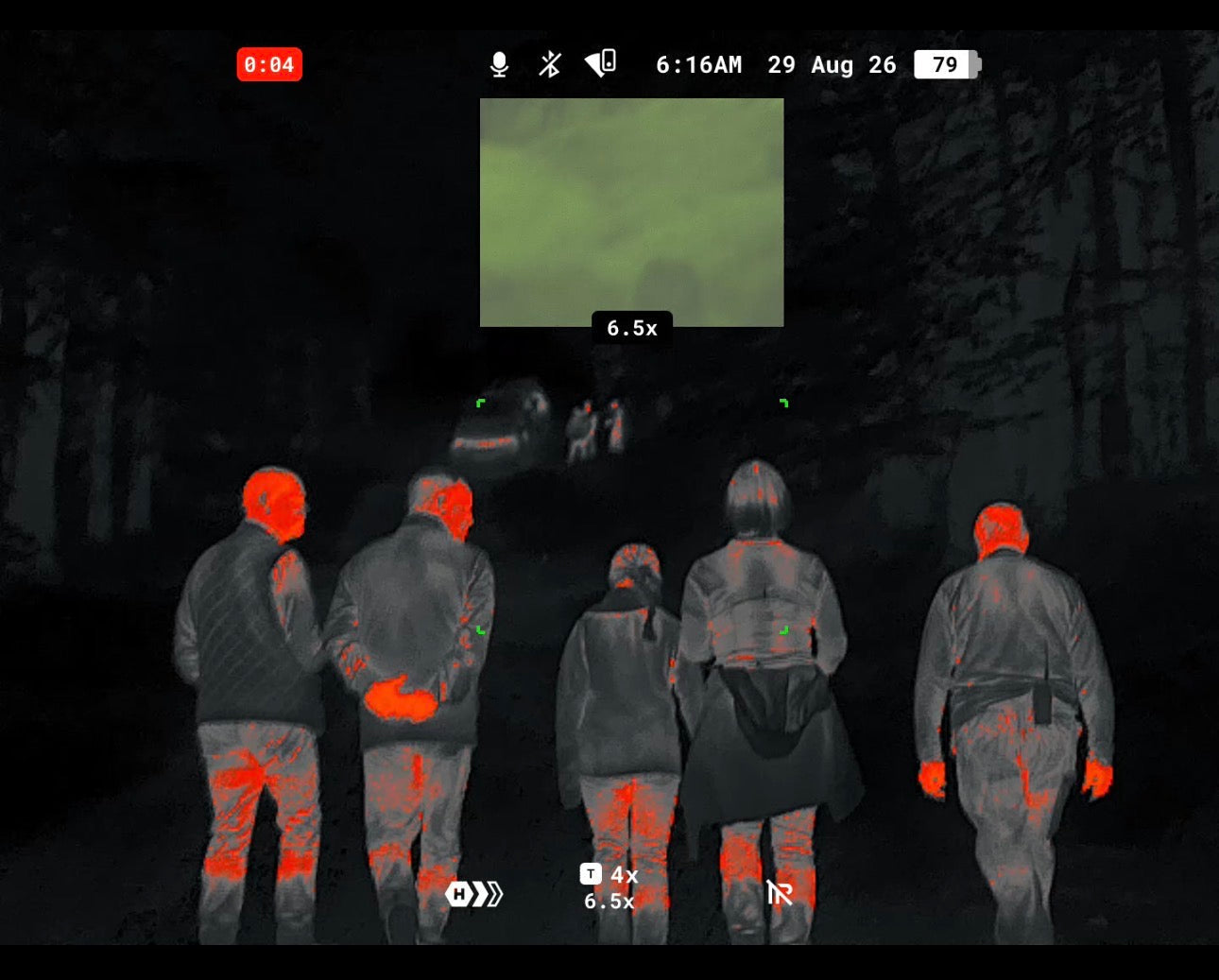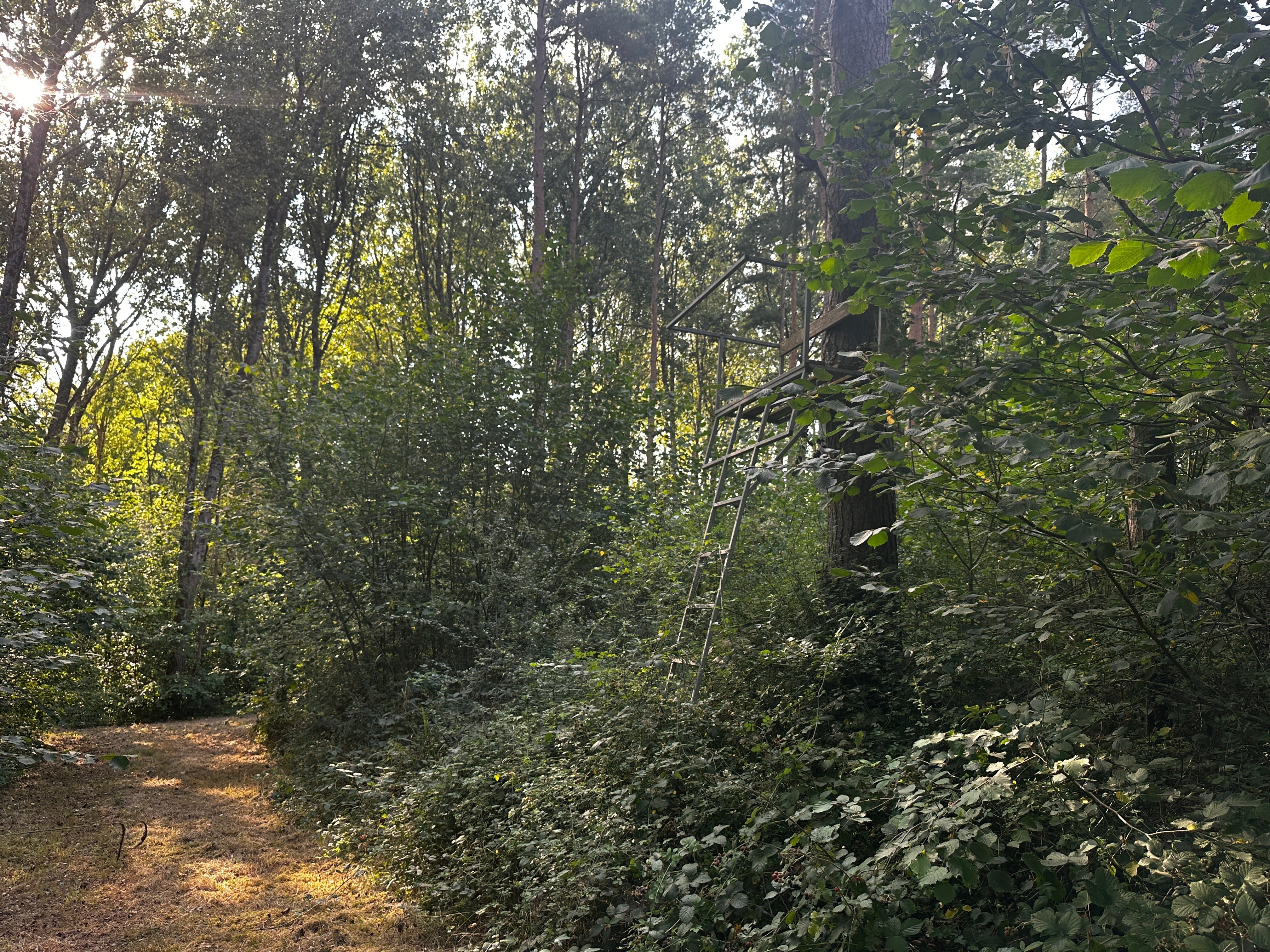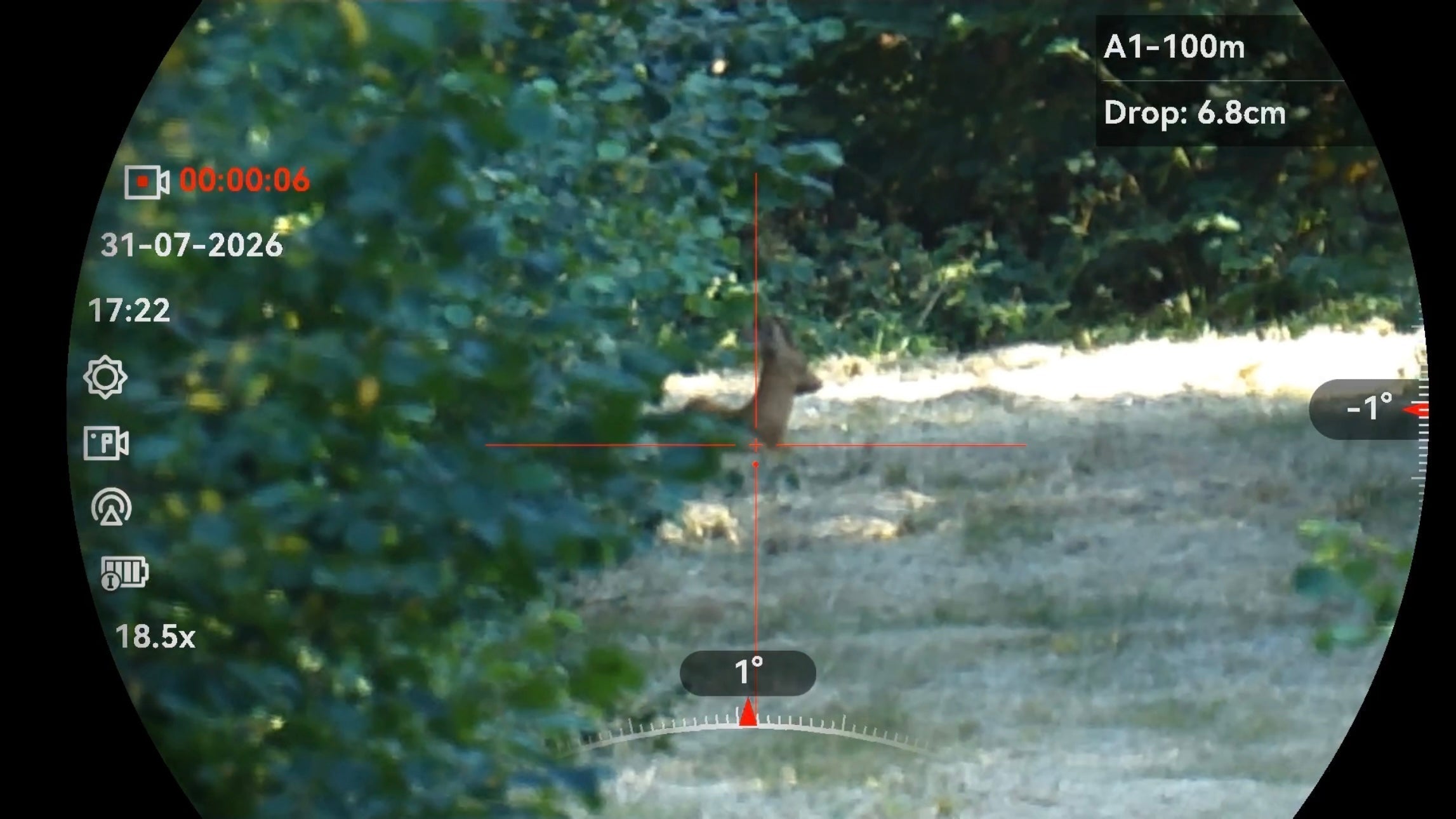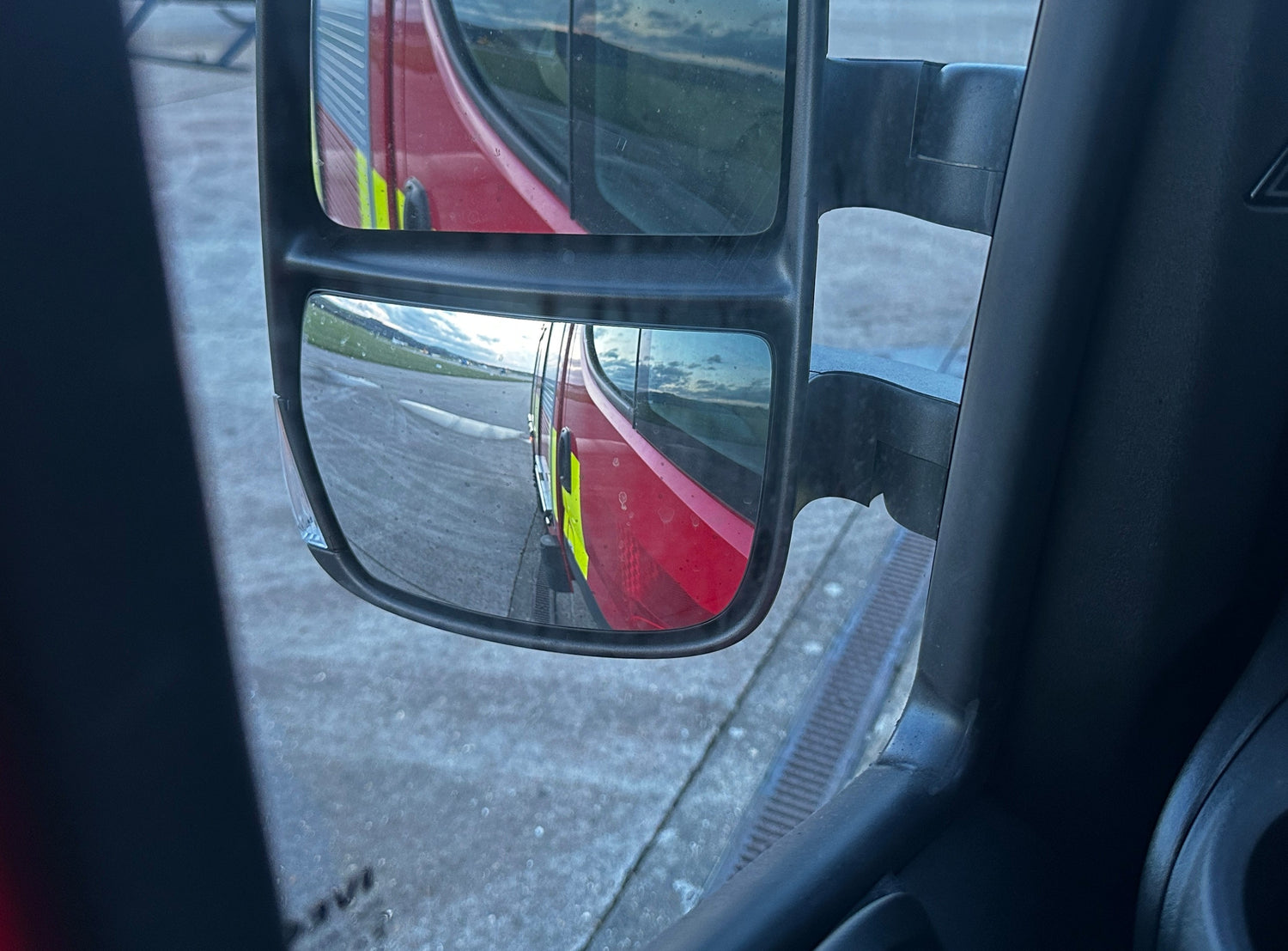
Most people hear “wildlife hazard” and immediately picture birds. They think of geese, gulls, corvids, perhaps a flock lifting at the wrong moment. Birds are a very real part of the risk picture, but they are not the whole story. On many UK airports and aerodromes, mammals are the problem that quietly grows until it becomes impossible to ignore.
Deer, foxes, hares, rabbits and badgers can turn a routine operating day into a high-consequence situation in seconds, particularly when they enter the movement area, cross an active taxiway, or break through a weak point in a perimeter line.
The difference with mammals is brutally simple. When a large animal is on or near a live runway, the consequences are immediate and physical. There is no time to “see how it goes”, no safe way to downplay the risk, and no room for ambiguity. It becomes an operational hazard, and it has to be treated as one.

At Wildscape Deer Management, we see aerodrome work as a technical operation, not because it is glamorous, but because the standard has to be higher than ordinary countryside work. The environment is controlled. The procedures are deliberate. The consequences of mistakes are outsized. It demands discipline, patience, and a calm professionalism that holds even when nothing is happening and you feel pressure to make something happen.
Why airports attract mammals in the first place
Airfields can be deceptively attractive landscapes. They often sit in a seam between improved grass, hedgerows, scrub, woodland edges, drainage ditches and agricultural land. In many cases they offer predictable cover and predictable routine. The grass is managed. Edges are lightly disturbed. The same corridors are used day after day. Animals learn that pattern quickly.
Add the reality of modern land use, development, fragmentation, light spill and constant disturbance on the surrounding fringe, and you get a familiar outcome. Wildlife is pushed into smaller, tighter spaces. Deer start using aerodrome margins as travel corridors. Foxes exploit vole-rich grassland and fencing lines. Rabbits and hares utilise open ground where they can watch for danger. Once a pattern is established, it persists until something changes the cost-benefit equation for the animals.
Add the reality of modern land use, development, fragmentation, light spill and constant disturbance on the surrounding fringe, and you get a familiar outcome. Wildlife is pushed into smaller, tighter spaces.
This is why aerodrome wildlife management is not just “turning up and dealing with what you see”. It is about understanding patterns, pressure points, and predictable vulnerabilities. Weak gates. Fence corners. Drainage runs. Woodland edges that pull deer like magnets. Sight lines that look fine on a map but create blind spots at ground level.
The wider welfare issue that rarely gets said out loud
Deer and other mammals are not only a woodland habitat problem. When numbers and distribution are out of balance with the landscape, welfare outcomes worsen. You see more deer vehicle collisions on surrounding roads. You see more animals caught in fencing. You see more injured deer reported on the urban fringe. You see more call-outs that rely on limited operator capacity at unsociable hours, often in poor conditions.
A collision on a runway, taxiway, perimeter road, or approach corridor is not only an operational and financial incident. It is often an animal welfare incident as well. Injury, stress, prolonged suffering, secondary collisions. That is why competent, proportionate control matters. Not eradication. Not emotion. Evidence-led intervention that reduces conflict, protects habitats, and improves welfare outcomes over time.
The foundation: health and safety before anything else
Public perception often fixates on the firearm. In reality, the firearm is only one part of a bigger safety system. The main risks on airports and aerodromes are created by movement, timing, and communication failures. This is not a place for casual assumptions or “it will probably be alright”.
Health and safety begins before you step out of the vehicle:
You start with site rules and induction requirements. You understand airside access procedures, controlled areas, emergency plans, and the chain of command. You confirm the operational status of the airfield and the nature of the day’s movements. You establish where you can be, where you cannot, and what “stop” looks like if the operational picture changes.
Then you build a practical plan that protects people first. Your own safety. Ground staff safety. Pilots and passengers indirectly. Only after that do you think about how to deliver wildlife management effectively.
This is one of the differences between recreational stalking and contract wildlife control in a high-consequence environment. On an aerodrome, the quality of your process matters as much as the outcome.
Communication with ATC and ground staff is the backbone
If you take one lesson from aerodrome work and carry it into every other contract, make it this: communication is not a courtesy, it is control.
Operations depend on clear, disciplined contact with the people running the airfield. That means:
- Knowing exactly who authorises movement and where that authority sits.
- Maintaining the agreed comms method and comms discipline.
- Operating only within defined locations and windows.
- Staying predictable. No surprises. No drifting.
- Being able to withdraw quickly, safely and without argument when instructed.
Controllers and ground staff are not an obstacle to work around. They are the people with the wider situational awareness you cannot have from the ground. They also carry responsibility for the whole picture, which is exactly why your job is to be professional, concise and easy to manage.

Birds are part of the picture, even on a “mammal” task
One of the more subtle realities of aerodrome wildlife work is that everything connects. Even when you are focused on mammals, you must remain aware of how disturbance affects birds.
Bird dispersal can be continuous. Birds lift and settle in response to vehicles, weather, sound, other birds, or changes in routine. If you move in a way that pushes birds across a live movement area at the wrong moment, you have created a new hazard while trying to reduce another. That is why aerodrome wildlife work is as much about restraint as it is about action. Calm movement, correct timing, and working in cooperation with the airfield’s operational rhythms.
Why lethal control is usually the last resort, and why we treat it that way
It is worth stating plainly. Lethal control is not the first preference for many people, including many who work in the sector. It sits at the end of a chain of options: deterrence, exclusion, habitat management, scaring, fencing improvements, procedural changes and repeated monitoring.
But the honest reality is this. On some sites, and for some species, those measures do not hold. Animals adapt. They learn routes. Pressure shifts them rather than removing the risk. And when the risk remains unacceptable, proportionate lethal control becomes one of the few tools that reliably reduces hazard, provided it is delivered with competence, legality and a clear objective.
This is also where welfare standards become non-negotiable. If lethal control is used, it must be humane, disciplined and defensible. Clean dispatch. Clean follow-up. Clean recovery. Not because we want applause, but because the work has to stand up to scrutiny and because it is the right way to treat any animal, wild or domestic.
Licensing and compliance are part of the job, not a paperwork chore
Aerodrome work can intersect with additional permissions and constraints. Species, timing, location, method and context matter. In relevant circumstances, licensing and permissions, including routes administered by Natural England, may apply. The details vary by site and scenario, but the principle is stable. You do not improvise your legal framework.
This is also where welfare standards become non-negotiable. If lethal control is used, it must be humane, disciplined and defensible.
Professional delivery means permissions are in place, conditions are understood, reporting expectations are met, and the work can be defended if reviewed. Airports do not tolerate vague contracting, and rightly so. The operation must withstand internal audit, external oversight, and the reality that if something is challenged you may need to explain your method to people who have never set foot in a wood at night.
The operational method: calm, planned, and built around safety zones
Without getting lost in unnecessary jargon, aerodrome mammal management usually comes down to a few fundamentals.
You define where you can operate, and where you cannot. You work to agreed access routes and safe positions. You treat the airfield like a living system, not an empty field. You plan approach and withdrawal as deliberately as any stalking approach, but with the added layer that you may be moving under instruction rather than by preference.
You also keep your decision-making thresholds higher than normal. If there is doubt, you do not force it. If the site does not offer safe margins, you step away. That is how incidents are prevented. Not by bravado, but by refusing to take marginal decisions in a setting where consequences travel fast.
Carcass recovery and hygiene matter more than most people think
On aerodrome ground, recovery is not a footnote. It is part of the welfare and biosecurity picture and part of maintaining operational professionalism.
Clean recovery prevents prolonged suffering in the event of injury. It protects staff and the public from unpleasant discovery. It reduces scavenger attraction. It maintains hygiene and prevents carcasses becoming a secondary hazard. It also ensures record keeping is accurate and defensible.
This is where professional standards show. It is easy to talk about “control”. The real work includes what happens after the shot, particularly in poor weather, in difficult ground, and when time pressure creeps in.
Public perception and reputational management: keep it calm, keep it adult
Airfields sit close to communities. People watch. People talk. Sometimes they film. Public opinion is not always informed, and it is not always fair, but it is still part of the environment you operate within.
The correct response is not to become defensive or theatrical. It is to keep the work calm, professional and low-drama. If questions arise, the answer is process, legality, safety and welfare, not arguing online. If an airfield commissions wildlife management, it is because risk has been identified and because other measures have not resolved it sufficiently. That is the honest frame.
Joined today by Milly: why fresh eyes matter
Today we were joined by our colleague on placement, Milly, on her first outing on this contract. Her reaction was useful because it mirrors what many people outside the sector imagine, and then corrects it.
She expected something closer to “just wildlife control”. What she saw was a coordinated system. Ground staff, controllers, operational procedures, safety zones, and a pace that is often slower and more methodical than people assume. She also saw that nothing is casual. Even small movements have meaning. Even quiet decisions are deliberate.
That is why placements matter. If we want land-based professions to remain strong, we need motivated young people to see the work as it really is: responsible, disciplined, technical and grounded in safety and welfare. Not as a caricature, and not as a social media story.
What makes Wildscape Deer Management suited to this kind of work
We specialise in technical operations because much of our work sits where pressures overlap: public-facing sites, sensitive ground, complex risk profiles, and an expectation of defensible delivery.
Aerodromes demand exactly that mindset. Clear communication. Calm decision-making. Patience. Restraint. A willingness to walk away when conditions are wrong. And the discipline to treat every outing as part of a wider pattern rather than a single “result”.
If you operate or manage an airport or aerodrome and you are seeing increasing mammal activity, repeated signs of incursion, damaged fencing, or near misses, the best time to act is early. Early assessment gives you options. It allows you to combine exclusion, monitoring, deterrence, targeted control and practical infrastructure improvements before the situation becomes reactive.
That is the point of professional wildlife management in high-consequence environments. Not drama. Not ego. Calm, proportionate intervention that keeps people safe, reduces conflict, and improves welfare outcomes over the long term.