There is a tendency, particularly among people who have never had to recover a deer by hand through wet woodland, to assume that lowland stalking is the easier version of the job. The Highlands carry the mythology of difficulty more comfortably. Steep ground, weather, distance, exposure, altitude. All of that is real, and nobody sensible would argue otherwise.
But lowland England has its own kind of difficulty, and one of the least appreciated parts of it is extraction.
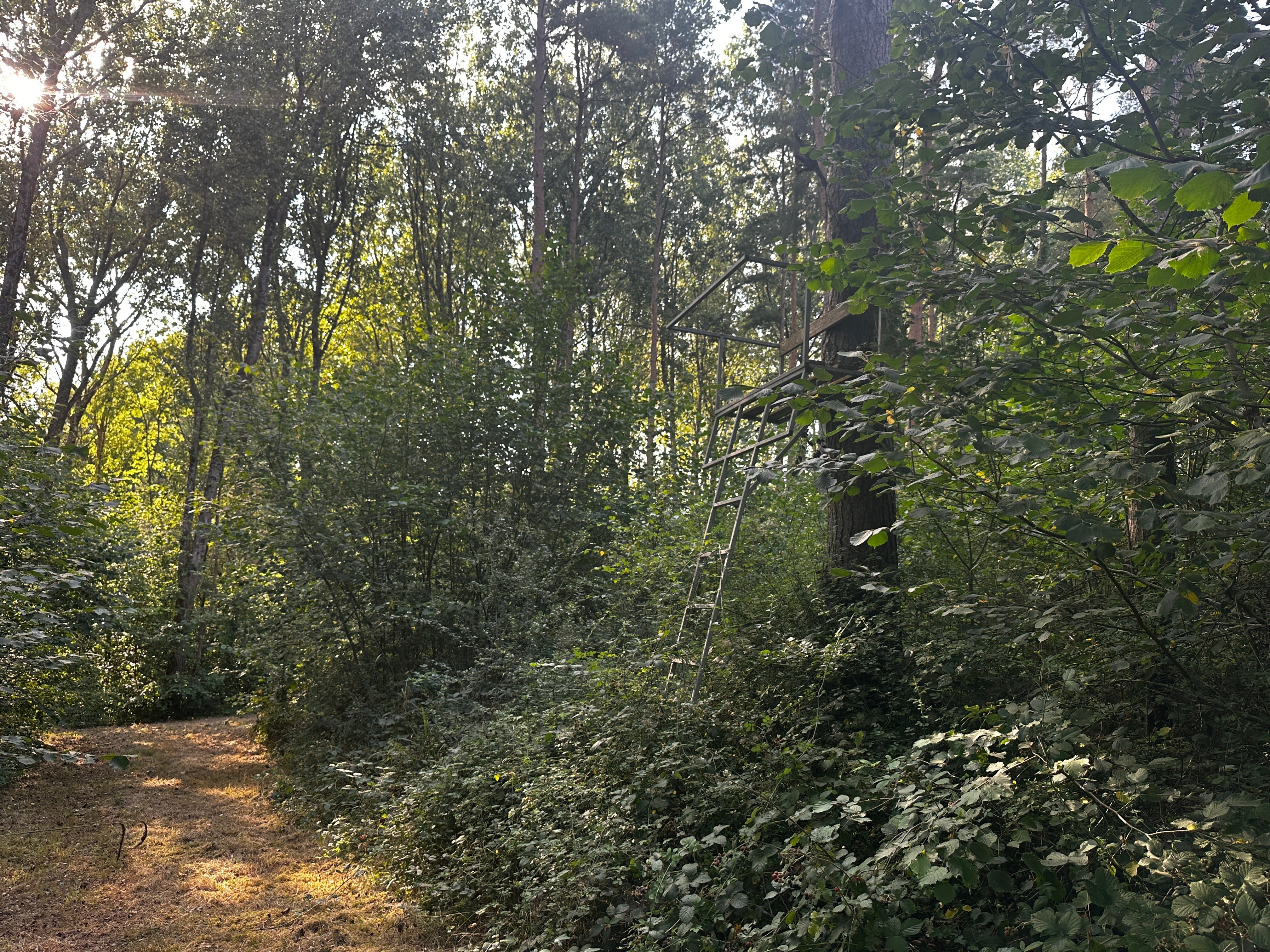
On paper, lowland stalking can look relatively forgiving. Woodland blocks rather than mountains. Shorter distances on a map. More access tracks. Less climbing. The problem is that deer are not extracted on paper. They are extracted through coppice stands, over ancient boundary banks, across soaked rides, through mud that wants to keep your boots, into ditches, around windblown timber, and out of the sort of inaccessible corners where even a trusted trolley quickly becomes decorative rather than useful.
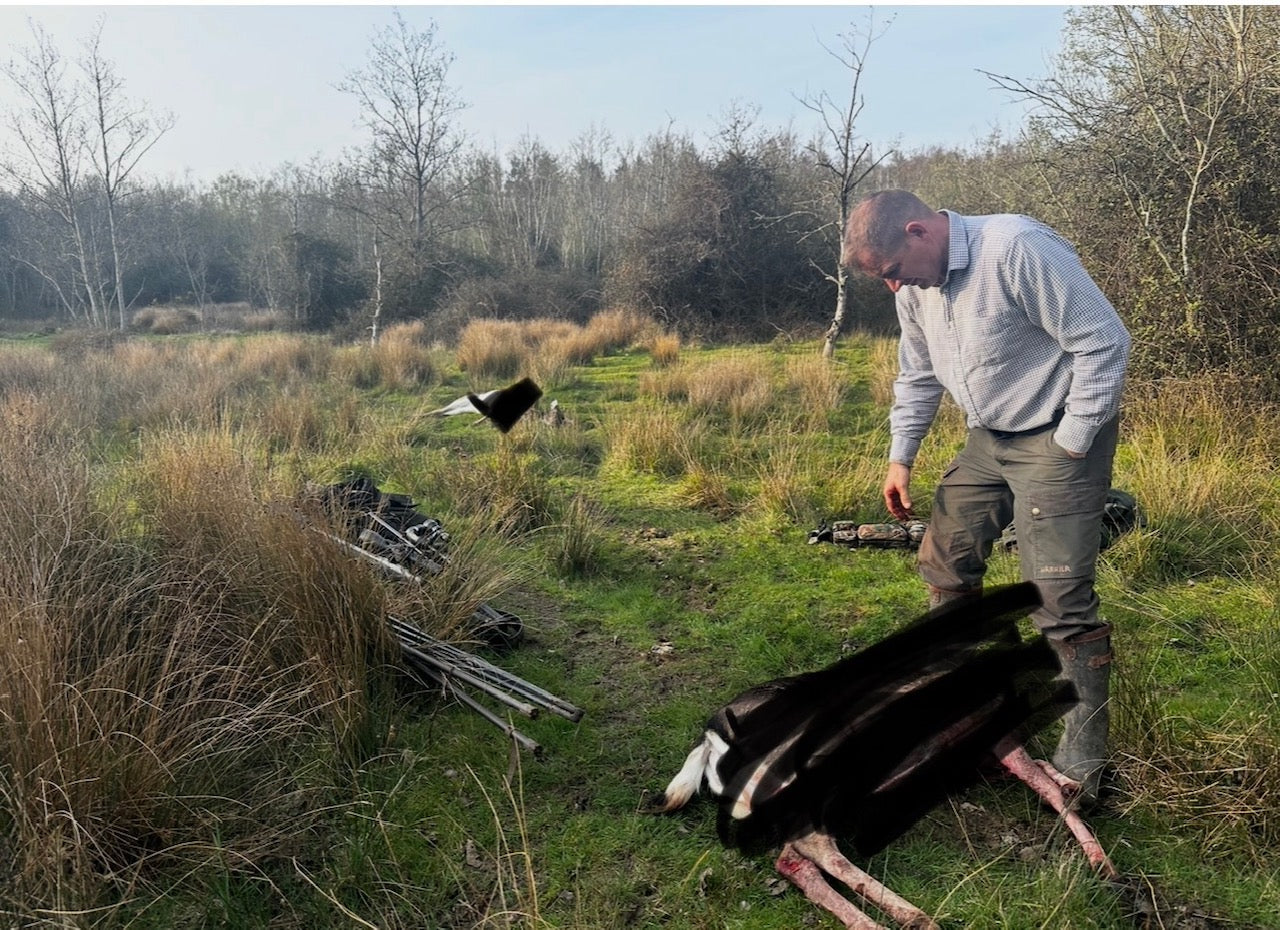
Last week was a useful reminder of that. Between us, Andy and I spent just over five hours extracting two fallow from one site. That was not because we had been careless. It was not because we were unfit. And it was not because the deer were in some absurdly remote Highland corrie. It was simply one of those lowland woodland situations where the ground was wet, the access poor, the deer in the wrong place, and the route out every bit as difficult as the route in.
That is the part people often miss. In lowland England, the shot is sometimes the easy bit.
Extraction starts before the trigger is pulled
This is still one of the most important and most neglected principles in deer management. Extraction does not begin once the animal is on the ground. It begins before the shot is ever taken.
A deer can be perfectly cull-appropriate. The shot can be safe. The backstop can be sound. The wind can be right. And still, the whole thing can be a poor decision if the line out has not been properly considered.
That is not a comfortable thing for people to hear, because most of us like to think in terms of the opportunity itself. But the opportunity is only half the question. The other half is what happens next. Can you recover it cleanly. Can you do so without undue risk. Can you do so without wrecking yourself or your team before the night is over. Can you get it out in a condition that respects both welfare and venison handling standards.
These questions matter on every outing, but they matter particularly in lowland woodland where terrain can mislead you. An animal that looks “not too far in” can still involve an hour of awkward recovery once ditches, mud, boundary banks, dense regrowth and bad footing all start stacking up.
And yet there is a second truth that sits alongside that one. Difficulty of extraction does not remove responsibility. If you are working to a contract, with agreed cull targets and habitat outcomes expected by the landowner, you do not get to quietly exempt difficult compartments just because they are hard work. You may have to phase effort differently. You may have to be brutally honest about what one person can and cannot do safely. But you cannot simply neglect parts of the ground because they are inconvenient.
That is why the conversation at the start of a contract matters so much. Honest discussion about the ground, about access, about realistic targets, and about what sort of extraction burden the site will actually create.

Muntjac difficult, fallow punishing
This is where species make a very real difference.
A muntjac in awkward ground is still awkward. Nobody sensible wants to drag one any further than they need to, particularly over wet and broken woodland. But a muntjac remains, in physical terms, a manageable problem for a reasonably fit stalker with a clear line out.
A fallow is something else entirely.
That is the distinction estates, agents, and sometimes newer stalkers do not always grasp. “A deer” is not one extraction problem. A muntjac caught in a bad corner is inconvenient. A fallow in the same place can become a major physical task. Add wet ground, ancient ditches, dense coppice, and the sort of access where even the trolley cannot reach cleanly, and the job changes character completely.
That is what happened last week. Two fallow in those conditions do not simply mean “twice the work”. They multiply the burden because the first extraction takes energy, the second takes judgement, and everything in between chips away at your efficiency. By the time you add rifle, sticks, extra kit, mud, fatigue, and the simple cumulative effect of hauling serious weight through bad ground, the whole outing becomes a reminder that lowland extraction deserves a lot more respect than it usually gets.
This is also why people who are comfortable extracting muntjac can sometimes underestimate what fallow recovery asks of them. The jump is not minor. It is fundamental.
Lowland woodland has its own kind of hardship
One of the reasons this work is still underappreciated is that lowland difficulty is less photogenic. It does not announce itself in the same way a steep skyline does. Instead, it arrives in repetition.
The same wet ride that steals a little more energy each pass. The same coppice stools catching the drag line. The same ditch that was simple enough to cross on the way in and now feels completely different with weight behind you. The same old bank, root plate, fallen stem or flooded corner that adds just enough inefficiency to turn a “manageable” extraction into a drawn-out one.
Lowland woodland is often not difficult because of altitude. It is difficult because of friction. Everything drags. Everything catches. Everything costs a little more time than it should. Over a long extraction, or over multiple animals, that sort of friction becomes punishing in its own right.
That is especially true in wetter periods, when ground that is merely awkward in summer becomes a full manual recovery problem in winter. A trolley helps until the wheels sink. A vehicle helps until the track ends. Then it is down to legs, back, judgement, and honesty.
Fitness matters, but honesty matters more
Both Andy and I are relatively fit for our age, and that helps. It helps every season. But fitness does not cancel the reality of the work. It only changes how long it takes before the work begins to answer back.
This is another part of the job where the sector could be more honest. Extraction is still one of those areas where people sometimes talk as though strength and determination solve everything. They do not. Age matters. Repetition matters. Recovery matters. Fatigue matters. Injury risk matters. And, perhaps most importantly, honesty matters.
Over the last month or so, being out with friends, colleagues and students, one thing has become more obvious with every season that passes. The work does become a little harder. Not dramatically. Not enough to stop. But enough to notice. Enough that the things you once pushed through without much thought now deserve more respect. Enough that poor decisions about extraction cost more than they used to.
That does not mean people should retreat from hard ground. It means they should stop pretending hard ground is neutral.
More than one deer changes the whole equation
There is another truth that deserves more attention. A single extraction is one thing. Multiple extractions on the same outing change everything.
The first recovery costs energy. The second costs energy and judgement. And when the species is fallow rather than muntjac, that jump is not subtle. The burden on the body rises, the margin for sloppy decisions narrows, and the temptation to rush becomes much more dangerous.
That is where experience matters. Not because it makes the drag shorter, but because it helps you recognise when the job is beginning to shape your thinking. When the next opportunity is no longer just a deer question, but a recovery question as well. When a second animal is not simply “another chance”, but another hour, another bank, another ditch, another period of fatigue in poor conditions.
That is also where working with the right person matters. Some sites are not built for solo heroics. They are built for staged effort, clear communication, and two people prepared to work steadily rather than one person determined to prove something.

Disturbance has changed the problem in recent years
There is another factor now in lowland England that makes both deer behaviour and extraction harder than it used to be, and it deserves saying plainly.
Since the pre-lockdown period, one of the changes many of us have noticed is the rise in excessive commercial dog walking, including excessive commercial dog walking trespassing on private ground where it should not be. This matters not just because it is irritating, but because it changes how deer use the landscape.
Ground that once settled properly now often carries more constant disturbance. Deer get pushed deeper. Sanctuary shifts. Movement patterns tighten. And the practical result is that animals are more likely to hold in those awkward, inaccessible corners that nobody would choose if easier parts of the ground still felt secure.
That increases the physical burden on extraction. It also reduces the owner’s and manager’s margin for choosing the more straightforward opportunities, because the straightforward opportunities become less frequent.
This is not a complaint about legitimate access used responsibly. It is an acknowledgement that repeated unauthorised disturbance on private land has real consequences for both management and recovery.
Difficult extraction is not an excuse, but it is a warning
There are two thoughts that need to sit together here.
The first is that hard extraction does not excuse inaction. If a block needs to be managed to protect the wider site, then “it will be difficult to get them out” cannot be the whole answer. A contract is a contract. Habitat pressure does not disappear because the ground is wet and awkward.
The second is that difficult extraction is a warning. It tells you what sort of system the site requires. It tells you whether the work should be solo or paired. It tells you how realistic the target really is. It tells you whether additional seats, revised access, improved recovery routes, or different timing might be needed. It tells you whether the current equipment is genuinely helping or simply accompanying you on a struggle it cannot really solve.
A competent deer manager should be learning from every hard recovery. Which route cost too much. Which area should only be worked in better ground conditions. Which opportunities are worth taking and which are better left until the line out is more sensible. Which species, in which compartment, at which time of year, fundamentally alter what success actually looks like.
That is not weakness. That is professionalism.
 What landowners often do not see
Landowners and agents sometimes see the cull figure, but not the route by which it was earned. That is understandable to a point, but it can create unrealistic assumptions about what is repeatable.
A muntjac lifted onto a trolley near a ride edge and a fallow manually extracted over a wet bank, across ancient boundaries and through dense coppice can look identical in the final record. They are not identical in labour, risk, time, or cost. Not even close.
That matters when discussing pricing, staffing, targets, and expectations. If estates want difficult corners managed properly, then access, safety and recovery have to be part of the conversation from the beginning, not treated as an inconvenience the deer manager should somehow absorb without comment.
The best contracts are usually the ones where this is understood early. The most strained are often the ones where extraction remains invisible until somebody gets hurt, burnt out, or simply stops touching the hardest ground.
A more honest conclusion
There is no value in pretending difficult extraction is easy. Equally, there is no value in dramatising it. It is simply part of the job, and in lowland England it is often a bigger part than outsiders realise.
Woodland stalking may not carry the same mythology as the Highlands, but that does not make it gentle. Dense cover, wet ground, ancient boundaries, public disturbance, inaccessible corners and full manual recovery create their own kind of hardship. Sometimes a more repetitive one. Sometimes a more punishing one over time.
The answer is not avoidance. It is honesty. Honest planning before the shot. Honest contracts at the start. Honest self-assessment about fitness, staffing and recovery. Honest understanding that a muntjac and a fallow are not the same extraction problem, however similar they may look on a spreadsheet.
Because if you are serious about deer management, extraction is not a problem that begins after success. It is one of the conditions that defines whether success was judged properly in the first place.